About Iberolacerta cyreni (Müller & Hellmich, 1937)
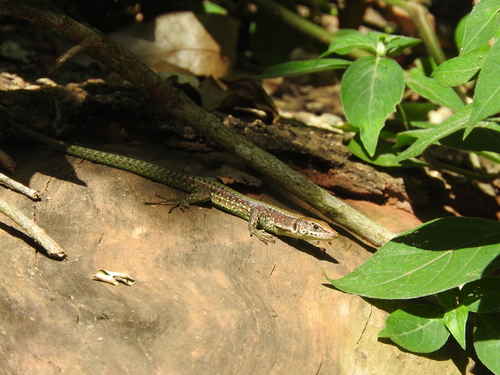
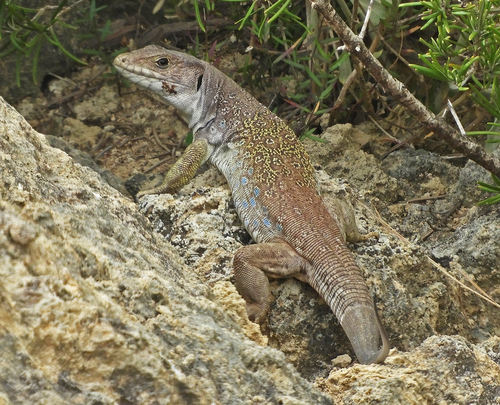
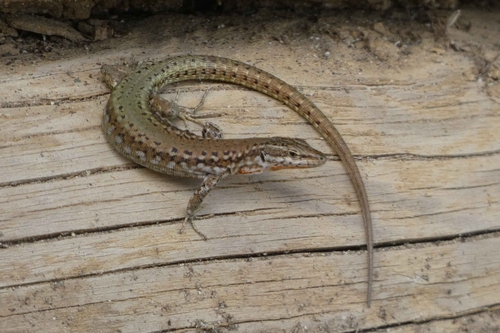
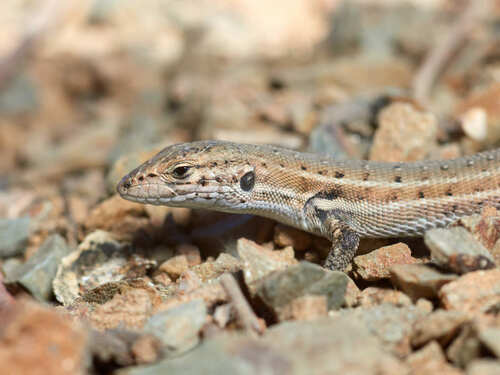
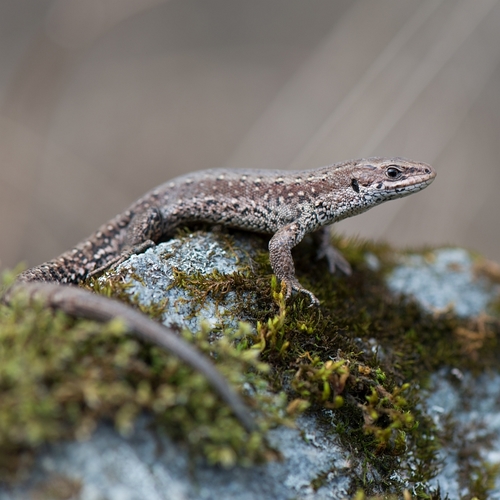
Iberolacerta cyreni, commonly called the rock lizard, reaches up to 8 cm (3.1 in) in snout-to-vent length, and up to 24 cm (9.4 in) when including the tail. In this species, males are believed to compete for females. In this competitive dynamic, larger lizards gain greater reproductive success, so selection favors larger overall body sizes and larger structures used for combat, such as the head. Females, by contrast, carry developing offspring, so selection pressures related to clutch volume or clutch size favor larger abdomen sizes. This results in males having larger head sizes than females, while females have longer abdomens than males. I. cyreni may be brown, or brown with a green undertone. It has dark brown spots aligned vertically along the full length of its body. It can be told apart from other western Iberian rock lizards by the absence of blue eye-shaped marks called ocelli on its shoulders. Lizards of the genus Iberolacerta live in mountainous areas of the Western Mediterranean region. I. cyreni is endemic to central mountain ranges of Spain: the Sierra del Guadarrama, Sierra de Gredos, Sierra de Bejar, and La Ser. This species occurs near the tree line in damp, rocky habitats, and can also be found in temperate forests, temperate shrubland, temperate grassland, and plantations.