About Hysterocarpus traskii Gibbons, 1854
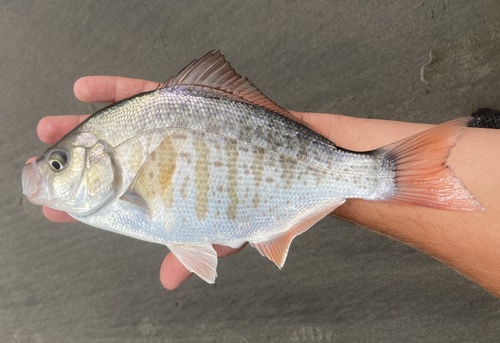
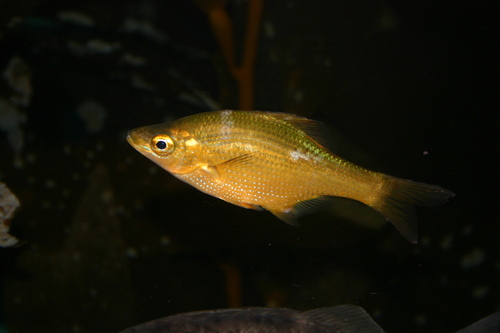
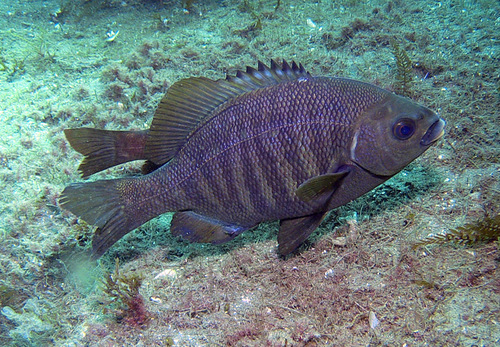
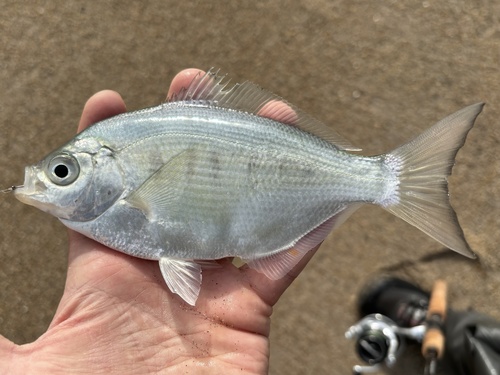
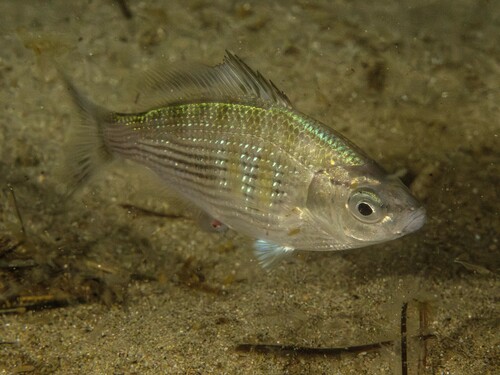
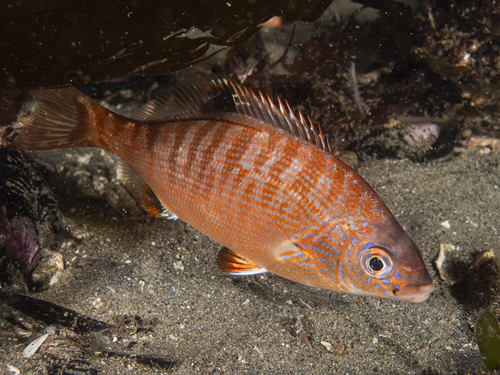
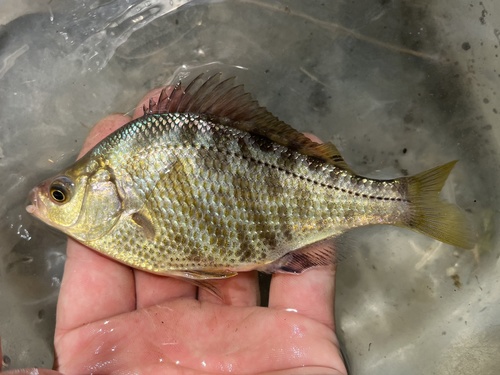
Hysterocarpus traskii, commonly called the tule perch, is a surfperch belonging to the family Embiotocidae. It is native to the rivers and estuaries of central California, and it is the only member of its genus, as well as the only known freshwater surfperch. The species is divided into three recognized subspecies: the Russian River tule perch (H. t. pomo), the Clear Lake tule perch (H. t. lagunae), and the Sacramento tule perch (H. t. traskii). Each subspecies is restricted to a separate California drainage: H. t. lagunae is found in the Clear Lake drainage, H. t. pomo lives in the Russian River drainage, and H. t. traskii occurs in the Sacramento-San Joaquin River drainage. This separation into three distinct subspecies is supported by a 1981 study that found significant genetic and population differences between tule perch groups from the three drainages.
Tule perch inhabit streams, rivers, lakes, and estuaries across northern and central California. They almost exclusively occupy cold, well-oxygenated water below 22°C, and are rarely encountered in water warmer than 25°C. A 1990 study found that this species has limited tolerance and low ability to adapt to changing oxygen and temperature conditions. In contrast, tule perch can tolerate high salinity levels, and have been observed in water with salinity as high as 30 parts per thousand. They commonly share their habitats with other native fish species, and typically form schools or shoals. Tule perch forage for food along the bottom of streams and rivers, feeding on invertebrates, zooplankton, and aquatic plants. They strongly prefer lake floors made of sand and gravel, and will move into deeper areas of lakes. One passive mark and recapture study found that tule perch spend most of their time in intertidal channels, except during the spring breeding season. Overall, reductions in the quality and amount of available tule perch habitat have caused negative impacts to the species’ population abundance.
The tule perch is the only native freshwater fish species in California that reproduces through viviparity, meaning it gives birth to live young. Females give birth once per year to between 10 and 60 fully formed, free-swimming live young that are miniature versions of adult tule perch. The number of offspring a female produces depends on her body size and her surrounding environment: larger females produce more offspring, while females in more variable environments produce more young than females in more stable environments. Offspring are born in May or June, and juvenile tule perch stay together in groups in areas with aquatic vegetative cover. Young tule perch grow very quickly during their first year of life; their main food sources include aquatic insects, crabs, shrimp, clams, and chironomid midges. As they reach adulthood, they expand their home range, and defend territories during the breeding season, which typically runs from July to September.
During the breeding season, females often mate with multiple different males. A 2013 study found that 92% of tule perch broods showed evidence of multiple paternity, and noted that the rate of mate encounters is a key factor affecting multiple mating. Males fertilize females using a modified anal spine to inject sperm into the female’s body. Females practice fertilization delay: they store injected sperm inside their body, and fertilization does not occur until January. Developing embryos grow inside a uterus-like pouch within the female’s ovary, and get all their nourishment from the mother’s bodily fluids. Most of the embryos’ growth happens during the final two months of gestation. When the delayed fertilization period is counted, total gestation can last up to nine months. Newborn tule perch are between 3 and 5 centimeters long at birth.
The maximum recorded lifespan for tule perch is 8 years, though most individuals do not live longer than 5 years. The three subspecies differ in the timing of sexual maturity and average lifespan: the Russian River tule perch (H. t. pomo) reaches sexual maturity during its first year, and generally has a shorter lifespan of 3 to 4 years. The Sacramento tule perch (H. t. traskii) reaches sexual maturity by the end of its first year, and most individuals live up to 5 years. A 2020 study of H. t. traskii found that the subspecies has sexual dimorphism: females have a narrower caudal peduncle, and their anal fins are positioned further toward the posterior end of the body than males. While there is no difference in average standard length between males and females of this subspecies, males are significantly heavier than females. The Clear Lake tule perch (H. t. lagunae) reaches sexual maturity during its second or third year, and typically lives 6 to 7 years, the longest lifespan of the three subspecies.