About Hyptiotes cavatus (Hentz, 1847)
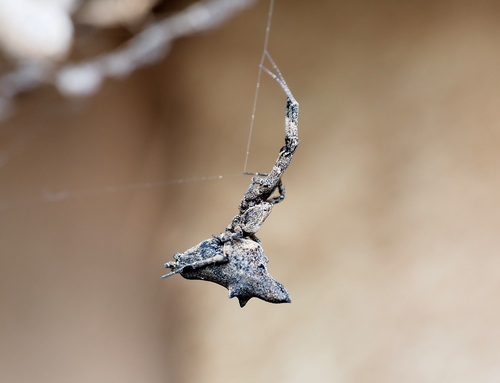
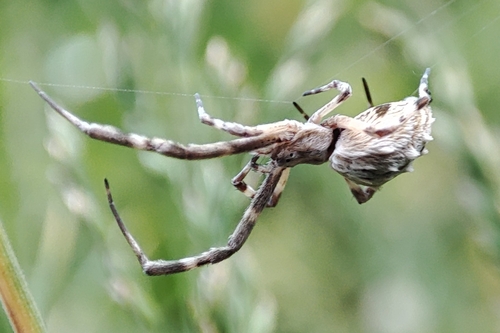
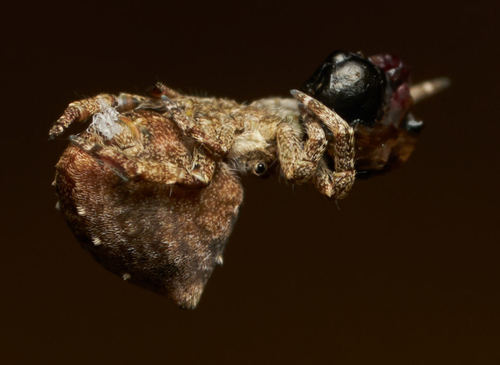
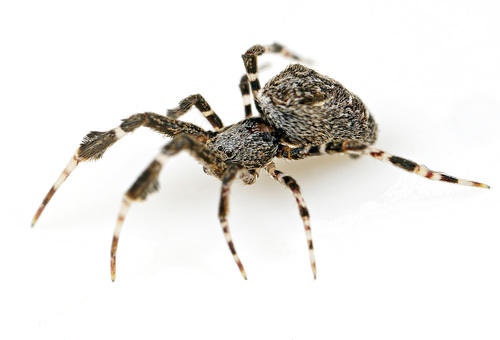
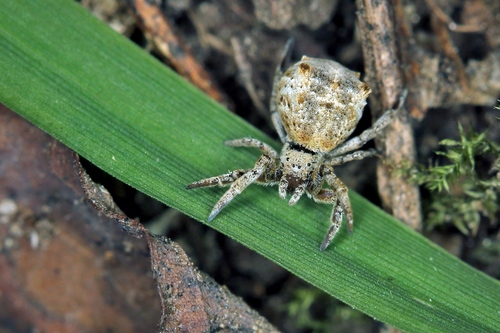
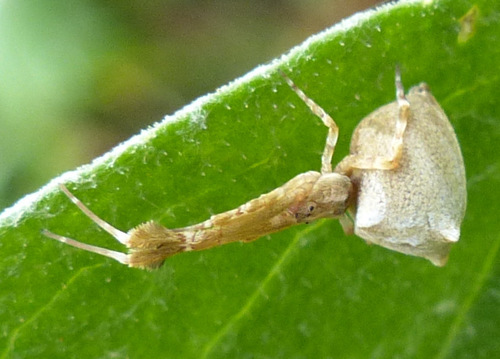
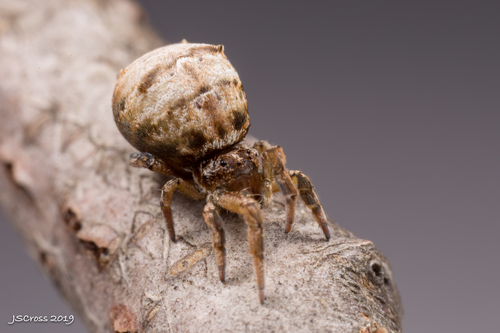
Hyptiotes cavatus, commonly called the triangle weaver, is a species of cribellate orb weaver spider belonging to the Uloboridae family. It is native to the eastern United States and Canada. Unlike most other orb-weaving spiders, this species uses its characteristic triangle-shaped web in a unique hunting method. The spider holds its body between an anchor line and the web’s main trap line, and pulls in the silk connected to the rest of the web with its legs to increase the web’s internal tension. It stays in this position until a prey animal touches the web, then releases the held anchor line. This release makes the web and the spider spring rapidly forward between 2 and 3 centimeters. As a result, up to four extra web strands come into contact with the prey, and the sudden stop once the web reaches the limit of its elasticity wraps the prey further into the web strands. This hunting mechanism relies on stored elastic potential energy, working in a similar way to human tools such as slingshots and bow and arrows. Hyptiotes cavatus only has six functional eyes. Its anterior lateral eyes, or ALE, are extremely small and vestigial, and they do not have retinas.