About Hypsurus caryi (Agassiz, 1853)
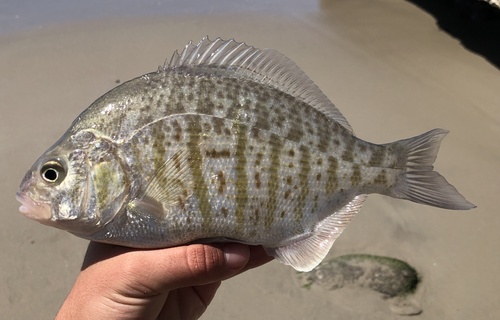
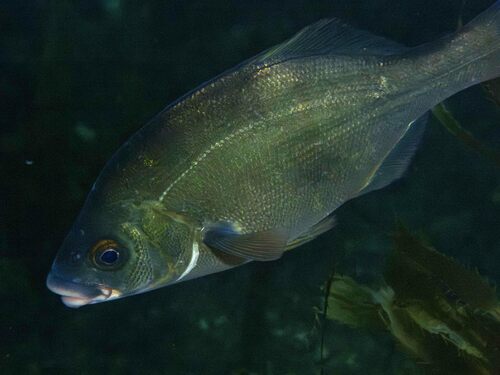
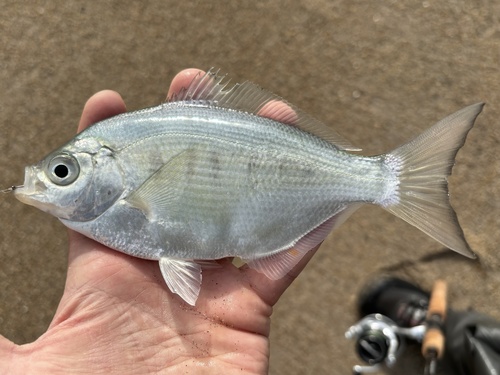
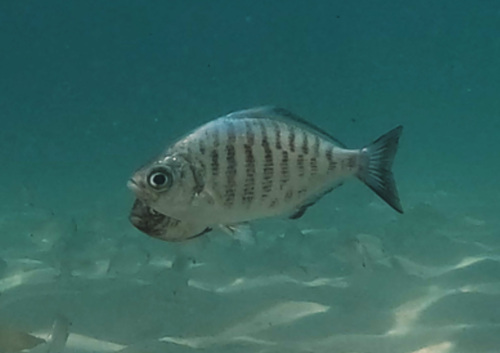
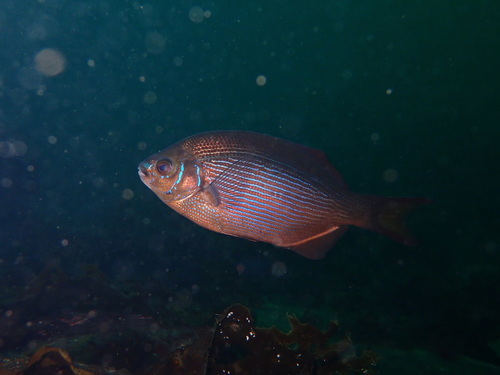
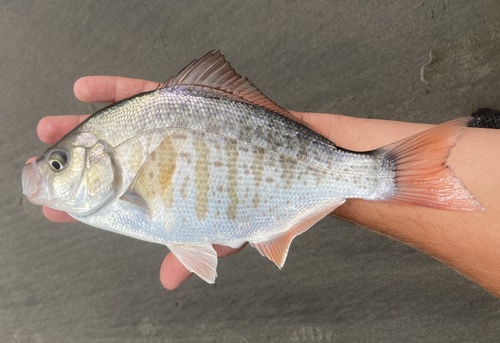
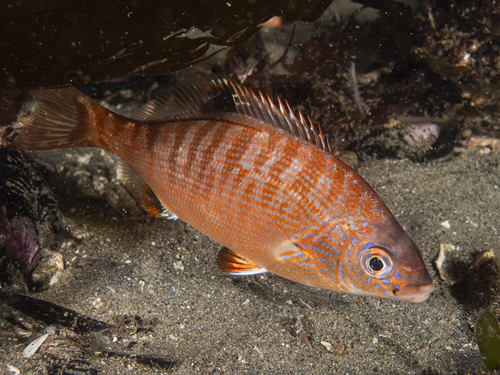
Rainbow surfperch (scientific name Hypsurus caryi (Agassiz, 1853)) has the typical body shape of a surfperch, with a deep, laterally compressed body. It is one of the most colorful surfperch species. Its body is grey, pink, or orange, marked with red bands that run from the top of the body down its side. Its orange face has blue spots; its fins range in color from yellow to red-orange. The tips of its first spines, and a spot on the soft dorsal fin and anal fin, are black. Its pectoral fin is lightly striped, with a vibrant blue edge. Rainbow surfperch is sometimes confused with striped surfperch (Embiotoca lateralis), because both have rainbow coloration and blue dots on the face. However, striped surfperch are typically much darker and less elongated than rainbow surfperch. This species reaches a maximum total length of 30.5 cm (12.0 in). Rainbow surfperch occurs along the Pacific coast of North America, from Cape Mendocino, California to Northern Baja California, Mexico. It prefers rocky shores and rocky substrate over sandy substrate. It is never found in the surf zone, instead favoring the edges of kelp forests or seagrass beds, at depths down to around 40 metres (130 ft); some individuals have been recorded as deep as 50 metres (160 ft). This species feeds primarily on small snails, crustaceans, and polychaete worms, and also consumes algae and small fish. Young rainbow surfperch may act as cleaner fish, eating parasites off larger fish. The species is also known to sift through sand to find prey. Like other surfperch, this species is viviparous, meaning it gives birth to live young. The fish mate in large aggregations during fall. After a gestation period of seven to nine months, they give birth to between nine and 29 offspring that each measure around 6.8 cm (2.7 in), in shallow or tidal waters.