About Hypsiglena torquata (Günther, 1860)
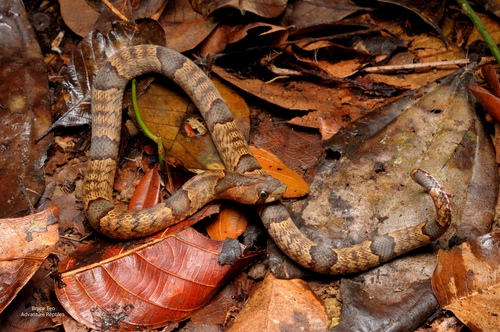
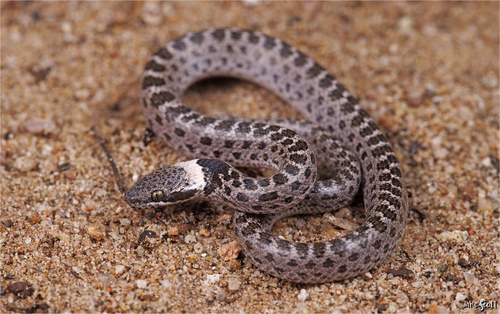
Hypsiglena torquata, commonly called the night snake, reaches a total length of 12–26 inches (30–66 cm). Its base body color is pale gray, light brown, or beige, with dark grey or brown blotches across its back and sides. The night snake has a relatively flat, triangular head, and usually has a pair of dark brown blotches on its neck. It also has a black or dark brown stripe behind its eyes, which contrasts sharply against the white or pale gray coloring of its upper lip scales. Its eyes are prominent, with vertical pupils. The belly of the night snake is white or yellowish. Females of this species are typically longer and heavier than males. The night snake is endemic to Mexico. Because this species is highly cryptic, little is currently known about its population densities or full exact range. Since 1980, it has also been reported from the Okanagan Valley of British Columbia, Canada, though sightings there are very rare, with only around 20 confirmed documented encounters. Night snakes mate in the spring. Females lay a clutch of 2 to 9 eggs between April and August. Eggs hatch after 7 to 8 weeks, which usually occurs in late summer. Males reach sexual maturity one year after hatching.