About Hypomyces lactifluorum (Schwein.) Tul. & C.Tul.
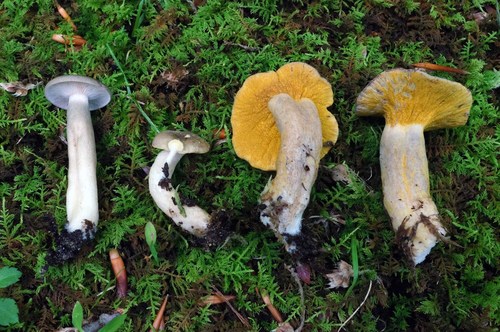
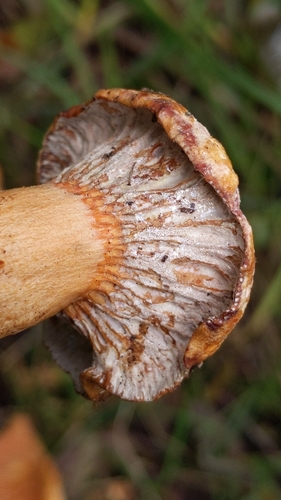
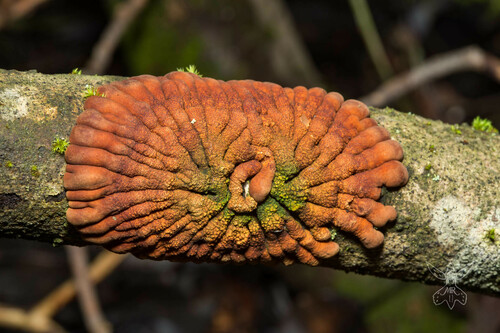
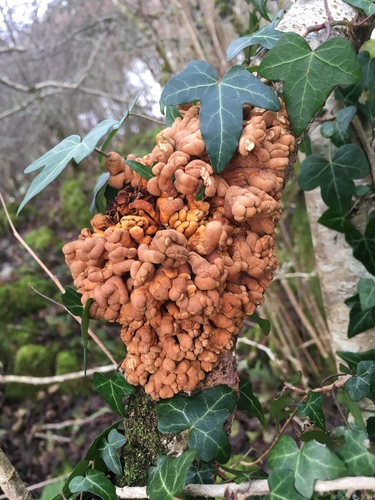
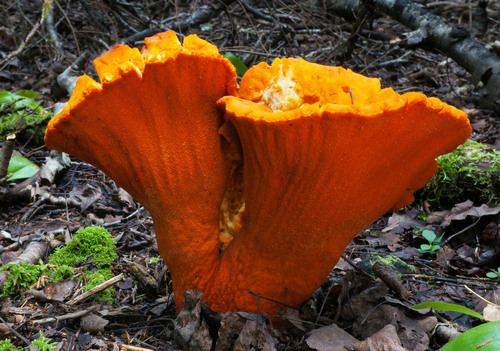
Hypomyces lactifluorum specifically parasitizes mushrooms in the milk-cap genera Lactarius and Lactifluus, and the brittlegill genus Russula. Common hosts in North America include Russula brevipes and Lactifluus piperatus. When mature, the reddish orange fungus completely covers its host mushroom, making the original host unidentifiable. As it ages, its discoloration spreads across the entire surface and gills of the host mushroom, extending to the host's margin. This species produces a white spore print. Hypomyces lactifluorum grows in wooded areas, often near Russula brevipes or Lactarius growing in conifer forests. It is particularly common under ponderosa pine in the American Southwest and Pacific Northwest of North America. Its growth habit in woodland is described as solitary, scattered, or gregarious, depending on location. Commonly called lobster mushroom, this fungus is widely eaten and enjoyed when freshly foraged and cooked. It is sold commercially and can sometimes be found in grocery stores, and has been made available at markets in Oregon. It has a seafood-like flavor and a firm, dense texture. Even though it is edible, field guides note the hypothetical risk that it could parasitize a toxic host mushroom, so people should avoid consuming lobster mushrooms with unknown origins. No cases of toxicity from eating this species have been recorded. During infection, the chemicals of the host mushroom are converted into more flavorful compounds, which makes lobster mushrooms more palatable. For example, Lactarius piperatus has a naturally spicy, hot flavor, but this flavor is neutralized by the parasitic Hypomyces lactifluorum, resulting in a more edible and pleasant-tasting product. One author has personally never had any adverse issues from consuming this fungus, and another notes that there have been no recorded reports of poisoning from hundreds of years of human consumption.