About Hypomecis separata (Walker, 1860)
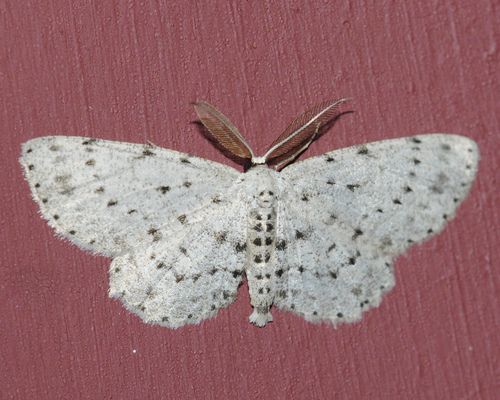
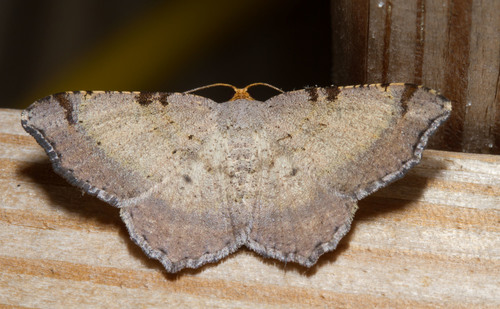
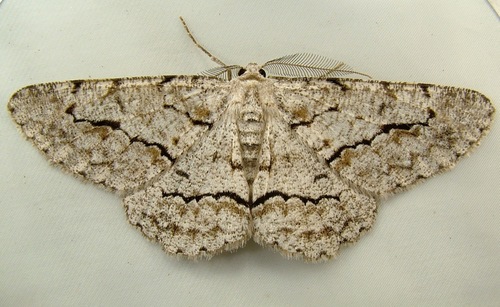
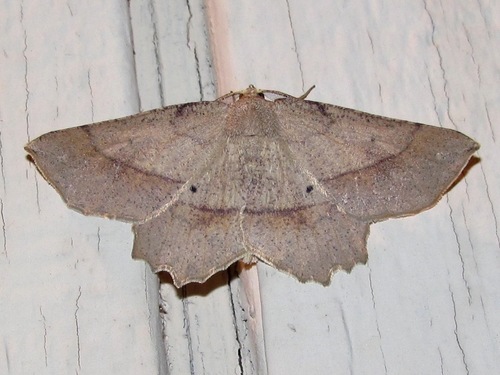
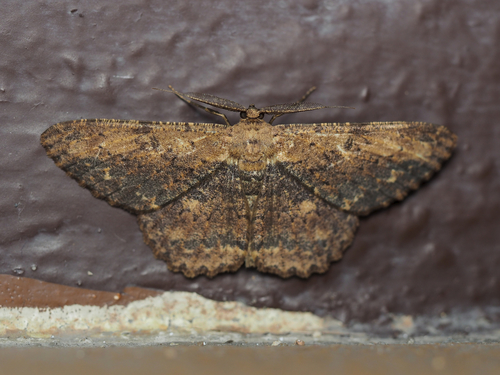
The moth Hypomecis separata (Walker, 1860) has a wingspan of approximately 48 mm. Males of this species have no fovea at the base of their forewings, though a slight ridge in the forewing marks where the fovea would be. Vein 5 is entirely absent from the hindwings. The antennae of males are bipectinate, meaning they are comb-like on both sides, and their branches have decumbent, up-turned tips. The male hind tibia is typically dilated, with a fold and a tuft of hair. Males have no secondary sexual patch on their hindwings. On the forewings, veins 10 and 11 are stalked. Male individuals are rufous, with portions of the body suffused and striated with black. A broad, poorly defined pale fascia runs from the base to the outer margin of the forewing, below the apex. The costal, inner, and outer areas of the forewing are striated and suffused with black. An indistinct annulus is present at the end of the forewing cell, and faint traces of a waved postmedial line can be seen. The hindwings of males have black striations, and their basal area is suffused with fuscous. A crenulate, or scalloped, postmedial line and an incomplete submarginal black band are visible on the hindwings. The ventral side of the moth is fuscous, with prominent cell-spots.