About Hypochaeris radicata L.
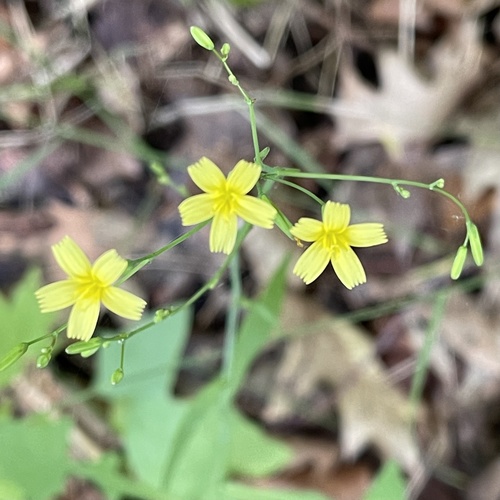
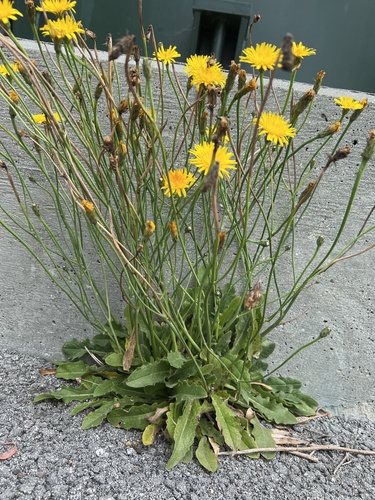
Botany: Hypochaeris radicata L. produces lobed leaves covered in coarse hairs that can grow up to 8 inches (20 cm) long. These leaves form a low-lying rosette around a central taproot. Forked stems bear bright yellow flower heads; when mature, these heads develop seeds attached to wind-dispersed parachute-like structures. All parts of the plant release a milky sap when cut. Hypochaeris species are eaten as food plants by the larvae of some Lepidoptera species, including the shark moth.
Toxicity: This species is suspected to cause stringhalt in horses and donkeys when consumed in large amounts.
Culinary uses: All parts of the catsear (Hypochaeris radicata) plant are edible, but leaves and roots are the most commonly harvested parts. The leaves have a bland flavor; they can be eaten raw in salads, steamed, or added to stir-fries, and some people recommend mixing them with other vegetables. Older leaves become tough and fibrous, while younger leaves are suitable for eating. Unlike dandelion leaves, which are commonly bitter, catsear leaves only rarely have any bitterness. In Crete, Greece, leaves of a local variety called παχιές (pachiés) or αγριοράδικα (agriorádika) are eaten boiled or steamed. The root can be roasted and ground to make a coffee substitute.