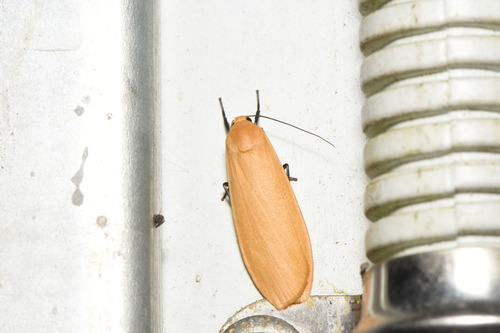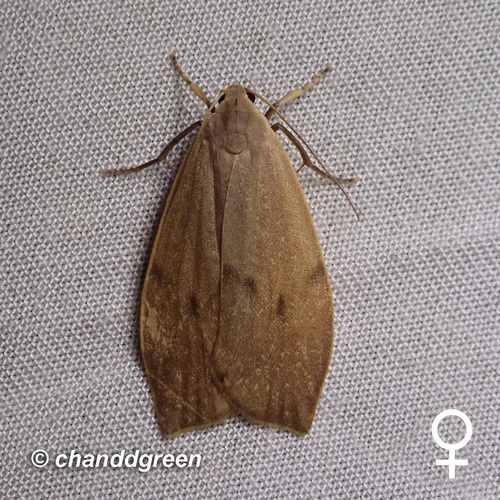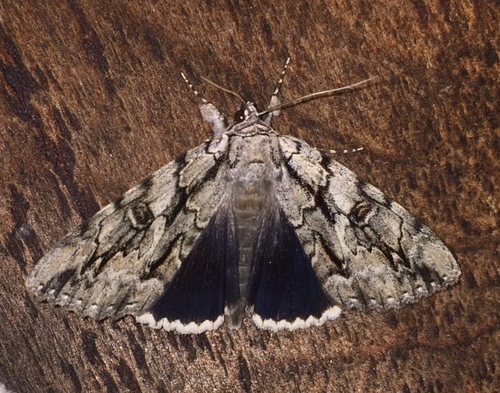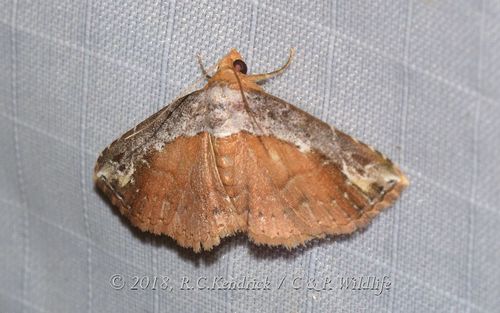
About Hyphantria cunea (Drury, 1773)
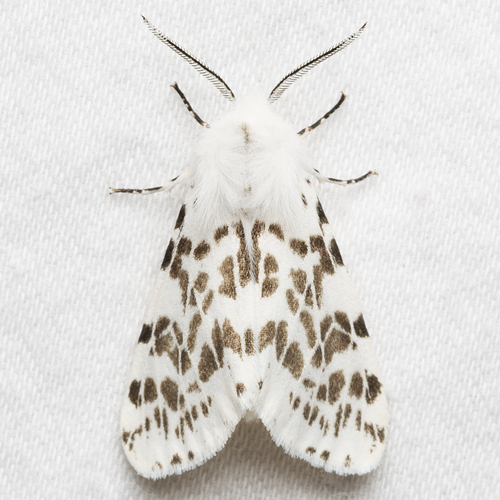
Adult fall webworms (Hyphantria cunea) have a wingspan of approximately 30 mm and are generally white, though some individuals carry dark-colored marks. This moth species is native to North America, where its native range extends from Canada to Mexico, and it has since been introduced to other continents. It was first introduced to what was formerly Yugoslavia in the 1940s, and first recorded there in 1949; it now occupies most of its potential range in Europe, stretching from France east to the Caspian Sea, and has also spread into Central Asia, reaching Turkmenistan between 1990 and 1993, the Fergana valley of Uzbekistan between 1996 and 1997, Kyrgyzstan, and southeastern Kazakhstan. It was introduced into Japan in 1945, and has adjusted its number of generations per year since arriving there. It has also spread into China, southern Mongolia, Korea and southern Primorsky Krai of Russia, and is now considered a holarctic species in terms of distribution. In the northern part of North America, this species produces one generation per year, with larvae appearing from late summer through early fall. South of approximately 40°N latitude, there are two or more generations each year, and webs appear progressively earlier the further south you go. In southeast Pennsylvania and Delaware, the second generation is the most damaging, and emerges between 791 and 1540 growing degree-days. Fall webworms feed on nearly any type of deciduous tree, chewing the leaves and capable of defoliating branches or entire trees. Worldwide, the species has been recorded feeding on 636 plant species, and it is counted among the most polyphagous insects. In the eastern United States, preferred hosts include pecan trees (Carya illinoinensis), black walnut, American elm (Ulmus americana L.), hickory, fruit trees, and some maples; in some areas, persimmon and sweetgum are also readily eaten. In the western United States, alder, willow (Salix spp.), cottonwood and fruit trees are commonly used as hosts. Additional confirmed host plant examples include madrone (Arbutus menziesii Pursh), mulberry, ailanthus, American sycamore (Platanus occidentalis L.), and Asian white birch (Betula platyphylla). Host plant selection by fall webworms depends on factors including the host plant's degree of sun exposure, age, any environmental stress it has undergone, leaf toughness, and nutritional quality. For example, consuming plants high in carbohydrates can benefit insects that need energy for processes like dispersal or diapause, while consuming plants high in protein can benefit female insects that are producing eggs.