About Hypertropha chlaenota Meyrick, 1887
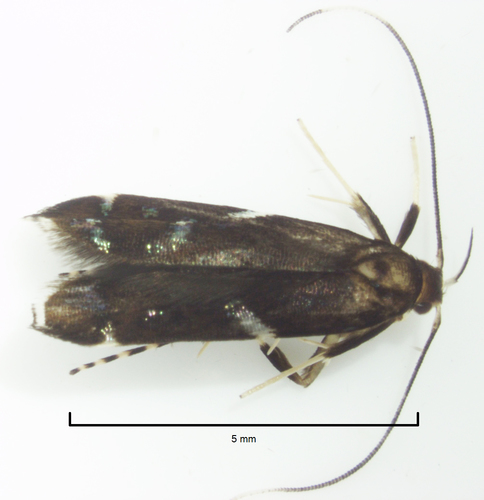
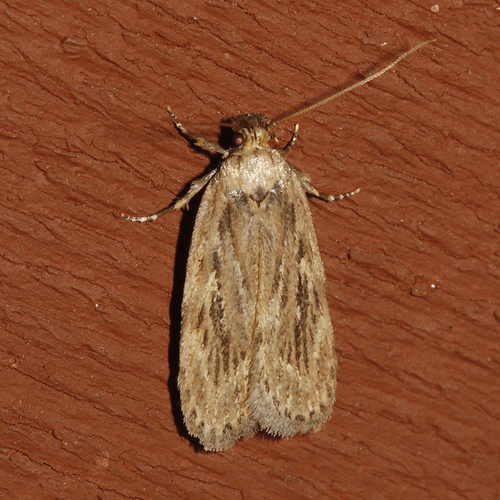
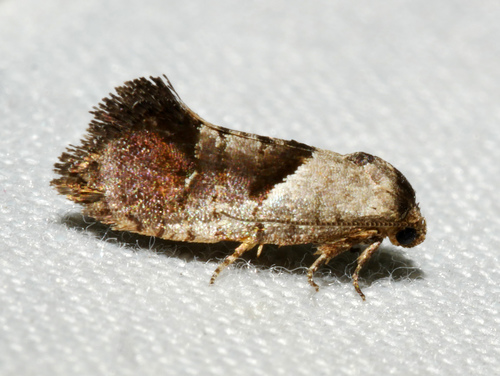
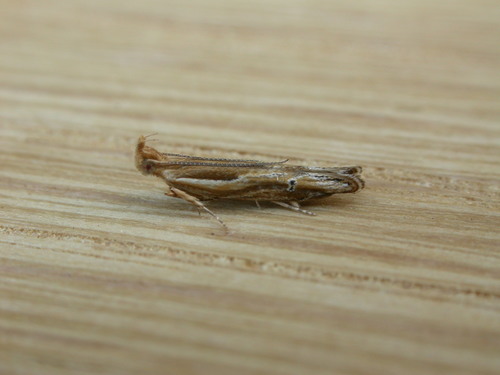
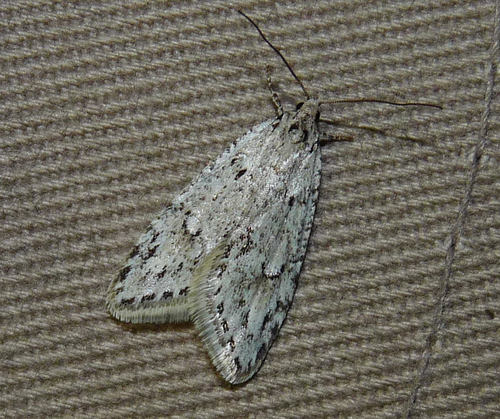
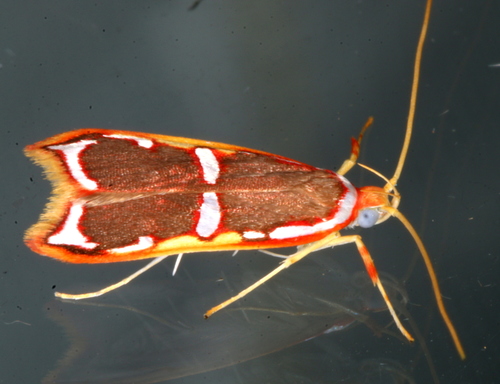
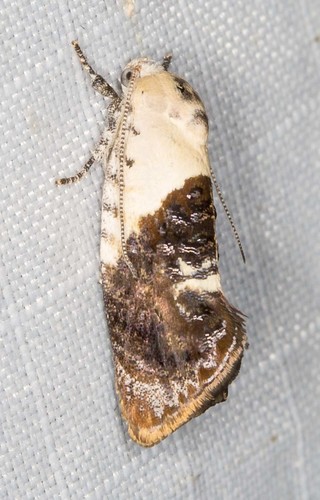
Hypertropha chlaenota is a species of moth in the Depressariidae family, first described by Edward Meyrick in 1887. This moth is found in Australia, with confirmed records from Victoria, Queensland, New South Wales, the Australian Capital Territory, and South Australia. Its wingspan measures 20 to 23 millimeters. The forewings are fairly dark, shiny fuscous with coppery reflections. They feature a large whitish-ochreous basal patch that extends to the middle of the costa and to two-fifths of the inner margin; the outer edge of this patch is nearly straight, and it bears four distinct cloudy blackish strigulae along the costa. A small, irregularly triangular whitish-ochreous spot that contains a dot of the moth's base wing color sits on the inner margin before the anal angle. The area between this spot and the basal patch is densely covered in small bluish-leaden metallic spots. A curved, broken, toothed whitish-ochreous line runs from four-fifths of the costa to the anal angle. This line is preceded by an irregular series of bluish-leaden metallic spots, and a blackish suffusion appears in the disc just before this series of spots. The hindwings are ochreous yellow, with a moderately wide dark fuscous border along the hindmargin. The larvae of Hypertropha chlaenota feed on species of Angophora and Eucalyptus.