About Hyperprosopon ellipticum (Gibbons, 1854)
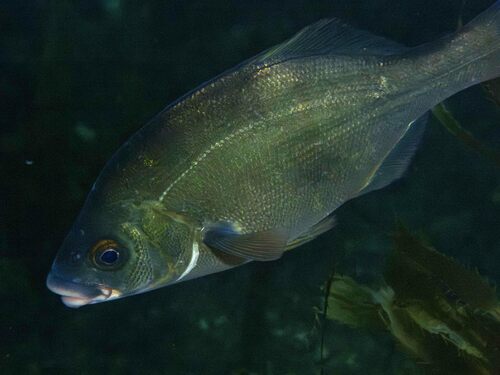
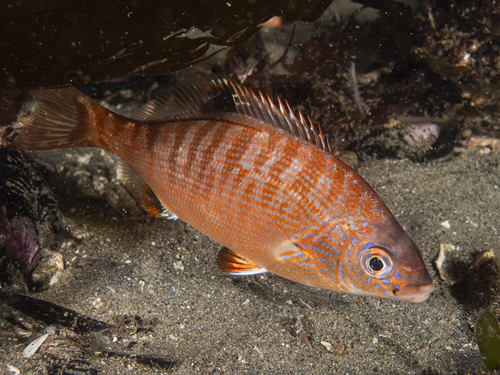
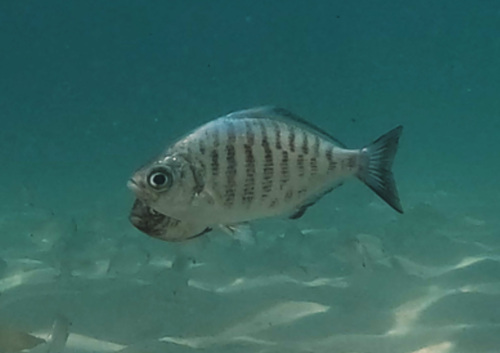
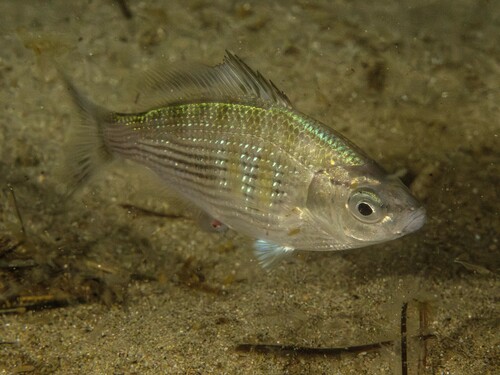
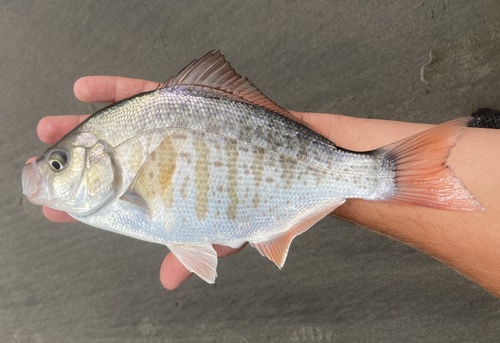
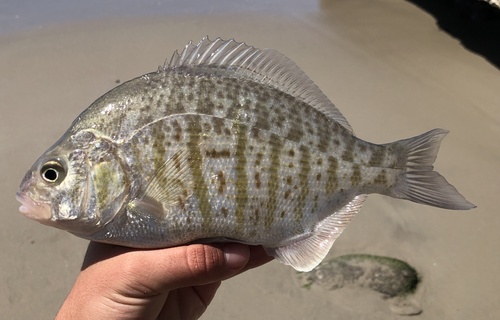
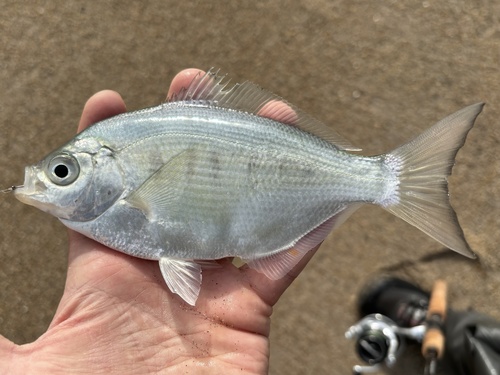
Hyperprosopon ellipticum, commonly called the silver surfperch, has an oval, strongly compressed body, a small head, and a moderately large mouth. The fish’s body is silvery, with dusky brownish to gray coloration on the back, and it may have faint dusky bars along the sides. Its tail is usually pink, and an orange spot occasionally appears on the anal fin. This species can reach a total length of 26.5 centimeters (10.4 inches), though most individuals grow to less than 20 centimeters (7.9 inches), and can weigh up to 0.4 pounds (0.18 kg). It resembles its close relative the walleye surfperch (H. argenteum), but can be distinguished by its lack of black coloring on the pelvic fins, smaller eyes, and lighter fin colors. Silver surfperch range from Rio San Vicente in northern Baja California to Schooner Cove near Tofino, Vancouver Island in southern British Columbia, and are more common in the northern portion of this range. The diet of silver surfperch consists of shrimp, small crustaceans including sand crabs and amphipods, algae, and small fish. These small surfperch primarily inhabit sandy surf zones, but can also be found near shallow rocks, piers, and within bays. They occur at depths ranging from the surface down to 110 meters (360 feet), and often form schools with other surfperch species. Like all surfperch, silver surfperch give birth to live, relatively large young. Mating takes place in fall and early winter. During mating, the male approaches the female from below; the two swim with their vents close together for 2 to 3 seconds, then separate and repeat the process. Between 3 and 17 young are born the following spring and summer. Silver surfperch are reported to live up to 7 years, and males are typically smaller and grow more slowly than females.