About Hypericum pulchrum L.
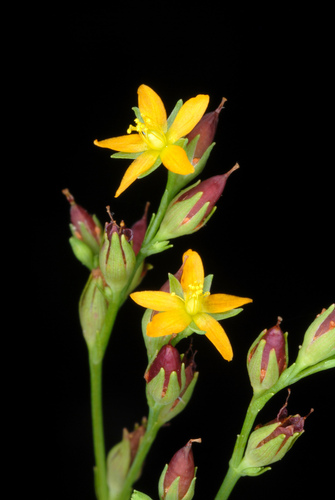
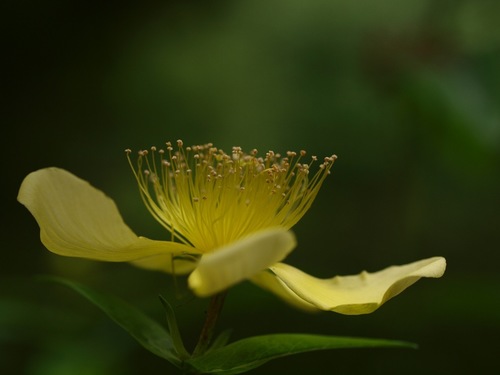
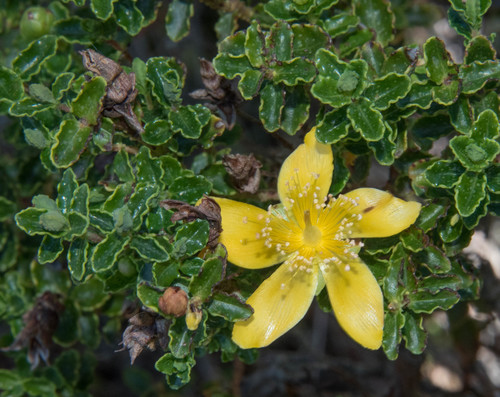
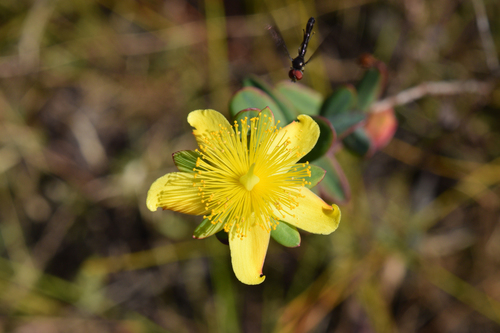
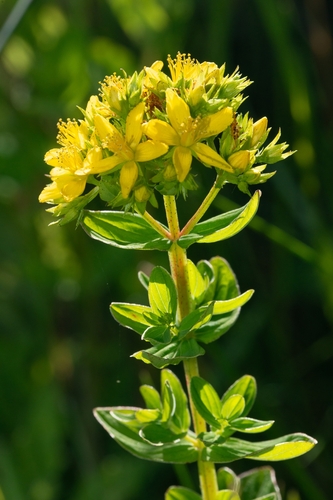
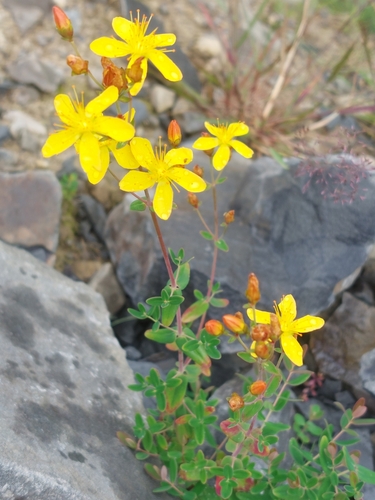
Hypericum pulchrum L. is a delicate, rhizomatous perennial plant that reaches 23 to 46 cm (9 to 18 inches) in height. It produces erect, smooth stems that lack ridges or wings. The plant bears a small number of opposite pairs of untoothed, heart-shaped leaves that half-clasp the stem. These leaves are dotted with transparent spots and often have inrolled margins. Its terminal inflorescence bears deep yellow flowers. Each flower has five small, broad, blunt sepals with black dots along their margins. The five petals are red on their lower surface and carry red and black dots along their margins. Each flower has three styles and many stamens with orange anthers grouped into three bundles. The fruit it produces is a dehiscent capsule. This species is a calcifuge, meaning it avoids growing on calcareous soils. It occurs in heathy areas, dry moorlands, among rocks in upland regions, and on road verges where soils are non-calcareous. Hypericum pulchrum is native to Austria, Belgium, Britain, the Czech Republic, Slovakia, Denmark, Finland, France, Germany, Ireland, Italy, the Netherlands, Norway, Poland, Portugal, Spain, Sweden, and Switzerland. It can be found in appropriate habitats throughout the entire United Kingdom. It has been introduced to New Zealand, where it has spread across the South Island and the southern portion of the North Island.