About Hypericum myrtifolium Lam.
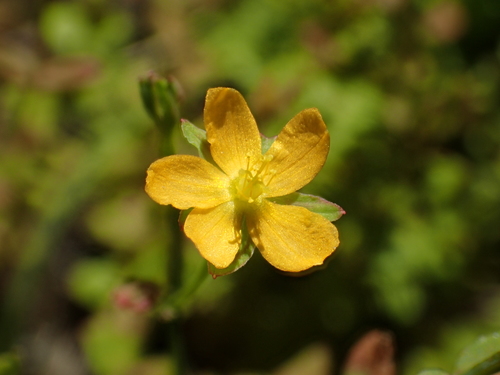
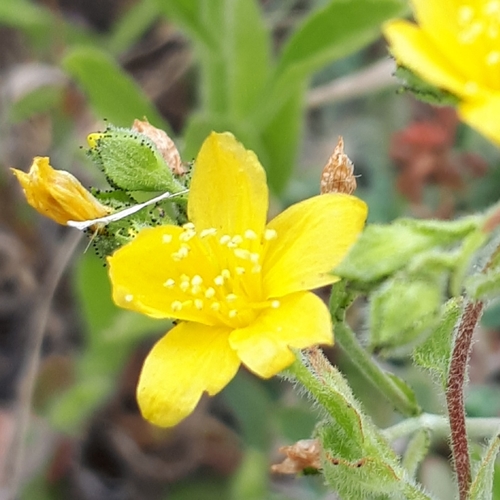
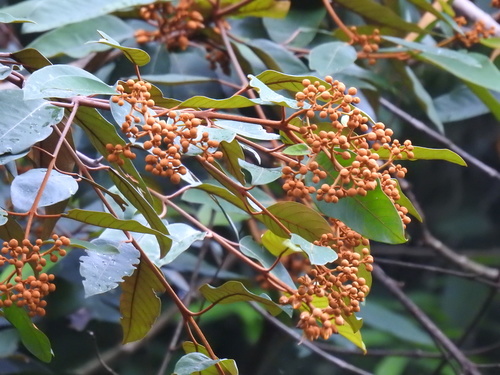
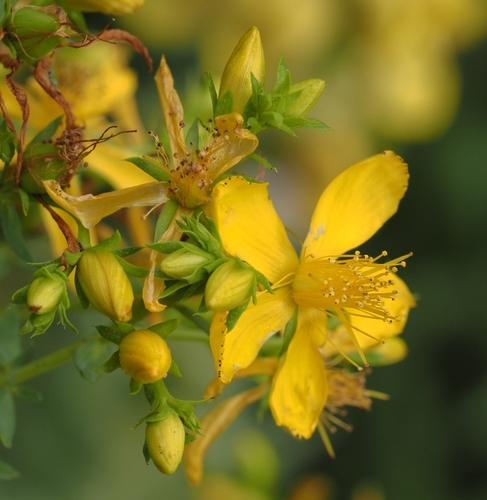
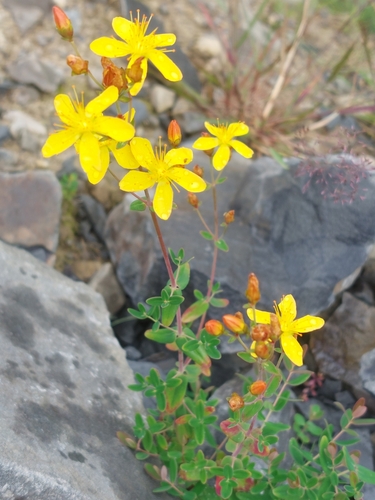
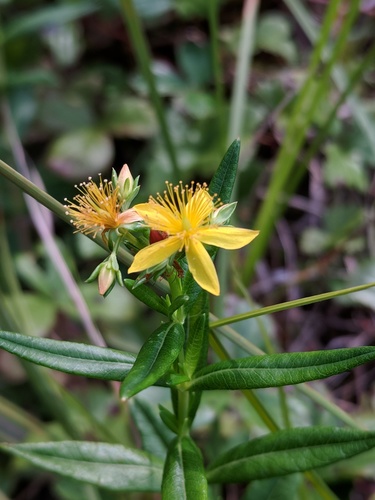
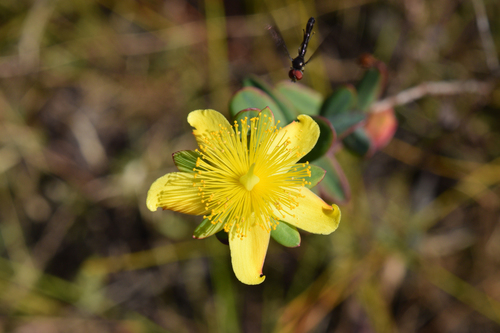
Hypericum myrtifolium Lam., commonly called Myrtleleaf St. John's wort, is a small, erect shrub or subshrub that reaches a maximum height of 1 meter (3 feet 3 inches). Young stems are glaucous and green; as they age, they turn reddish brown and develop greyish, corky bark that peels in strips. Its evergreen leaves are sessile and leathery, typically glaucous on their undersides. The leaves measure 8–40 mm (0.31–1.57 in) long and 5–20 mm (0.20–0.79 in) wide, are oblong to lanceolate in shape, and develop recurved margins when they dry. This species produces branching flowerheads that hold 7 to 30 flowers arranged in a dichasium. Each flower can grow up to 25 mm (0.98 in) across, with 5 persistent sepals, 5 bright yellow petals, and approximately 200 stamens. Flowering occurs from late spring to summer, between May and July. Its ovary is divided into three or four sections, which separate at the top as the fruit ripens to produce blackish-brown seeds. Hypericum myrtifolium can be distinguished from the closely related species Hypericum frondosum by its shorter, usually clasping leaves, its broadly branching dichasial flowerheads, and its persistent sepals. In terms of distribution and habitat, Hypericum myrtifolium grows in wet pine flatwoods, graminoid bogs, roadside ditches, and other wetland areas with sandy or peaty soils. It is endemic to the coastal plain of the Southeastern United States, where it occurs across most of Florida and in portions of South Carolina, Georgia, Alabama, and Mississippi.