About Hypericum microsepalum (Torr. & A.Gray) A.Gray
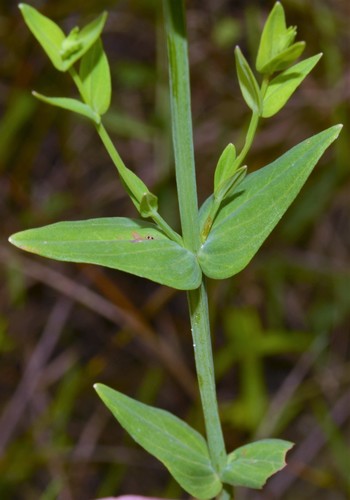
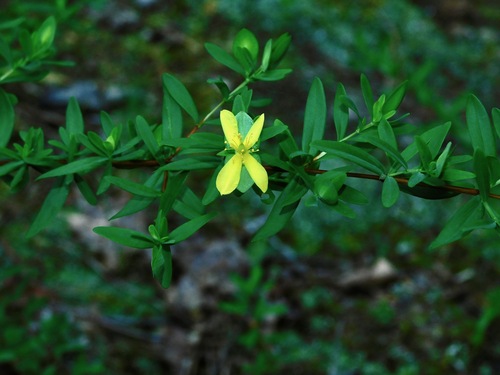
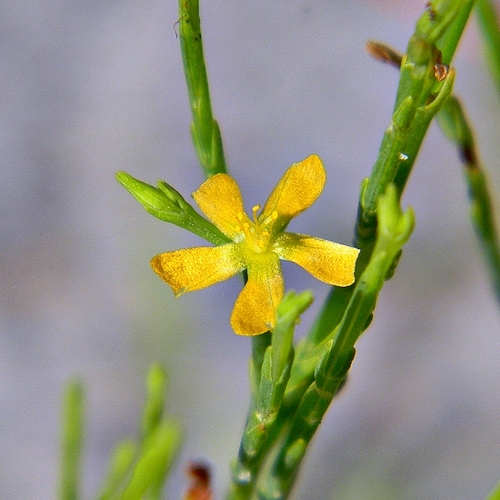
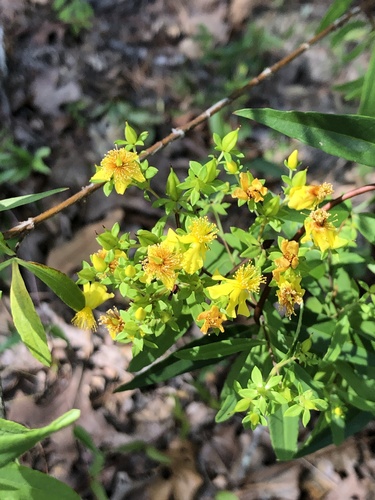
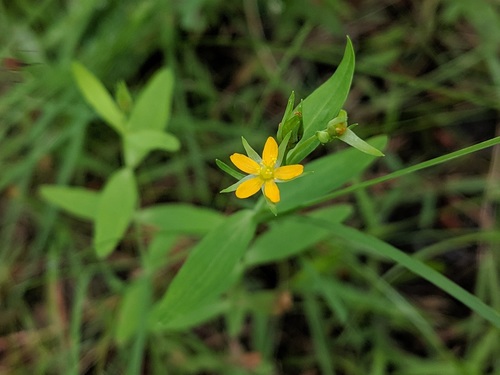
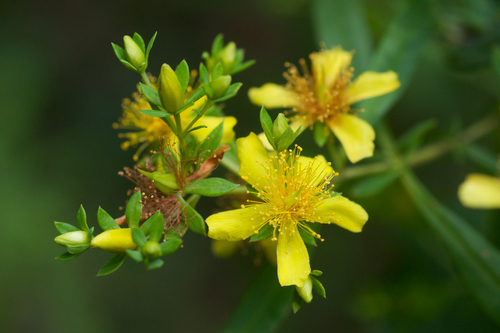
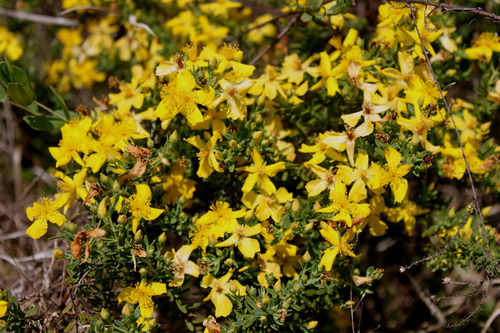
Hypericum microsepalum (Torr. & A.Gray) A.Gray is most commonly a hairless herb or shrub. Its features include simple, opposite, entire leaves that are often dotted with small glands, and typically lack stalks or have very short stalks. No stipules are present on the leaves. Its inflorescences are mainly cymose, and the flowers are bisexual, radially symmetrical, have small bracts, and are either nearly stalkless or held on short stalks. Flowers have 2, 4, or 5 persistent sepals, and 4 or 5 petals that are usually yellow or pink and often remain on the plant after flowering. There are between 5 and many stamens, which are either free from one another or joined at the base into 3 to 5 clusters, with filaments that persist after flowering. The ovary is positioned above the other flower parts, formed from 2 to 5 carpels; the styles and stigmas may be free or fused. The ovary can be single-chambered, or partially to fully divided into 2 to 5 chambers, with either axile or parietal placentation. The fruit is a capsule, typically ovoid in shape, that splits open lengthwise, and retains the persistent styles. The plant produces numerous shiny seeds, which are either cylindric or oblong in shape with an areolate surface texture. Hypericum microsepalum occurs across an area stretching from southern Georgia and southeastern Alabama, south to the Florida panhandle. It grows in moist to wet pine flatwoods, and can also be found in dry upland pine savannas that experience fire every 2 to 3 years. This species flowers between February and May. Its dehiscent septicidal capsules hold numerous seeds, which are dispersed by gravity, and occasionally by birds. The plant has an approximate lifespan of 10 years, and maintains a persistent seed bank in the soil.