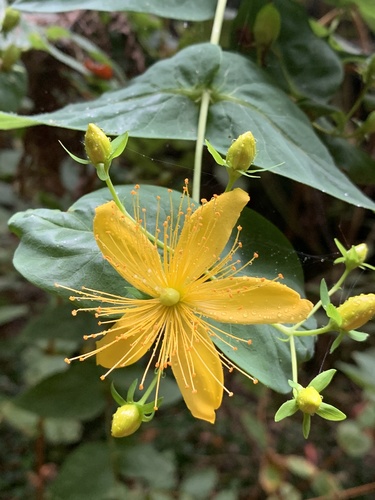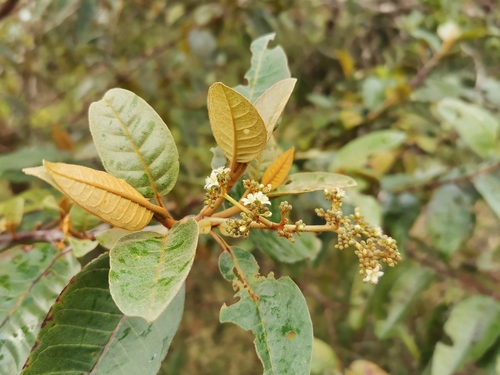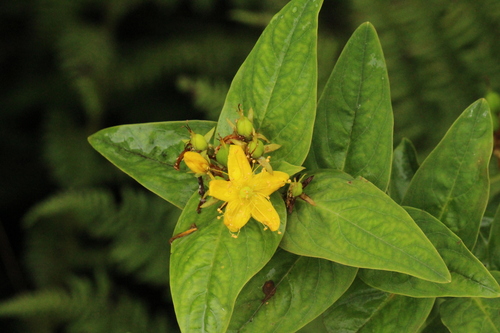
About Hypericum foliosum Dryand. ex Aiton
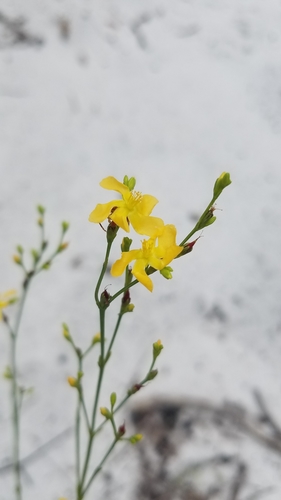
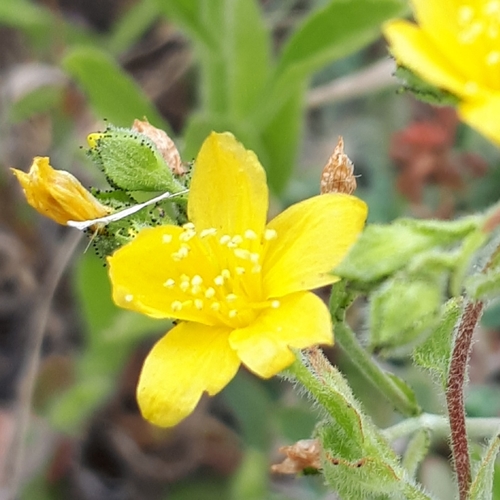
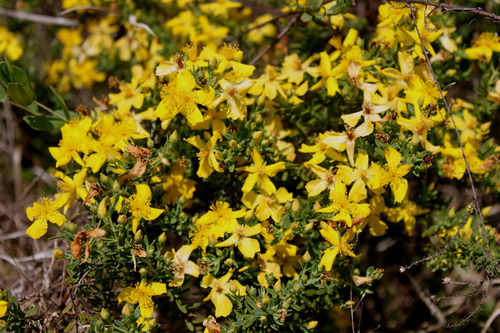
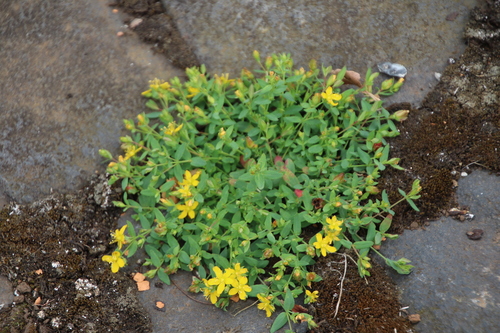
Hypericum foliosum Dryand. ex Aiton is a perennial shrub that grows 50 to 100 centimeters (20 to 39 inches) tall at minimum. It can take a bushy form, with branches growing both upright and outward from the plant's center. It typically produces flowers in August. This species is endemic to the Azores Islands in the North Atlantic, and occurs on every island in the group. It grows in the archipelago's laurel and juniper forests, most often in shady, damp areas of mountainous terrain at elevations between 220 and 800 meters (720 to 2,620 feet). It also grows in established Pittosporum tree stands, and rapidly colonizes volcanic ash deposits. In general, it readily colonizes recently cleared areas including human-made clearings and landslide sites. Populations at any given site usually consist of just a small number of individual plants. The leaves of H. foliosum host several parasites. The rust fungus Melampsora hypericorum forms pustules on leaf surfaces, causing damage to the leaf. Larvae of the moth Caloptilia aurantiaca mine into the leaves, then later live under the folded tip of the leaf blade. H. foliosum is not directly threatened by competition from invasive species or human activity, and the IUCN listed it as Least Concern in 2016. Even so, it has been studied as a model for using micropropagation as a conservation method in the Azores; micropropagation had previously been used for Hypericum perforatum and Hypericum canariense. A single node of H. foliosum propagated through this method can produce 2 to 4 new plants in approximately four months. As of 2011, no official pharmacological uses of Hypericum foliosum had been recorded. However, Azorean locals report that the species is used in traditional medicine in similar ways to other members of its genus. Some of these uses rely on the diuretic, hepatoprotective, and antihypertensive properties of the plant's extract. While H. foliosum has higher phenolic activity than H. undulatum and H. androsaemum, those two species are at least as common as H. foliosum in Portuguese medicinal markets. H. foliosum has shown in vitro antibiotic effects against infectious bacteria including Staphylococcus aureus. Carotenoid and phenolic compounds in the plant give its extract antioxidant properties. The lower parts of the plant, including the stem, bark, and roots, have the highest effectiveness for these properties.