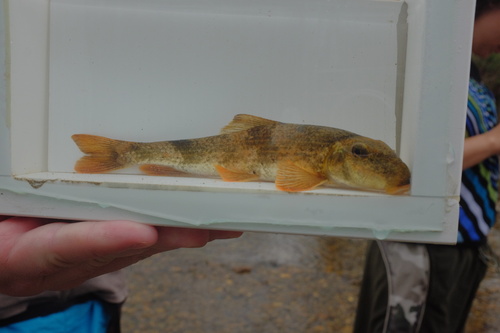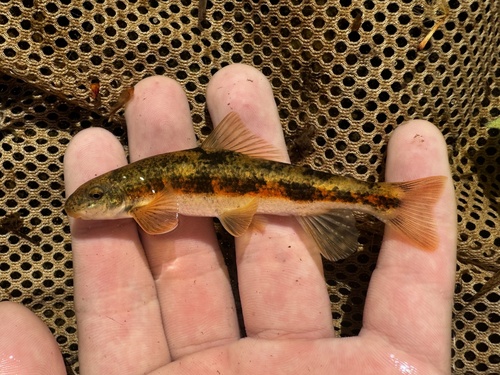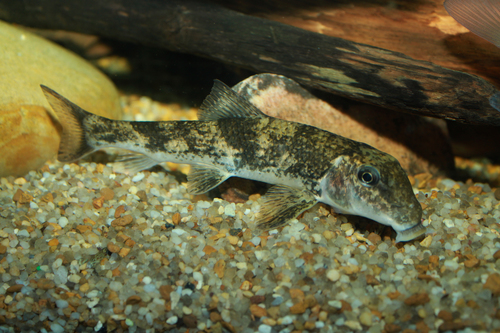
About Hypentelium nigricans (Lesueur, 1817)
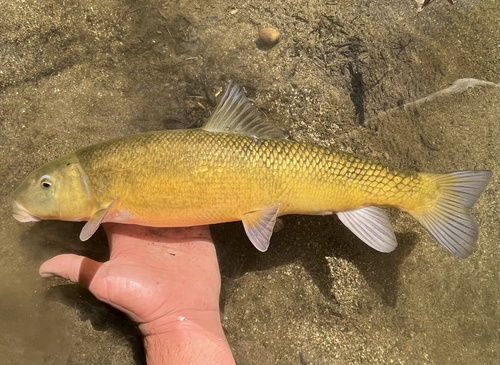
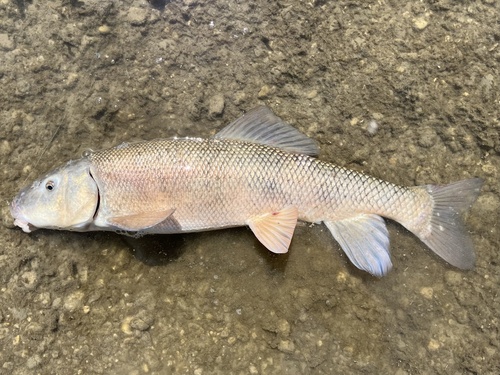
The northern hogsucker, Hypentelium nigricans, is a freshwater ray-finned fish in the sucker family Catostomidae. It is native to the United States and Canada, where it lives in streams and rivers. It prefers clear, fast-flowing water, where it forages on the riverbed for crustaceans, mollusks, aquatic insects, algae, and detritus. While feeding, it turns over small pebbles, scrapes material from rocks, and sucks up loosened particles. Other fish species sometimes position themselves downstream to feed on the material stirred up by the northern hogsucker's feeding activity. Breeding occurs on gravel bottoms in shallow riffles in late spring. This species is vulnerable to human-caused disturbances including channelization, sedimentation, pollution, and dam construction. Because it has a wide range and is a common species, the International Union for Conservation of Nature lists its conservation status as least concern. The northern hogsucker is native to southern Canada and most of the eastern and southern United States. It inhabits rivers in the Mississippi River Basin, with its range stretching from Oklahoma and Alabama north to Minnesota. It is also found in the Great Lakes and in rivers of the mid-Atlantic region. Its current distribution matches its historical range, except in western areas where local extirpations have occurred. Habitat disturbance from agricultural practices in South Dakota, Iowa, Missouri, Kansas, and Oklahoma has contributed to these extirpation events. Males of this species reach sexual maturity in their second year, while females usually do not mature until their third year. Individuals living in smaller streams grow to smaller sizes and take longer to reach maturity. Hypentelium nigricans can grow up to 33 cm (13 in) by the end of its fifth growing season. Exceptionally large specimens are usually female, and the species has a maximum lifespan of around 11 years. The northern hogsucker can be found in or adjacent to riffle areas in warm, medium-sized creeks and small rivers. It also occurs in cold water streams, tiny creeks, large rivers, and occasionally in reservoirs. Its diet consists mainly of insect larvae, crustaceans, mollusks, diatoms, and bits of vegetation. While feeding, it scrapes the top surface of rubble, turns over bottom stones, and sucks up loosened material that contains small organisms. Species including shiners and smallmouth bass position downstream to feed on the loose material stirred up by the hogsucker during feeding. Predators of the northern hogsucker vary based on its environment. Young northern hogsuckers living in shallow, fast-flowing streams are preyed on by other fish-eating species. Adult northern hogsuckers are typically among the largest species in their waterways. In the northern part of the species' range, where it lives in deeper streams and lakes, it is hunted by large predatory fish such as muskellunge and northern pike. The northern hogsucker sometimes competes with other sucker species and redhorse for breeding habitat. During spawning, daces, minnows, and chubs sometimes feed on the freshly laid eggs. Spawning occurs in shallow water riffles, most often in May, when water temperature is around 15 °C (59 °F). Breeding males gather in these gravel areas, and a single receptive female may be courted by multiple males. Spawning activity is vigorous, and the commotion creates shallow depressions in the gravel. The eggs are non-adhesive and settle into the gravel. Young-of-the-year and fry swim in schools and prefer shallower environments (less than 30 cm deep) than adult northern hogsuckers.