About Hyoscyamus albus L.
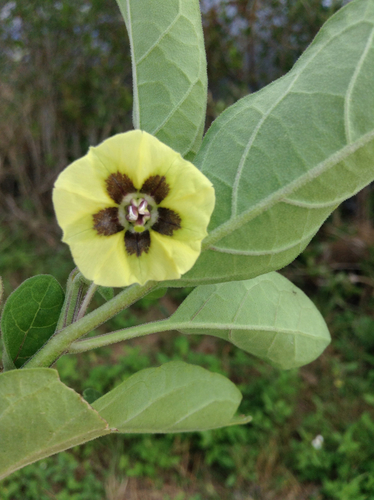
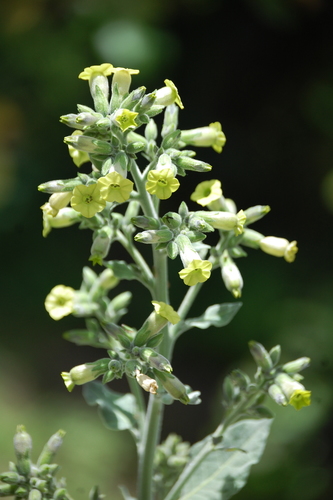
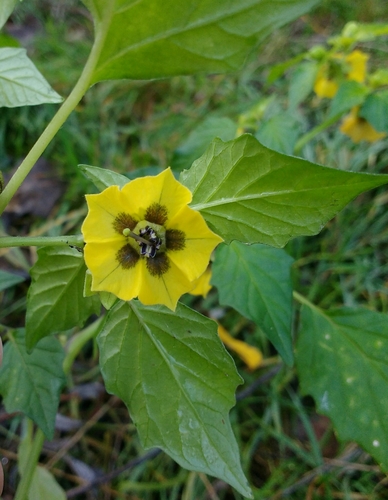
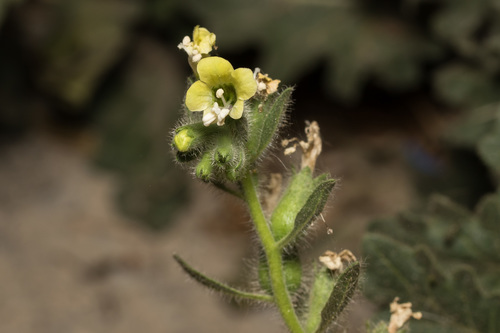
Hyoscyamus albus L. is an erect, sticky plant 20 to 80 cm tall, covered in glandular-woolly hairs. All of its leaves are stalked, ovate, and have blunt, sinuate teeth. Its flowers measure 3 cm across; only the lowest flowers are stalked. The flowers are arranged in dense, leafy, spike-like inflorescences, and most face the same direction. The corolla is tubular to bell-shaped, almost regular, and has 5 lobes. It is glandular hairy on the outside, usually yellowish white, with a green or purple throat. Anthers do not protrude, or only protrude slightly. When fruiting, the calyx is 2 to 2.5 cm long and densely covered in glandular-woolly hairs. This species is slightly poisonous, and flowers from March to September. It grows on waste ground, road sides, and walls, and is often found near and within human settlements including villages, towns, and ancient sites. Its native range spans the Mediterranean region, the Canary Islands, and extends eastward to southern Russia and Iraq. In mythological tradition, the discovery of the hallucinogenic properties of this species, commonly called white henbane, is attributed to the Greek divine hero Heracles. Hippocratic school doctors prepared an infusion of its seeds in wine to treat fever, tetanus, and female disorders, including paralysis that occurred after childbirth. Dioscorides used both its pounded seeds and leaves soaked in hot water to deaden pain; he preferred white henbane over other Hyoscyamus species, as it was less likely to cause madness and worked well to induce sleep.