About Hynobius yangi Kim, Min & Matsui, 2003
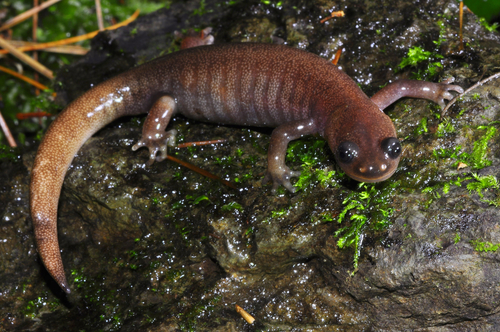
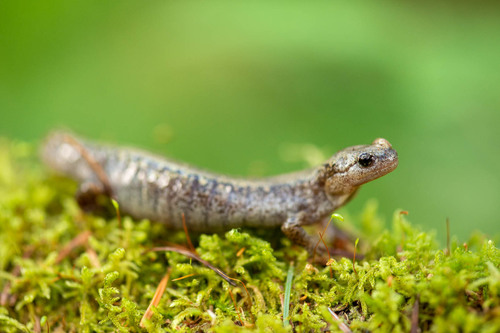
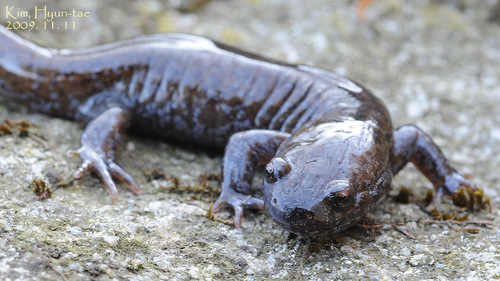
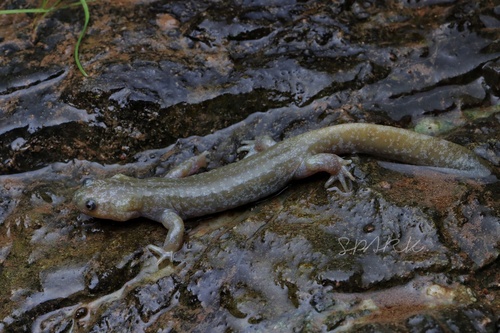
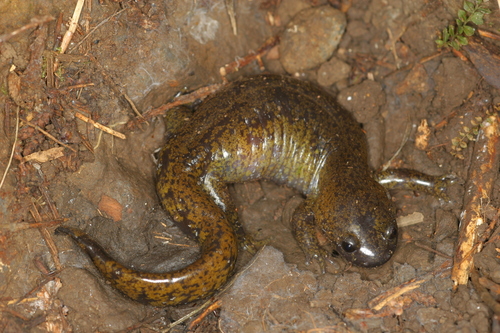
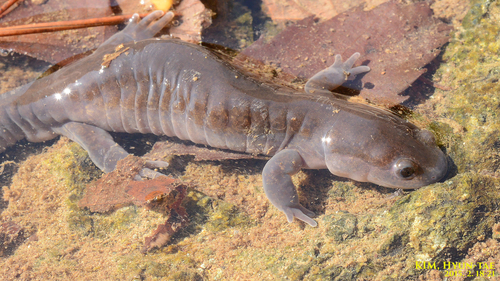
For Hynobius yangi, adult males have a snout–vent length of 42–63 mm (1.7–2.5 in), based on 18 measured individuals; adult females have a snout–vent length of 57–61 mm (2.2–2.4 in), based on 3 measured individuals. Tail length ranges from approximately 70% to 90% of snout–vent length, and males have relatively longer and higher tails than females. The dorsum may be olive and lack dark speckles, or it may be dark brownish and finely dotted with yellow speckles in some individuals. The underside of the body is a lighter shade than the dorsum. This species breeds from late February to late March, and its egg sacs are coil-shaped. One measured female had a clutch size of 86 eggs, each around 2.8 mm (0.11 in) in diameter. Hynobius yangi lives in hilly forest areas, and breeds in still water found in ditches. Egg sacs attach to water plants or fallen branches in these breeding sites. The IUCN has assessed Hynobius yangi as Endangered, due to its small distribution area and ongoing habitat loss.