About Hymenopus coronatus Olivier, 1792
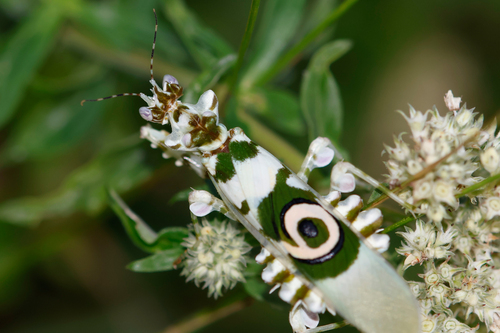
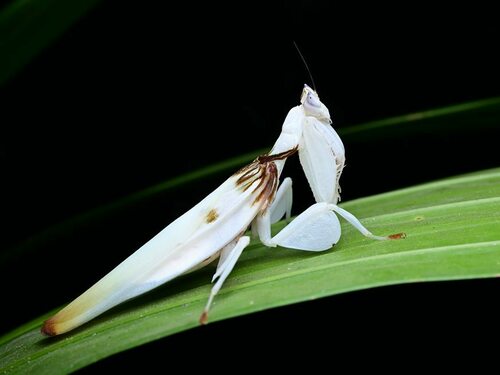
This mantis species mimics parts of orchid flowers. Its four walking legs look similar to flower petals, while its toothed front pair of legs is used to grasp prey, just like in other mantises. Hymenopus coronatus has one of the most extreme examples of sexual size dimorphism among all mantis species; adult males can be less than half the size of adult females. Female predatory selection is likely the main driver that led to the evolution of this extreme sexual size dimorphism. Before this mantis develops its full flower camouflage, the female uses ambush predation to hunt larger pollinating insects. One example of this ambush behavior is the orchid mantis ambushing foraging butterflies, which are fairly large prey. It captures these butterflies using its toothed front arms and a powerful bite. As female mantises continue to develop, most of their dramatic increase in size can be linked to predatory selection and ambush predation. First-stage nymphs of this species mimic reduviid bugs, a group that has a powerful bite and a foul taste. This mantis can change its color between pink and brown to match the color of its background. Hymenopus coronatus occurs in tropical regions of Southeast Asia, including Cambodia, Indonesia, Laos, Malaysia, Myanmar, Singapore, Thailand, and Vietnam. Its range may also extend into the far eastern regions of India and Bangladesh. This matches the northernmost historic record, which was collected from Sivasagar (recorded as "Sibságar, Assam") in Northeast India by Wood-Mason in 1878.