About Hymenophyllum peltatum (Poir.) Desv.
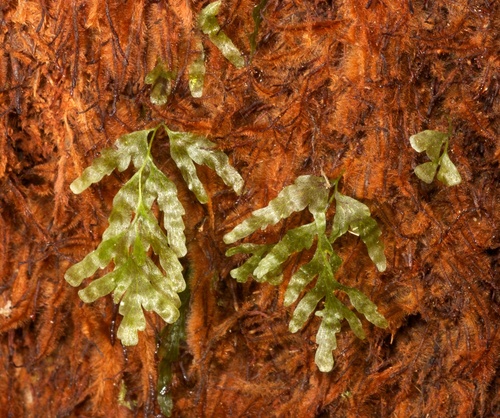
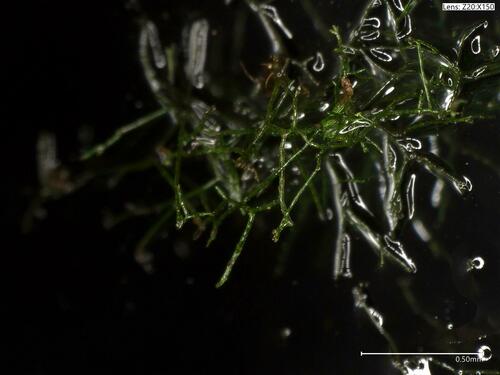
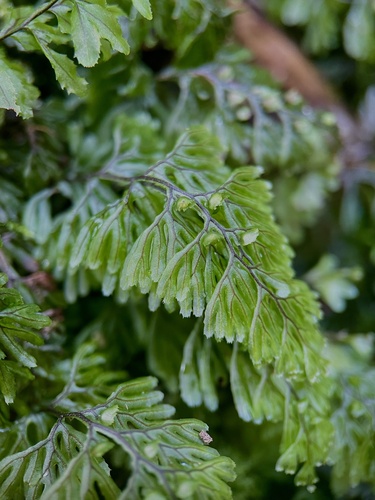
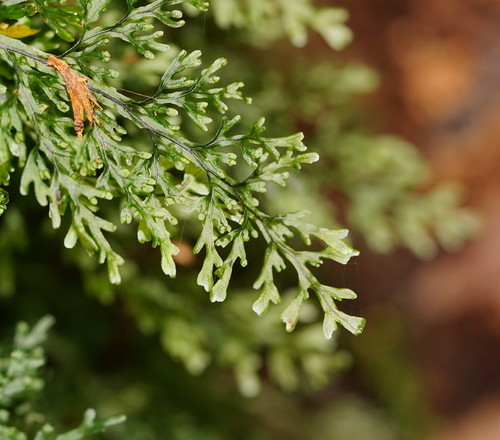
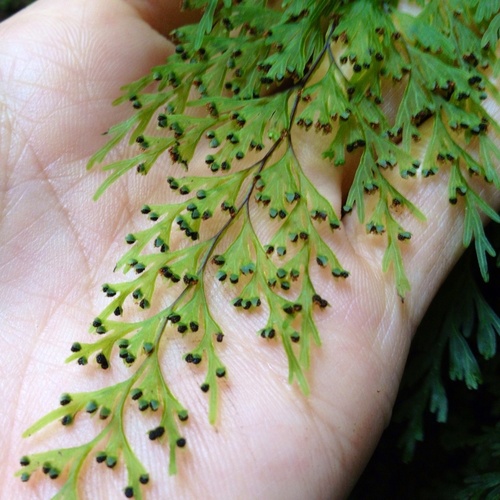
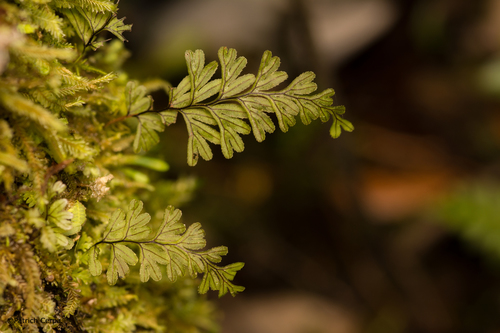
Description: Rhizome. The near-hairless (glabrescent) rhizome of Hymenophyllum peltatum grows as a creeping, interlacing thread across a range of substrates. These substrates include larger ferns like Dicksonia antarctica, rocks, and fallen logs. Leaves. Each frond is made up of multiple dark-green pinnae that contain multiple laminae, which have toothed margins and a single vein each. Frond length ranges from 1.5 to 17 cm. H. peltatum can be told apart from similar close relatives, such as H. cupressiforme, by its distinct apically winged foliage. This feature means branching only occurs on the apex side, toward the main stem, a pattern called acroscopic branching. Between 1 and 2 sori grow on the acroscopic side of each primary pinna. When mature, each sorus attaches via a small, peltate branch, which is how the species got its name peltatum. The sorus is a funnel-shaped receptacle that holds numerous sporangia; each sorus measures approximately 1 to 2 mm long and 0.5 to 1 mm wide. The indusium forms a two-lipped cleft, with smooth entire margins that protect developing sporangia. Habitat and distribution: While H. peltatum is less common than H. cupressiforme, it is widespread and occurs in cool temperate to sub-tropical rainforests around the world, including in Australia, New Zealand, South Africa, and South America. It is one of 19 Hymenophyllum species native to Australia, where it can be found throughout Tasmanian alpine regions, Victoria, and New South Wales, and occurs rarely in Queensland. Its typical habitats include wet, mossy banks, rocks, and logs. It also grows as an epiphyte on tree species such as Nothofagus cunninghami and Atherosperma moschatum.