About Hymenocera picta Dana, 1852
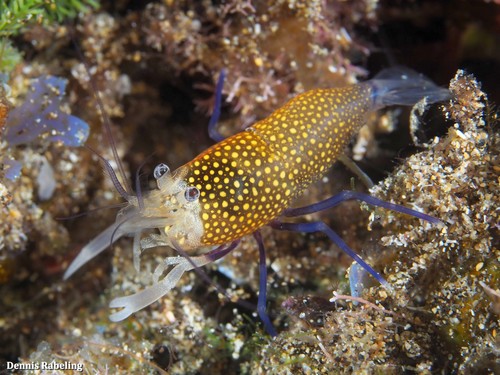
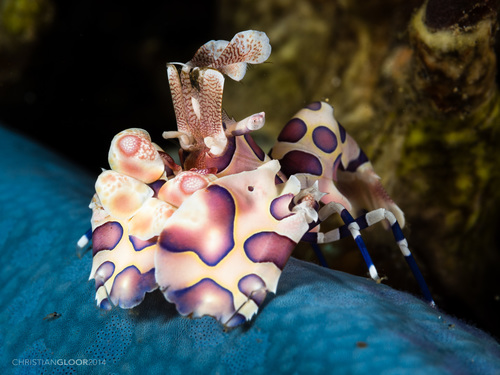
Hymenocera picta, commonly called the harlequin shrimp, is usually cream or white with occasional spots. Populations across different regions have distinct spot colors: Pacific Ocean individuals typically have red spots, Indian Ocean individuals usually have purple spots, and Hawaiian H. picta have both purple and red spots on their bodies. Each side of the shrimp has two walking legs, plus large claws called chelipoda. Both the claws and eyes are flattened and thin in shape. On its head, the shrimp has petal-like sensory antennules that it uses to detect prey by smell. Adult harlequin shrimp usually grow up to 5 cm (2 inches) long, and males are slightly smaller than females.
Harlequin shrimp are found on coral reefs from Hawaii across the Indo-Pacific, living below the intertidal zone. They prefer water temperatures between 72–82°F, and are currently very rare due to changes to coral reef habitats.
Harlequin shrimp move very slowly in a waving motion. They constantly move their claws almost nonstop. They can retain toxins from their main prey, starfish, which makes them distasteful and potentially dangerous to predators. Females are larger than males, and have colored abdominal plates that males lack. A female produces between 100 and 5,000 eggs per breeding season, with the number depending on environmental conditions. Males and females are commonly found together in the wild, and partner to both reproduce and forage for food.