About Hylobius transversovittatus (J.A.E.Goeze, 1777)
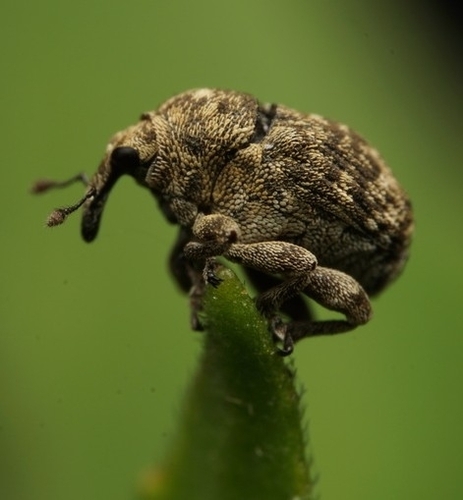
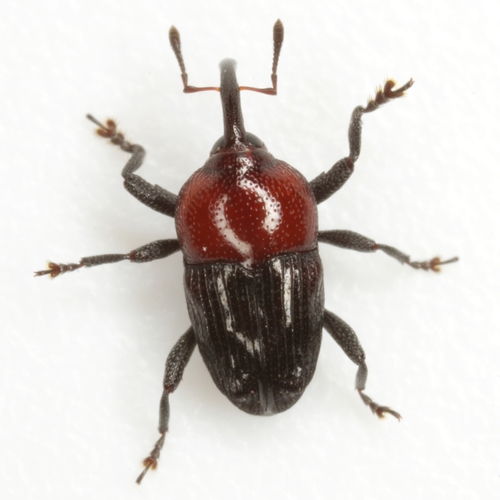
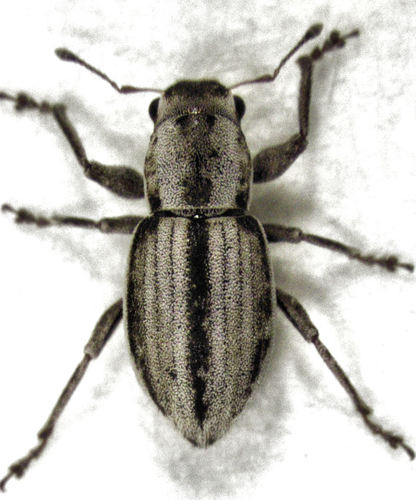
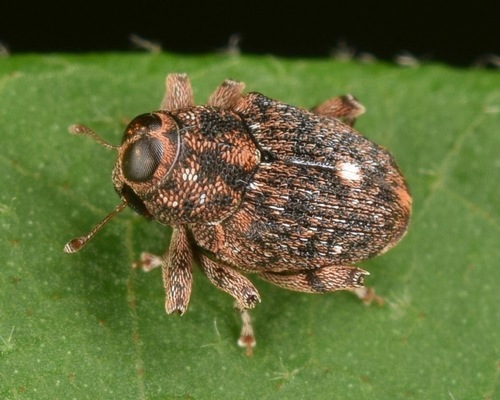
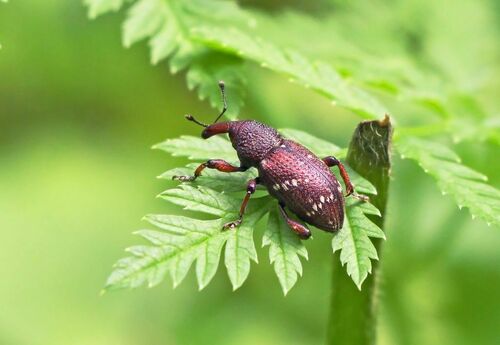
Adult Hylobius transversovittatus weevils are dark brown, marked with two irregular transverse lines of white hair tufts. Adults measure around 13 millimeters long and 6 millimeters wide, with a narrow head and thorax, a curved trunk-like proboscis, elbowed antennae, and reddish legs. The eggs of this species are white or pale yellow, oval-shaped, and hatch after approximately two weeks. Larvae are creamy-colored with dark brown heads, and have a crescent shape. Hylobius transversovittatus is used in the biological control of purple loosestrife, a plant native to Europe, Asia, northwest Africa, and parts of Australia. This weevil is one of several insect species naturally associated with purple loosestrife in the plant’s native range: adult weevils feed on purple loosestrife foliage, while larvae tunnel through and consume the plant’s roots. When purple loosestrife was introduced to North America, this natural controlling insect was not present, so the plant grew rampant. It now forms large dense stands across the northeastern United States, southeastern Canada, and the American Midwest, where it outcompetes native species and threatens local biodiversity. Starting in 1992, weevils and their eggs were introduced to test sites in Virginia for biocontrol. The species successfully established; six years after introduction, 28% of tested purple loosestrife roots were infested, and larvae were detected in roots 400 meters downstream from the original release site. While feeding by adult weevils causes little damage to purple loosestrife, larval activity—especially when multiple larvae occupy a single rootstock—weakens the plant, increases its vulnerability to stressful conditions, and reduces how many seeds the plant produces.