About Hylobius pales C.H.Boheman, 1834
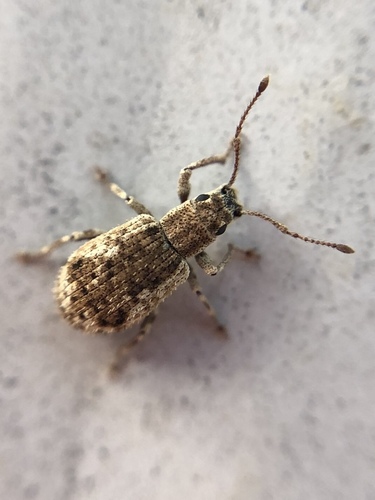
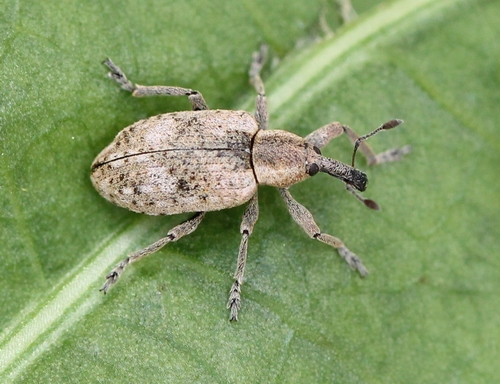
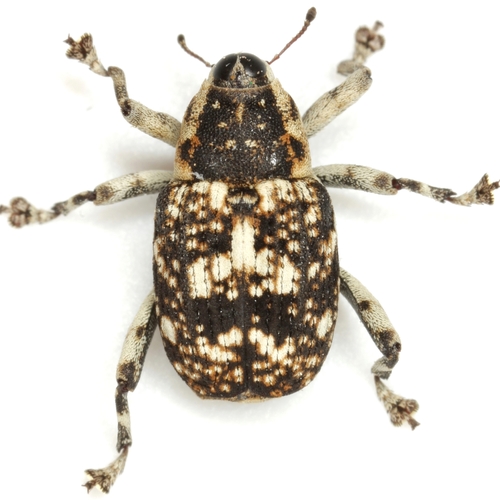
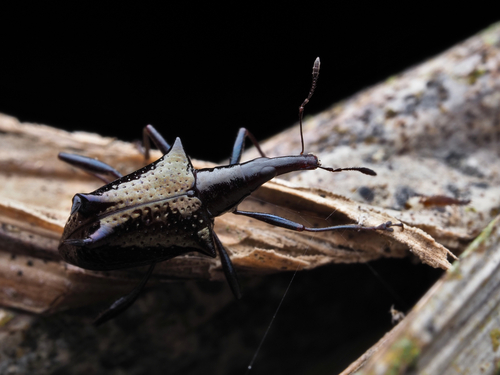
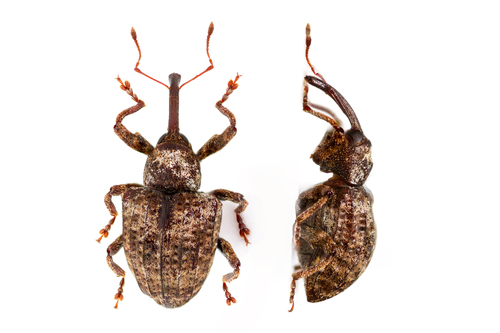
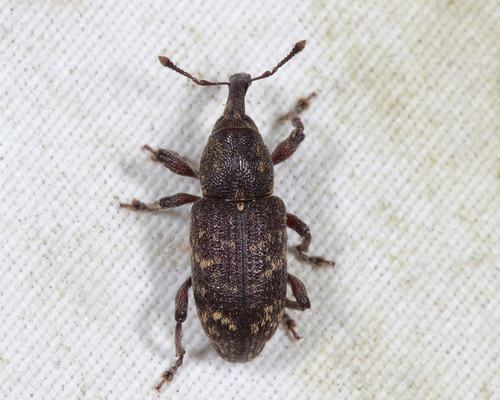
Adults of Hylobius pales, also called pales weevils, are dark red-brown, with clusters of yellowish or gray hairs scattered across their elytra and thorax. The species' characteristic rostrum (snout) is robust, cylindrical, and gently curved, and it is nearly as long as the weevil's thorax. The antennae are positioned before the middle of the snout, and not far from the sides of the mouth. Individual adult weevils measure between 5.8 mm and 11.3 mm in total length. This species is distributed across most of the eastern half of the United States, Puerto Rico, and Canada, and its range matches the range of conifers that it inhabits. Adult pales weevils lay their eggs in the stumps and roots of suitable host plants, which are typically pine species. Larvae tunnel through and feed on the tree's vascular tissues until they pupate, a stage that occurs after the larva reaches its fifth or sixth instar. Fully developed adult weevils then emerge through the tree bark. Southern populations of H. pales may produce two or more generations per year. Weevils in more northern latitudes usually only have one generation per year, and some adults overwinter for two full years.