About Hylobittacus apicalis (Hagen, 1861)
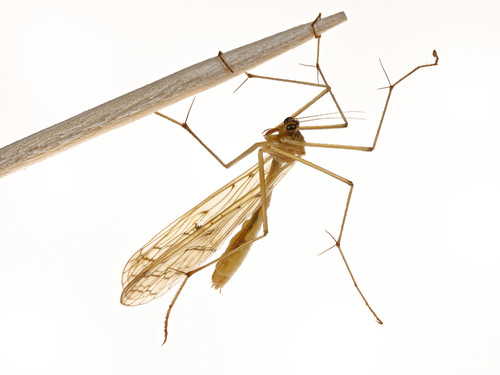
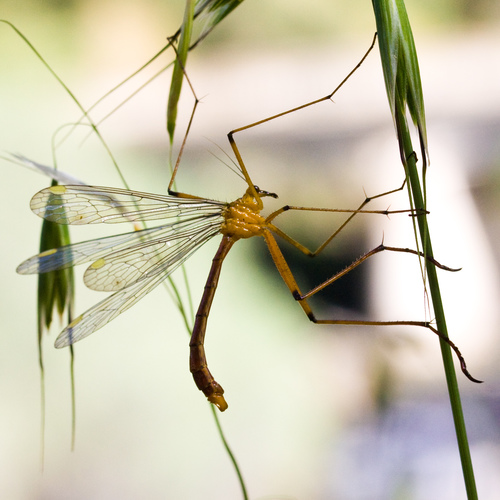
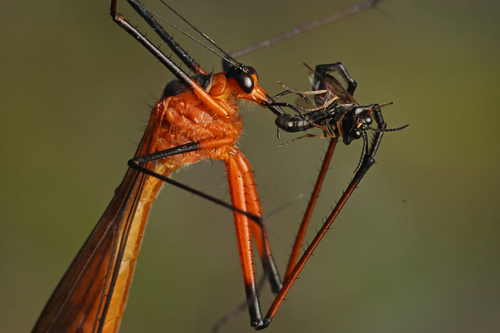
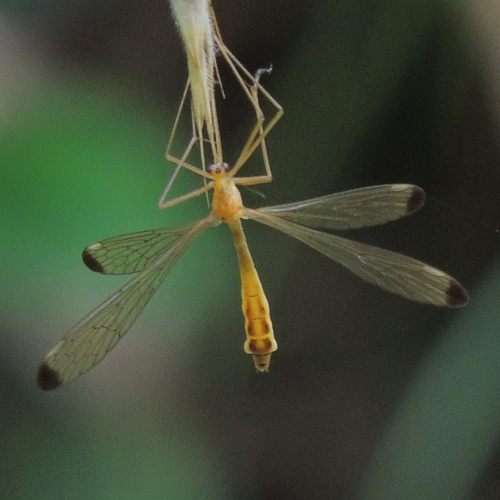
Hylobittacus apicalis is a holometabolous insect that has two pairs of wings. Adult individuals of this species are medium-sized, reaching a body length of around 1.9 centimeters. Proportionally to their body size, their antennae are short. Hylobittacus apicalis is widely distributed across the lower United States, and it is the most common hangingfly species in Illinois. There is also an isolated population of this species living in Mexico. Adult Hylobittacus apicalis live near small herbaceous plants, and they are active during the day, which makes this species easy to study. Adults can be found from late April to early August. Males and females of this species can be distinguished by clear sexual dimorphism in the structure of their abdominal segments. Hylobittacus apicalis can fly, but its flight is slow, and it only completes short flights, usually covering less than 4 feet. When not flying, adults hang from foliage using their front legs; this behavior is what gives the family Bittacidae its common name of hangingflies. Their wings stay extended when they hang at rest. Because their tarsi are specialized for hanging from foliage, adult Hylobittacus apicalis find walking difficult or impossible – the tarsi cannot support the insect’s body weight. Populations of this species can grow as large as several thousand individuals, and they can coexist in the same area with other Mecoptera populations.