About Hylarana taipehensis (Van Denburgh, 1909)
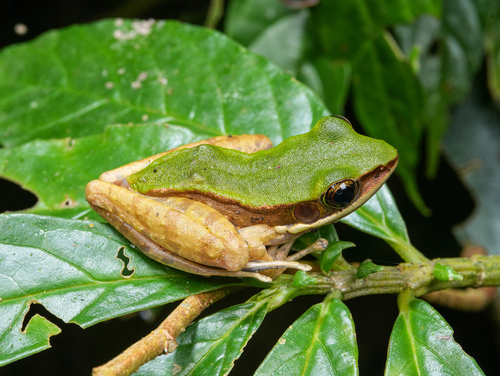
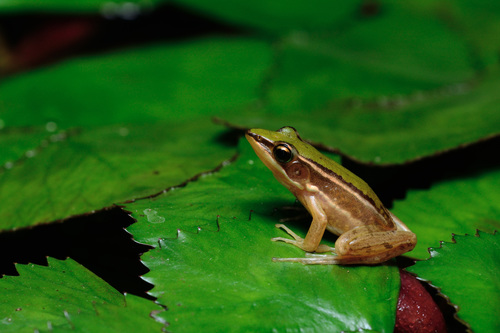
Males of Hylarana taipehensis usually reach a maximum snout-vent length of 3 cm (1.2 in), while females are less than 4 cm (1.6 in) in snout-vent length. The dorsum ranges from yellowish green to greenish brown, and the sides are light yellowish brown. Paired dorso-lateral glandular folds appear as brownish black lines. The limbs are light brown and marked with dark brown stripes. The abdomen and neck each have tiny spots plus three brownish black stripes. The tympanum, and the area behind and below the tympanum, are dark blackish brown. Hylarana taipehensis lives in open, grassy wetlands, rice paddies, river floodplains, forest ponds, and swampy areas within deciduous forests. It is often a common species. Breeding occurs at water edges sheltered by thickets. This frog can adapt to agricultural habitats, but it may be threatened by pesticides, and is sometimes persecuted as a pest. It is classified as endangered in Taiwan, but is not considered threatened globally, and is found in many protected areas. Its overall population is considered stable, but scientists note it is sensitive to habitat changes. Chemicals including fertilizers, pesticides, and general pollution are all harmful to this species.