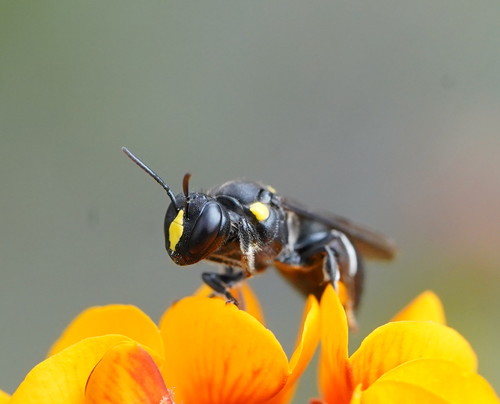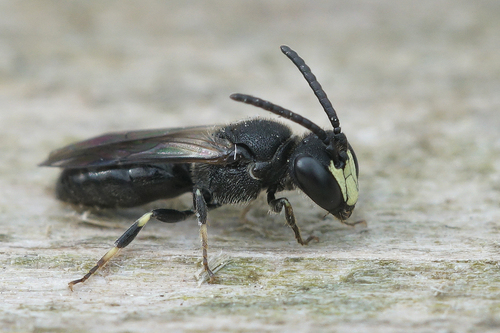
About Hylaeus communis Nylander, 1852
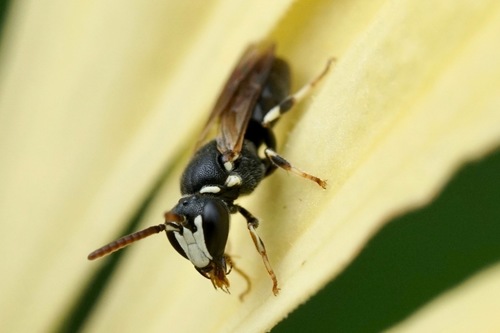
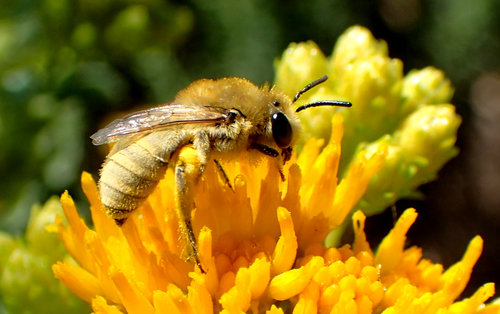
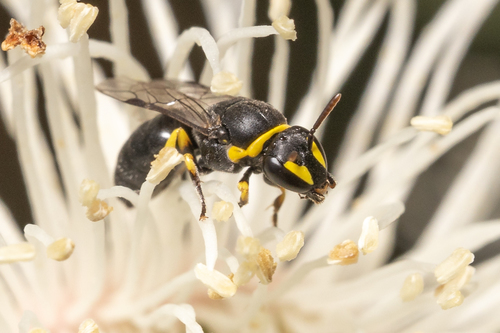
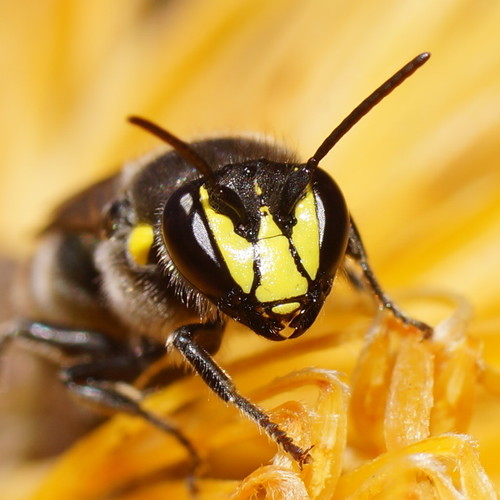
Adult Hylaeus communis Nylander, 1852 measure 4.5–7 mm in length. This species cannot be distinguished from other Hylaeus species when observed in the field. Its range extends from Portugal across Europe, Asia Minor, and the Caucasus to Central Asia. To the north, it reaches Ireland, central Scotland, and crosses the Arctic Circle in Scandinavia: it occurs up to 63° N in Norway, 66° N in Sweden, and 67.5° N in Finland. In Russia, its range extends to Karelia and Kirov. In the southern portion of its distribution, this species has often been confused with Hylaeus deceptorius (BENOIST, 1959), so its southern border has not been definitively established. Based on current knowledge, its range extends south to Sicily, Crete, Lebanon, and northern Iran. It is widespread across central Europe, occurring from plains up to the higher elevations of low mountain ranges and the Alps. It is very common in central Europe, and is the most common species in its genus. As a pronounced ubiquist, it occurs in a very wide variety of habitats, thriving in both dry and more humid locations. Examples of habitats it occupies include forest edges, clearings, clearcuts, field hedges, blackberry bushes, sand, gravel and clay pits, and railway embankments. It is also regularly found in residential areas, including gardens, parks, and ruderal areas, making it a synanthropic species. It occurs from lowlands up to the subalpine altitude range. This species is at least partially bivoltine, with a total flight period from mid or late May to September. A partial second generation flies from early August to September. It feeds on flower nectar and pollen, and is an extremely polylectic species. Documented plant species that females have been observed visiting include: Alliaceae: Allium schoenoprasum, Allium sphaerocephalon, Allium porrum, Allium cepa; Apiaceae: Daucus carota, Aegopodium podagraria; Asteraceae: Cirsium arvense, Cirsium vulgare, Achillea millefolium, Achillea filipendulina, Tanacetum vulgare, Solidago canadensis, Leontodon autumnalis; Boraginaceae: Echium vulgare; Brassicaceae: Sinapis arvensis; Campanulaceae: Campanula rotundifolia; Crassulaceae: Sedum rupestre; Lamiaceae: Galeopsis angustifolia; Lythraceae: Lythrum salicaria; Resedaceae: Reseda lutea, Reseda luteola. Males are also known to visit many flower species. Hylaeus communis nests in pre-existing cavities, including insect-feeding tunnels in old wood, abandoned digger wasp nests, mortar joints, cracks in house wall plaster, and cavities in old window frames. It also nests in the pith of stems, tendrils, and twigs, for example in blackberry (Rubus), elder (Sambucus), and rose (Rosa). Additional nesting sites include abandoned oak galls formed by Andricus kollari, old reed galls formed by Lipara lucens, and artificial nesting aids such as 2–4 mm diameter holes in wood (preferring 3 mm diameter) and reed stalks. Narrow-bellied wasps of the genus Gasteruption and ore wasps of the genus Coelopencyrtus have been recorded as nest parasites of this species. Occasionally, adult Hylaeus communis are attacked by Strepsiptera.