About Hylaeus alcyoneus (Erichson, 1842)
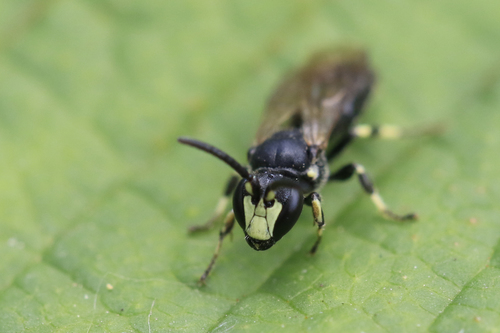
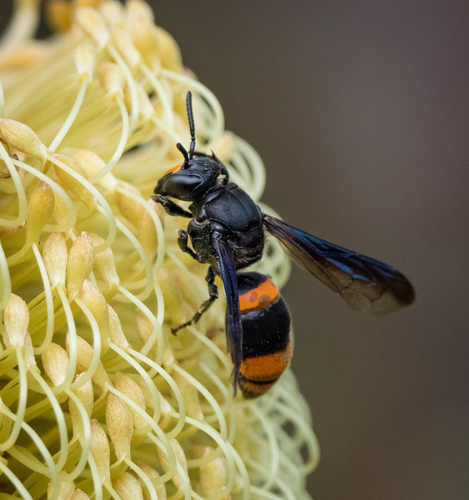
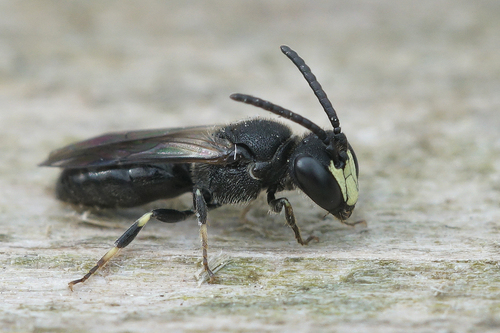
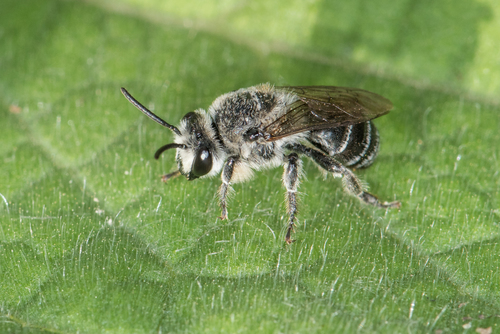
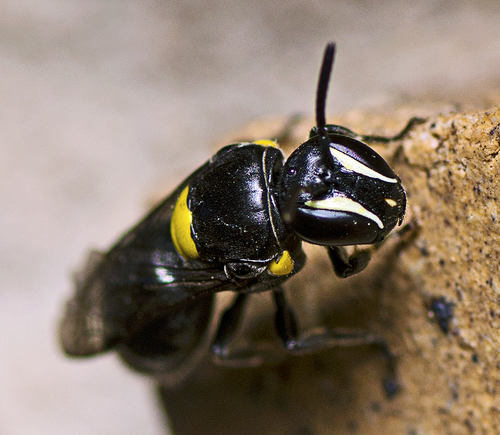
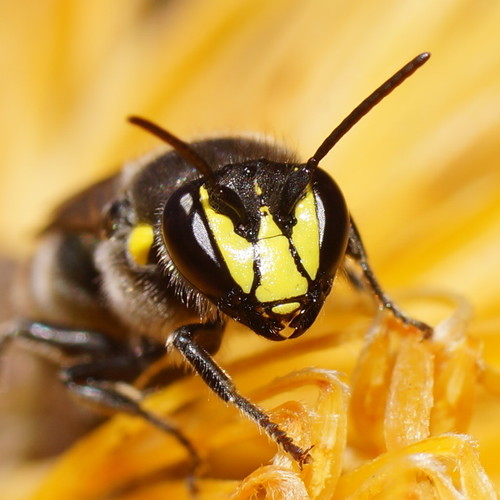
Hylaeus alcyoneus, commonly known as the banksia bee, is a species of bee that is endemic to Australia. It is most commonly found in the coastal heaths of eastern and southern Western Australia, and it is an important pollinator of Banksia species. This species was originally described by German entomologist Wilhelm Ferdinand Erichson in 1842. Its specific epithet comes from the Ancient Greek word halcyon, meaning kingfisher, a reference to the species' characteristic kingfisher blue colour. The banksia bee has a metallic blue abdomen and yellow markings on its face. This species displays notable sexual dimorphism that is uncommon among bees: male banksia bees are significantly larger than female banksia bees, while females are larger than males in most other bee types. Males of different sizes exhibit distinct feeding behaviours. Large males perch on and defend high-positioned Banksia inflorescences where they feed, while small males feed closer to the ground and patrol set routes that cover multiple inflorescences. When a large male is displaced from its perch, it is almost always done by an even larger male. Recorded Western Australian plant species that the banksia bee visits include multiple Banksia species: Banksia ashbyi, B. coccinea, B. hookeriana, B. ilicifolia, B. menziesii, B. prionotes, B. sessilis, and B. speciosa. Other visited plant species are Allocasuarina campestris, Grevillea cagiana, G. eriostachya, Isopogon dubius, and species from the Xanthorrhoea genus. The banksia bee experiences competition from the introduced European honey bee, Apis mellifera. In locations where both species co-occur, the banksia bee has significantly fewer active nests than it does in sites with no European honey bee competition. A banksia bee nest is made up of multiple separate cavities or cells inside hollowed wood. A parent bee places a provision of pollen and nectar, along with a single egg, in each cell.