About Hydrosaurus pustulatus (Eschscholtz, 1829)
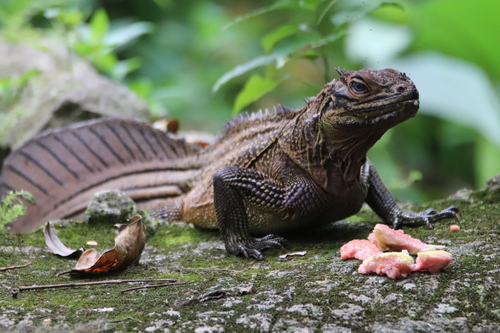
Hydrosaurus pustulatus, commonly known as the Philippine sailfin lizard or Philippine sailfin dragon, is a large semiaquatic agamid lizard endemic to all major island groups of the Philippines except the Palawan islands. Like other sailfin lizards, this species has characteristic large, sail-like dorsal crests on its tail. It can reach a maximum total length of 3 to 4 feet (0.91 to 1.22 meters). It is a strong swimmer, and smaller juveniles are able to run briefly across the surface of water. This lizard lives in areas with heavy vegetation near coastlines and low-lying rivers, especially in mangrove forests. Local common names for this species include layagan and balubid in Tagalog, and ibid in Visayan languages, among other local names. H. pustulatus is a protected species in the Philippines. It is targeted by the international exotic pet trade because of its unique dorsal crests and bright coloration. Extensive mangrove deforestation over recent decades also poses a threat to its conservation. The Philippine sailfin lizard occurs across the Philippine islands, excluding the Palawan islands. Documented populations exist in Luzon (Aurora, Bicol), Polillo Islands, Samar, Leyte, Dinagat Islands, Camiguin, Bohol, Negros, Panay, Romblon (Romblon Island, Tablas, Sibuyan), Mindoro, and Mindanao (Zamboanga). This species inhabits tropical wooded habitats located close to water, including rivers, riverbanks, rice fields, and mangrove forests. It occurs at moderately high population densities in these habitats, and it prefers to live near freshwater bodies of water. Philippine sailfin lizards use their sailfins and scales during territorial displays when encountering competing males or potential threats. They breed only once per year, but may produce multiple clutches of eggs in a single breeding season. After mating, females dig relatively shallow holes in soil near their aquatic habitats to lay their eggs. Eggs incubate for approximately two months, and hatching occurs during the rainy season. Females can lay several clutches of eggs per year; each clutch holds between two and eight eggs, and clutches are laid above the flood line.