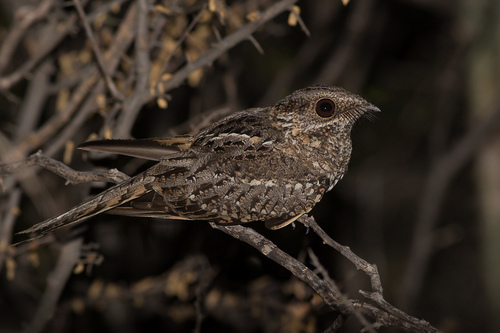
About Hydropsalis torquata (J.F.Gmelin, 1789)
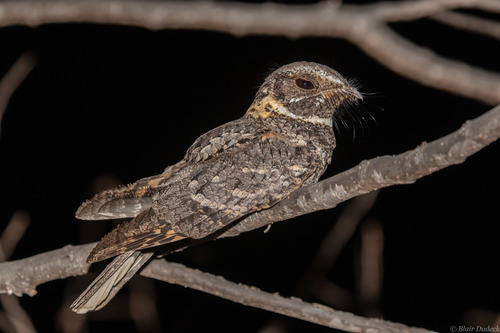
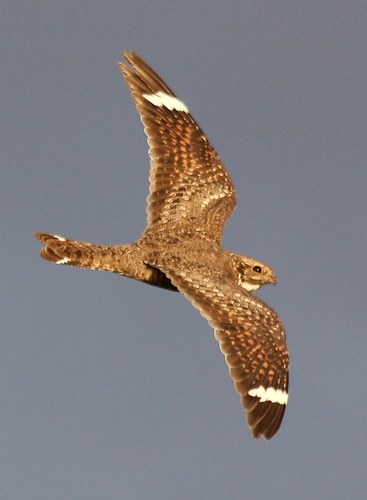
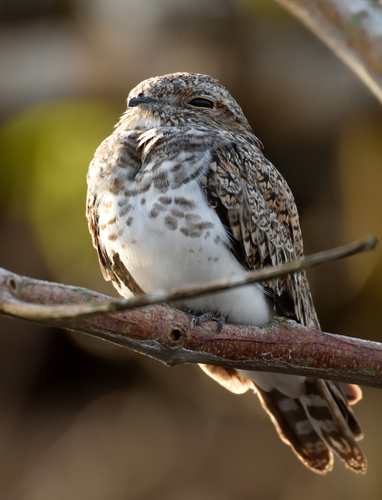
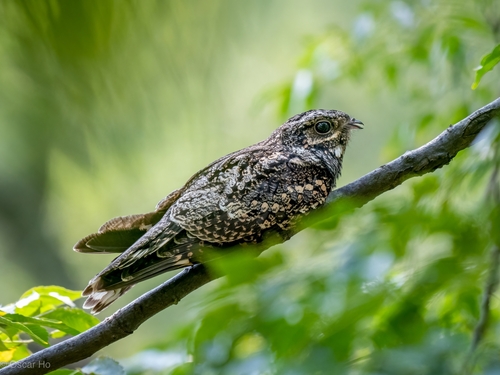
Hydropsalis torquata, commonly known as the scissor-tailed nightjar, has its most distinctive feature in the male's elongated outer tail feathers, which are almost twice as long as its body. Excluding these elongated feathers, both sexes measure 25 to 30 cm (9.8 to 11.8 in) in length; including them, the male can reach a total length of up to 66 cm (26 in). Males weigh 47.5 to 63 g (1.7 to 2.2 oz), while females weigh 48 to 60 g (1.7 to 2.1 oz). Males of the nominate subspecies have brown upperparts marked with grayish white speckles, and the middle of the back also has blackish streaks and tawny spots. They have a broad tawny collar on the hindneck. Their tail feathers are brown, and the long outer pair has broad white tips. The chin is buffy, the throat is buff or whitish with brown spots or bars, the breast is buff with narrow brown bars, and the belly and flanks are buff with wide brown bars. The wings are generally brown with tawny or buff streaks and spots, and lack the white band present on the wings of many other nightjar species. Females have tawnier wings, no white coloring on the tail, and their outer tail feathers are only slightly longer than the inner ones. The subspecies H. t. furcifer is larger than the nominate subspecies, generally paler overall, and has a buffier nuchal collar. The scissor-tailed nightjar's song is a prolonged sequence of tsips, sometimes continuing for minutes on end. The song is given at dusk and dawn, both from a perch and during flight. The species also has an extremely high tsig flight call, and a low clucking sound. The nominate subspecies is distributed from east central Peru across central Brazil, with an additional isolated population in Suriname. H. t. furcifer ranges from southern Peru through Bolivia and across southern Brazil, extending south to Paraguay, northern and central Argentina, and Uruguay. Scissor-tailed nightjars inhabit open and semi-open landscapes including second growth, arid scrub, grasslands, acacia groves, pastures, and urban parks. They can often be seen along roads, especially those that border sugar cane fields. In terms of elevation, they generally occur from sea level up to 1,100 m (3,600 ft), but have been found as high as 1,700 m (5,600 ft) in Peru and 2,700 m (8,900 ft) in Bolivia. Northern populations of the scissor-tailed nightjar are generally non-migratory resident populations. Southerly populations are thought to be migratory, spending the austral winter in southern Amazonia.