About Hydropsalis climacocerca (Tschudi, 1844)
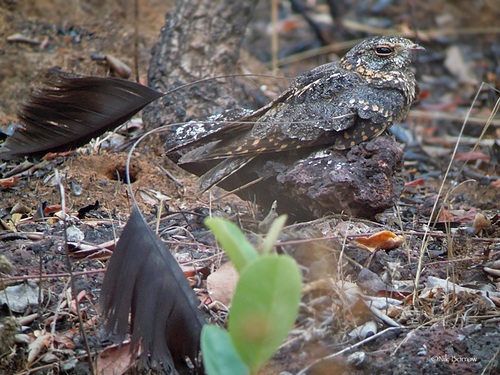
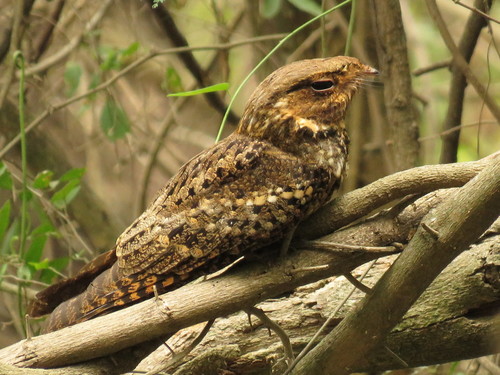
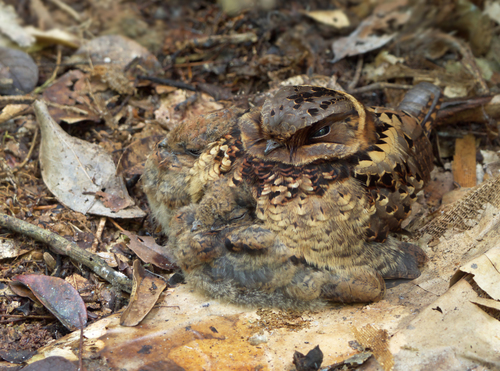
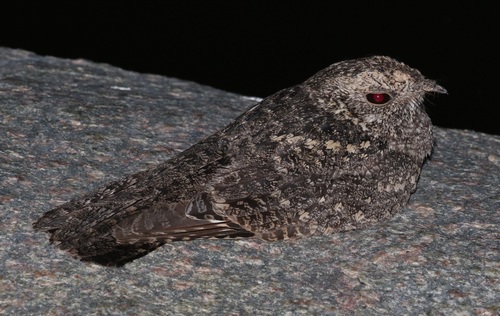
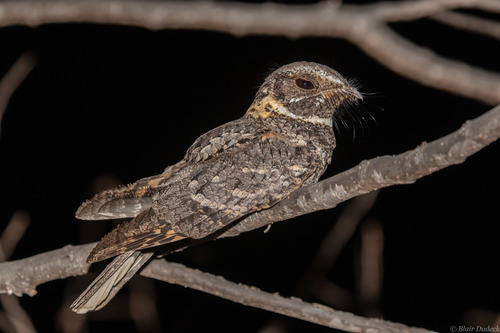
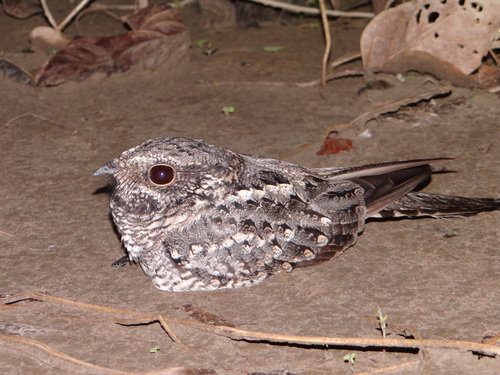
The ladder-tailed nightjar (Hydropsalis climacocerca) is a bird species belonging to the nightjar family Caprimulgidae. It is one of four species placed in the genus Hydropsalis. This species is found in the Amazon Basin of Brazil, the Guianas, Suriname, Amazonian portions of Colombia, Ecuador, Peru and Bolivia, and also occurs in Venezuela. Its natural habitats are subtropical or tropical moist shrubland, rivers, and freshwater lakes. Like most nightjars, the ladder-tailed nightjar is highly camouflaged, with plumage matching the colors of ground cover. Its plumage is a broken mix of white patches, both dark and light gray, and some brown, particularly around the neck and head. Like many other nightjar species, it uses a distraction display to lead unwary predators further away from its nest, young, or eggs. As it hunts airborne insects at night, it has large eyes and a large, wide gape adapted to this feeding strategy. The ladder-tailed nightjar occurs across all regions of the Amazon basin, and in the northeast it is found on the Guiana Shield and in the Guianan countries. Its range does not extend east of the Amazon River outlet, including the island of Ilha de Marajó. At the same Amazon outlet, near the confluence of the Xingu River, the range extends southward to cover the lower two-thirds of the drainage of this north-flowing river. To the west, the species' range is adjacent to the Andean foothills. To the north, its range extends into southeastern Venezuela, and only covers the upper third of the drainage of the Caribbean-bound north-flowing Orinoco River, in the area of the eastern Orinoco River Basin and uplands that border western Guyana. In the far headwaters of the southern Amazon Basin, the upstream half of river drainages in both the southeast and southwest, the range of the ladder-tailed nightjar overlaps with that of its sister species in the Hydropsalis genus, the scissor-tailed nightjar. The scissor-tailed nightjar ranges through southeast Brazil, via the caatinga, cerrado, and pantanal, south into Argentina. Together, the two species cover all of South America east of the Andes cordillera from central Argentina to the Caribbean coast; the only exception is a small region centered southeast of the Amazon basin in the vicinity of Maranhão, Brazil.