About Hydropsalis cayennensis (J.F.Gmelin, 1789)
The white-tailed nightjar, Hydropsalis cayennensis, measures 20 to 22.5 cm (7.9 to 8.9 in) in total length. Males weigh 33 to 40 g (1.2 to 1.4 oz), while females weigh 32 to 38 g (1.1 to 1.3 oz).
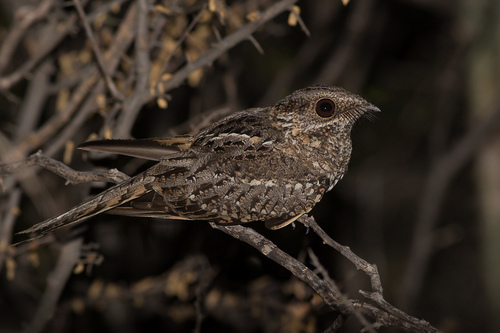
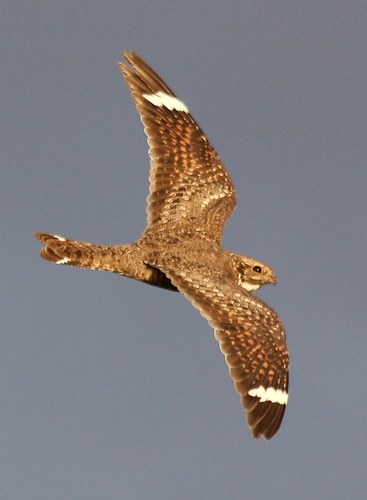
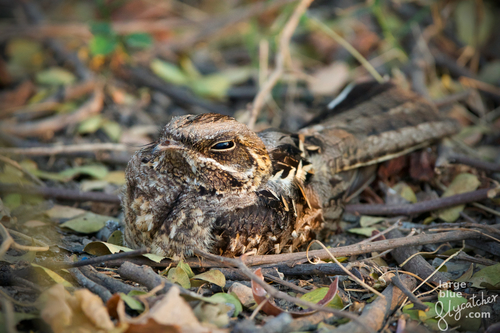
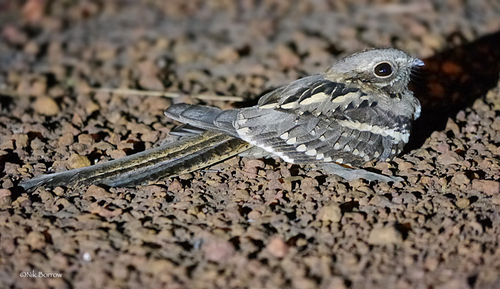
Males of the nominate subspecies have grayish brown upperparts marked with brown to blackish brown speckles and streaks. Their face features a white or buffy supercilium and moustachial stripe, and a broad tawny buff collar crosses the hindneck. The wings are generally grayish to blackish brown with tawny and buffy markings, and a white band is visible on both spread and folded wings. The tail is slightly forked, with all feathers except the innermost pair partially to completely white. The chin and throat are white, the breast is buff with a cinnamon tinge, brown bars, and bold white spots, and the belly and flanks are white with a pale buff wash.
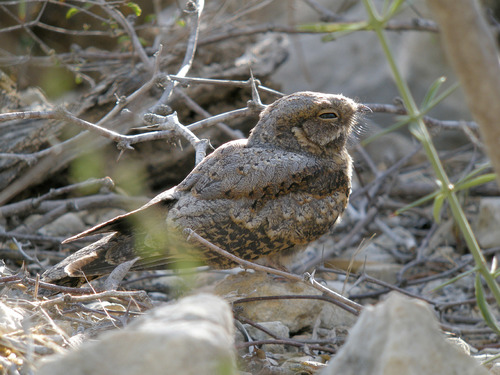
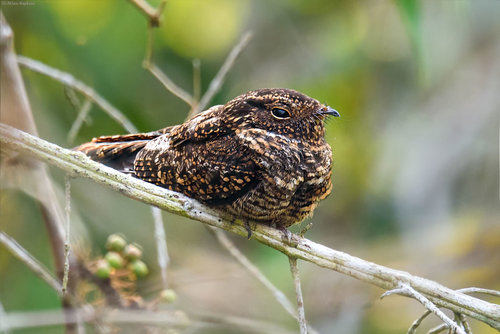
Nominate subspecies females are darker overall, and lack white markings on the wings and tail. Their throat is buffy, the breast brownish, and the belly buff with brown bars.
Several additional subspecies differ slightly from the nominate. H. c. albicauda is similar to the nominate, but males have a strong buff tinge on the belly, and females have dark brownish buff underparts. H. c. aperta has longer wings and tail than the nominate, and is otherwise similar to albicauda except that females have darker upper- and underparts. H. c. insularis is paler than the nominate, possibly smaller, and has buffier upperparts especially on the crown. H. c. leopetes is similar to the nominate, but the buff of its collar and other markings is richer; males have darker underparts and females have paler upperparts. H. c. manati is darker than the nominate, with less white in the tail.
The species' primary song is a high, thin pt-cheeeeeeeee, with the second note being a long-drawn rising whistle that falls slightly at the end. Males sing from dusk through much of the night during the breeding season. Other calls include a scratchy wheer given in flight, and a thin tic-tic when the bird is flushed from a roost.
The white-tailed nightjar is distributed across the ABC Islands, Brazil, Colombia, Costa Rica, Ecuador, French Guiana, Guyana, Martinique, Panama, Suriname, Trinidad and Tobago, and Venezuela. It inhabits open landscapes including savanna, pastures, scrubby grasslands, and hillsides with scattered bushes and thickets.