About Hydrocotyle vulgaris L.
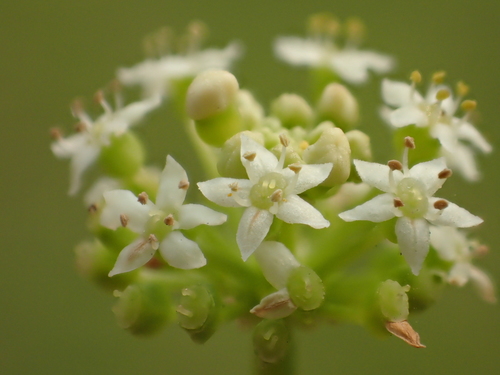
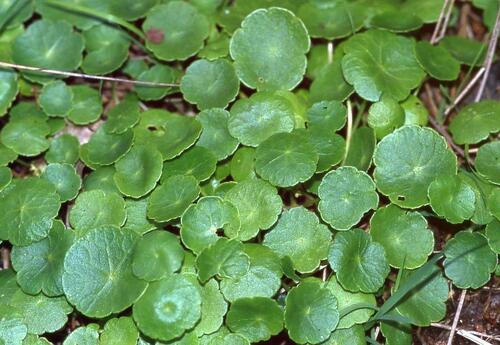
This species, scientifically named Hydrocotyle vulgaris L., is a perennial herbaceous plant that reaches a height of 5 to 20 centimeters. It produces an umbrella-like leaf and has a faint carrot scent, and it is edible. This plant forms numerous creeping offshoots that can grow up to 1 meter long. Its serrated, rounded, shield-shaped leaves can reach a maximum diameter of 4 centimeters, though they are often smaller. Long, hairy petioles attach to the middle of the leaf's underside. Leaves are fresh green, shiny and waxy, with a clear vein that extends radially across the surface. Tiny, inconspicuous hermaphrodite flowers grow in few-flowered umbellate inflorescences or whorls. Inflorescence stems are roughly half as long as leaf stems. Petals may be greenish, white, or reddish. The flowering period runs from July to August, and flowers rarely bloom; most reproduction occurs through self-pollination. The fruits produced are flat, warty, and winged. Vegetative propagation happens via creeping offshoots. This species commonly grows in wet habitats including wetlands, marshes, and swamps, and sometimes grows in deeper water. In Britain, it is the only native Hydrocotyle, growing in wet places such as fens, swamps, bogs, and marshes. It is a component of purple moor grass and rush pastures, a type of Biodiversity Action Plan habitat. In cultivation, Hydrocotyle vulgaris L. is a low maintenance plant. It is used in wild plant gardens to plant around garden ponds, and is also grown as an aquarium plant. It prefers reliably moist humus in full sun or part shade, and can be grown indoors or outdoors; it is also able to tolerate full shade. It may be grown as an aquatic plant in mud at the edge of a pond or water garden, in up to 2 inches of stagnant water. Even though it naturally grows in wet habitats, over-watering can still cause root rot.