About Hydrochoerus isthmius Goldman, 1912
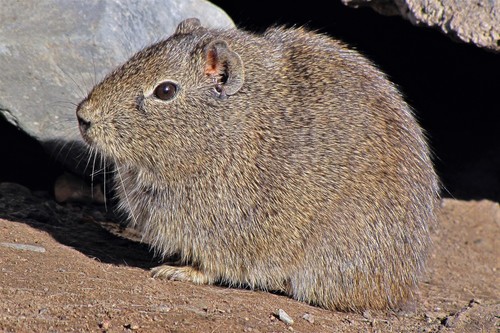
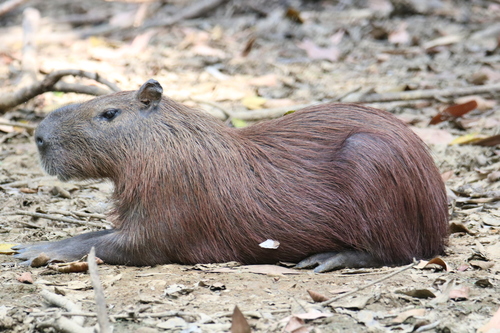
Hydrochoerus isthmius, commonly called the lesser capybara, shares many physical traits with the greater capybara. It has short brown fur, a blunt snout, four short legs (with front legs smaller than hind legs), partially webbed feet, small eyes and ears positioned high on the head, and a very small tail. Unlike greater capybaras, the lesser capybara is generally smaller in overall size: adult individuals reach a maximum length of 90 centimetres (3 ft) and a maximum weight of 28 kilograms (62 lb), and have a darker brown coat. The lesser capybara lives primarily in water-adjacent habitats including marshes, ponds, and lagoons. Access to water is essential for this species, as water supports its needs including maintaining stable body temperature, providing food, offering shelter from predators, and enabling mating. First documented in 1912 from Pacific river valleys in Panama, the lesser capybara was originally classified as a subspecies of the common capybara. Detailed anatomical and genealogical studies led to its reclassification as a distinct separate species during the 1980s. Today, the species' range extends into parts of Eastern Panama, Western Colombia, and Western Venezuela, all located west of the Andes Mountains. Excluding the now-extinct Pleistocene species H. hesperotiganites from California, the lesser capybara has the northernmost distribution of any living capybara species.