About Hydrocharis morsus-ranae L.
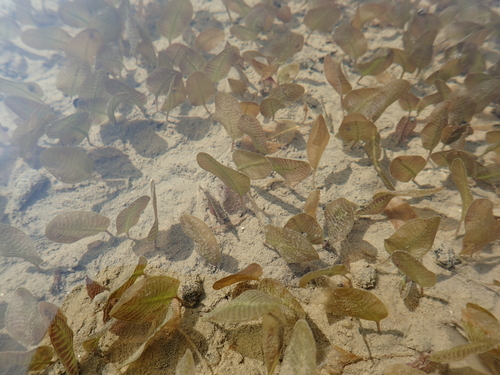
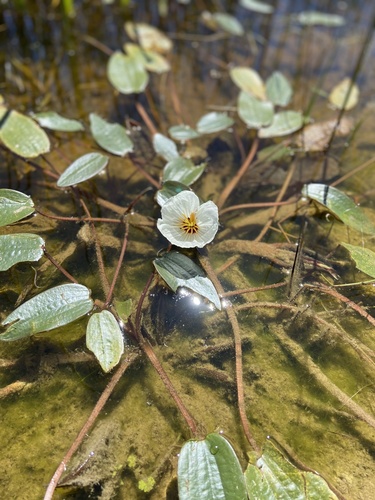
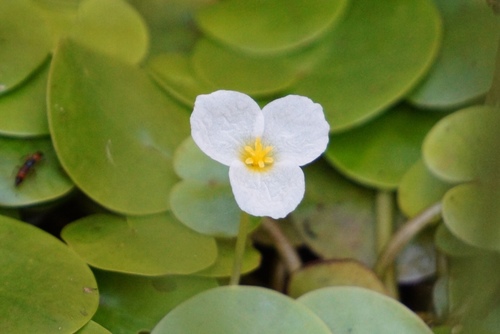
Hydrocharis morsus-ranae L. is a perennial stoloniferous aquatic plant. Its overall growth reaches 0.1 to 1.5 meters in diameter, and it forms individual rosettes that measure 1 to 30cm across. While most plants are either entirely male or entirely female, occasionally one genet (group of plants) will have both sexes on separate shoots, rather than having both sexes within a single rosette. The species produces unbranched white roots that can grow up to 50cm long, and these roots have numerous extended root hairs. Its circular floating leaves have visible aerenchyma tissue on their undersurface. The slender leaf petioles are 6 to 14cm long, and have two free lateral stipules at their base. Hydrocharis morsus-ranae is native to Europe and Asia, where it grows in slow-flowing rivers, stagnant waters, aquatic ditches, and oxbow lakes. It was first introduced to Canada (and North America) in 1932, and has become invasive in eastern Canada and some northern U.S. states. In these invaded regions, European frog-bit is considered a pest: it colonizes waterways and forms dense surface mats of vegetation, threatening native biodiversity. Because of this, trading or transporting this plant is prohibited in U.S. states including Washington and Minnesota.