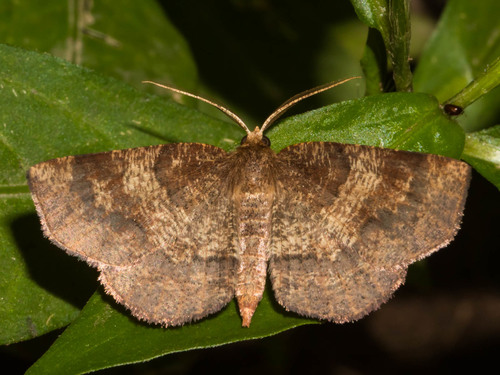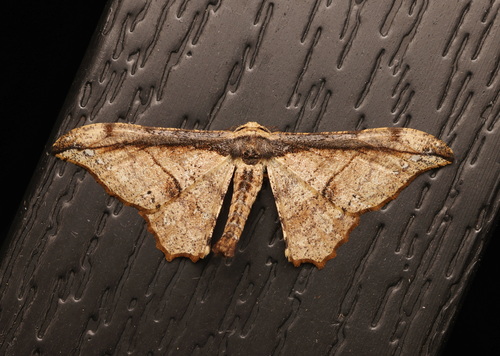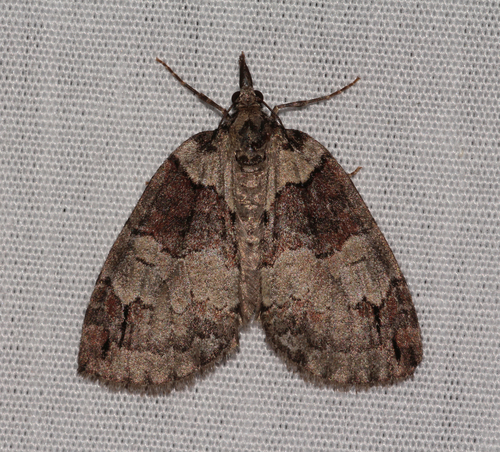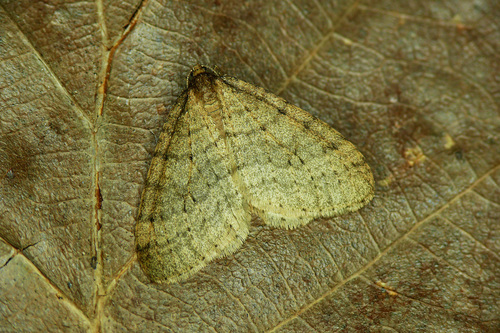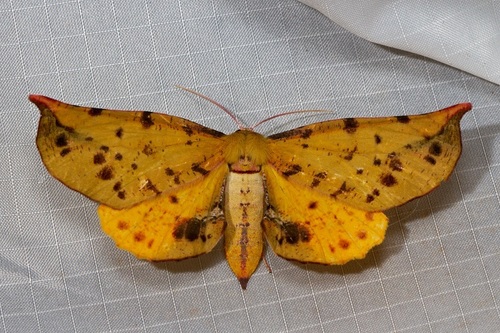
About Hydriomena impluviata (Denis & Schiffermüller), 1775
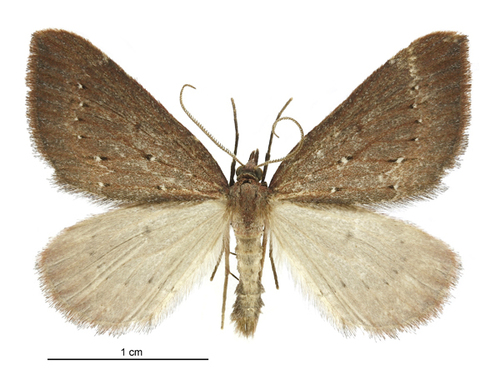
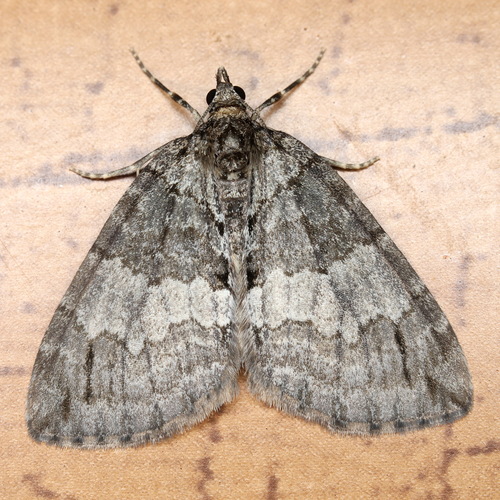
The May highflyer (Hydriomena impluviata) is a moth species in the family Geometridae. It is distributed across the Palearctic region and the Near East, and its range is mostly determined by the presence of its larval food plant. This species was first described by Michael Denis and Ignaz Schiffermüller in 1775. It has a wingspan of 30–34 mm, and it varies considerably in markings. The most reliable identification feature is four square spots along the costa of each forewing, though these spots are often not visible in the common melanic forms. Coerulata, a synonym of Hydriomena impluviata, has individual specimens that very closely resemble Hydriomena ruberata. On average, coerulata (Hydriomena impluviata) is slightly smaller, with somewhat shorter wings. It more often has a very pale, blue-green median band. Its oblique subbasal line is straight, or only very weakly angulated in the cell. The black marks on the hindmargin of the forewing and on the anterior veins distally, which generally characterize both species, are less strongly developed on average in Hydriomena impluviata than in Hydriomena ruberata, though these marks are very variable in both species. The larva of Hydriomena impluviata is relatively powerful, dark red-purple in color, and has a number of short setae. This species flies at night from May to July, and is attracted to light. The flight season given refers to the British Isles, and may be different in other parts of the species' range. The larva feeds on alder leaves, and spins two alder leaves together to feed without disturbance. The species overwinters as a pupa under loose alder bark.