About Hydrangea integrifolia Hayata
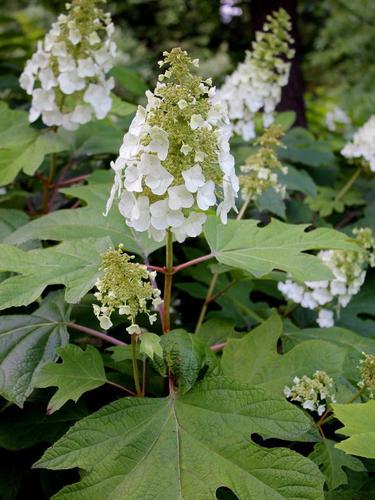
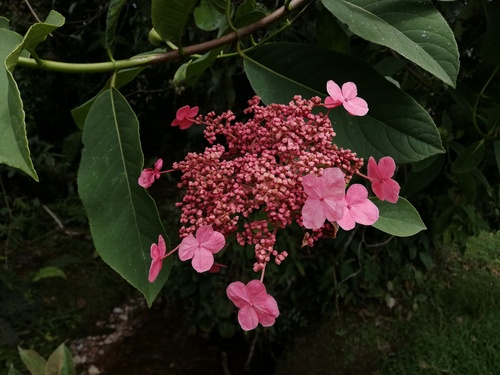
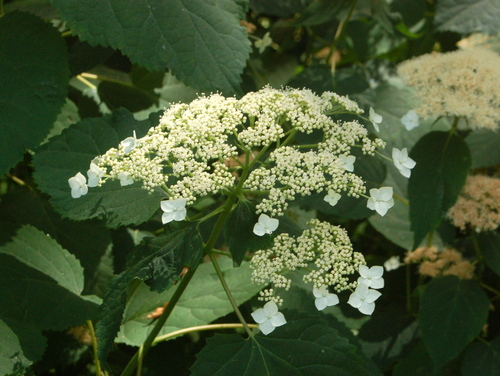
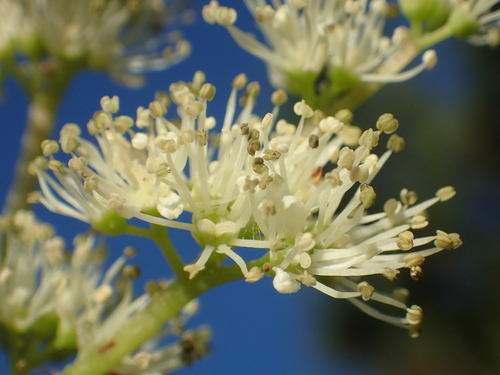
Hydrangea integrifolia Hayata is a climbing vine that uses adventitious roots to climb unassisted onto any nearby solid structure. Its leaves are about 15 cm (6 inches) long, dark green, glossy, and leathery in texture. Leaves have an elongated ovate shape with undulating, toothed margins, and are arranged in opposite pairs along stems. Petioles on newer or top growth are bright red, while other petioles are yellow-green. Before opening, the flower buds of this species differ from other hydrangeas and resemble oversized golf balls. Blooms open around June, forming terminal cymes that hold many small white blossoms. The flowers have the lace-cap form of deciduous hydrangeas, though this species most often lacks the sterile blooms around the edge of the cyme. Spent blooms dry out and are retained on the plant through the growing season. Fruits are dry, brown capsules. Hydrangea integrifolia grows scrambling across shady woodland floors, climbing up tree trunks, and spreading over rocky outcroppings in the wild. It also grows in partially shaded areas and on coastal cliffs exposed to salt spray. This species is primarily used as an ornamental plant. It is vigorous but grows slowly enough to not become invasive. It is tolerant of both salt and shade, though full shade reduces its amount of blooming. It requires regular watering, well-drained soil, and sturdy supports. It can grow in full sun, as well as partial or dappled shade. Plants may take 5 to 7 years to reach maturity and begin blooming, but they add layered texture and brightness high up in shady areas where these traits are rare. It grows best in milder climates, specifically USDA hardiness zones 8a to 10b. Pruning is only required for aesthetics, and is generally limited to minor growth training and deadheading. Hydrangea integrifolia can be propagated from cuttings and seeds.