About Hydnellum aurantiacum (Batsch) P.Karst.
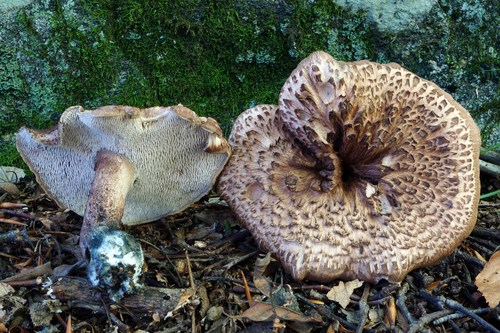
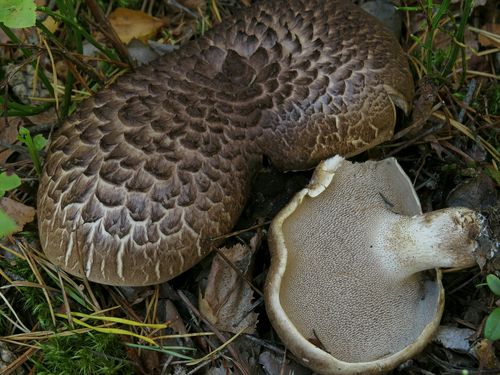
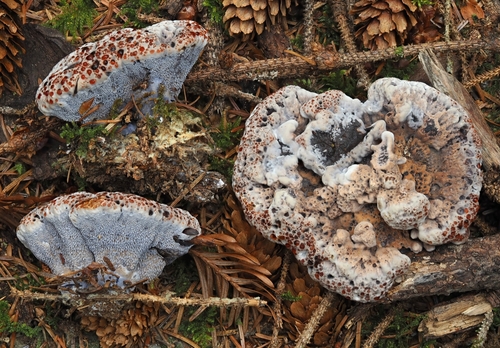
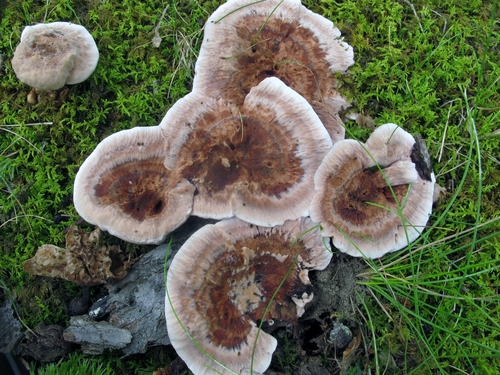
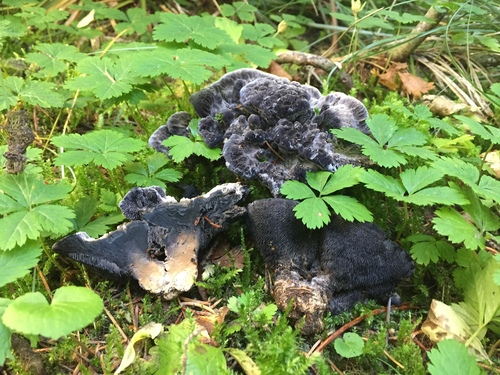
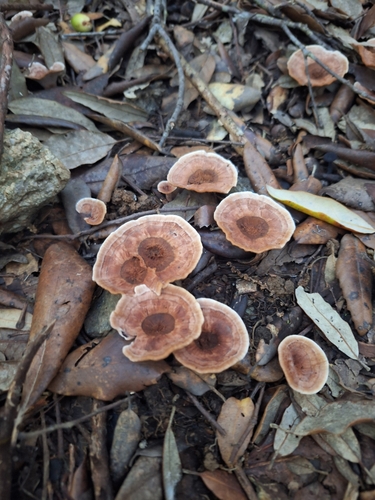
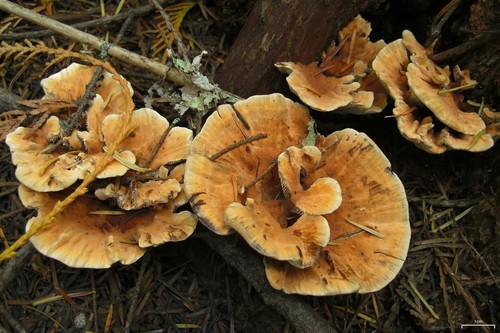
Hydnellum aurantiacum (Batsch) P.Karst. produces infundibuliform, or shallowly funnel-shaped fruitbodies that can reach up to 15 centimetres (6 inches) in diameter. The upper surface of the fruitbody is orange or orange-brown at the centre, with a paler margin. When young, the upper surface may be velvety or tomentose, becoming wrinkled or lumpy as it ages. The flesh is tough and woody in texture, ranging from pale to dark orange-brown; it has no distinctive odor, with a bitter or mealy taste. The spore-producing teeth on the underside of the fruitbody are short, growing up to 5 mm long, and are white when young, with their tips gradually turning brown as the fruitbody matures. The stipe measures up to 4 cm long and 0.5–2 cm thick, is colored orange to dark brown, and has a velvety surface. The spore print of this species is brown. Due to its tough flesh and unpleasant taste, Hydnellum aurantiacum is inedible. The species' spore-bearing cells, called basidia, are club-shaped (clavate), measure 35–46 by 8–11 μm, lack clamp connections, and produce four spores each. Sterigmata, the basidia extensions that hold spores, can grow up to 6 μm long. Spores are roughly spherical, covered in rough warty tubercle outgrowths, nonamyloid, and measure 5.5–8 by 5.5–6.5 μm. This species usually grows solitary or in clusters on the ground in conifer and mixed woods. Rarely, the stipes of separate fruitbodies may fuse together. Hydnellum aurantiacum has been recorded in Australia, Europe, North America, and Asia, including China, India, and Korea. It is one of the most commonly encountered Thelephorales species in Russia's Sverdlovsk region.