About Hybopsis amblops (Rafinesque, 1820)
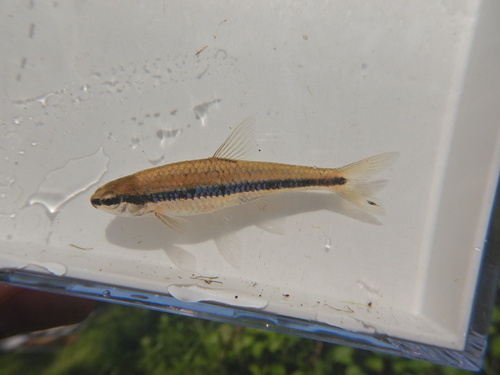
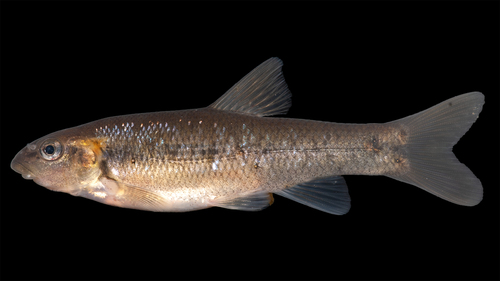
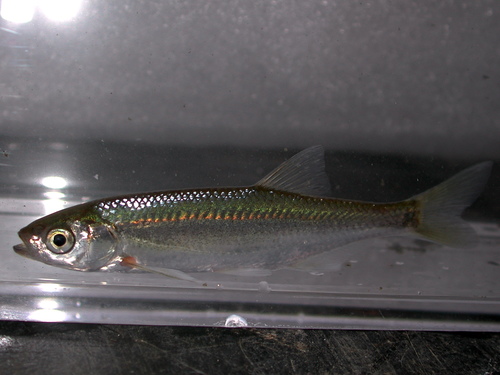
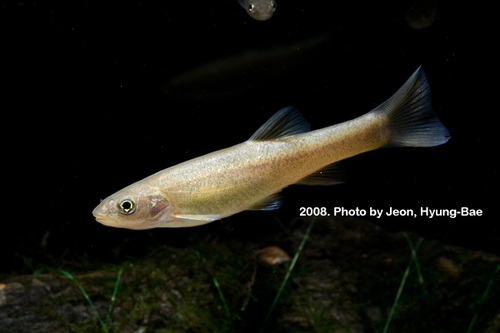
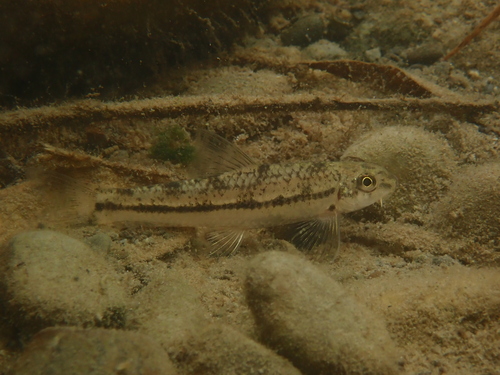
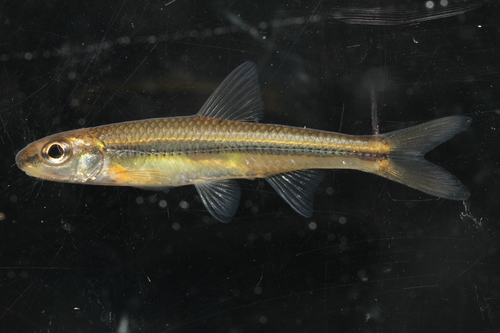
Hybopsis amblops (Rafinesque, 1820), commonly called the bigeye chub, has the following key characteristics. It has a long, blunt snout with a downturned, overhanging mouth, and like other species in the Hybopsis genus, it has a single mouth barbel that holds taste buds. Its body is light greenish yellow, with a distinct black lateral stripe that runs from its mouth to its tail. It has elliptical-shaped eyes that face upward, and adults reach a length of approximately 2 to 3 inches, or 51 to 76 millimeters. Its diet is made up of aquatic insects, including various types of larvae and large mayflies. This freshwater fish is native to the United States. Its native range covers the Lake Ontario and Lake Erie drainages in New York, Pennsylvania, Ohio, and Michigan. It is also found in the Ohio River basin from New York to eastern Illinois, extending south into the Tennessee River drainage in Georgia and Alabama, and the Ozarks of southern Missouri, northern Arkansas, and northeastern Oklahoma. There is one recorded observation of this species in the Cottonwood River in Kansas. It is not found in the Missouri River drainage, and it is currently listed as a threatened species in Illinois. In terms of ecology, bigeye chubs prefer habitats located near riffles in quiet water with aquatic vegetation. They inhabit small to moderate-sized, clear-water tributaries that have sand, gravel, or rocky substrates, and they are highly intolerant of siltation.