About Hyas araneus (Linnaeus, 1758)
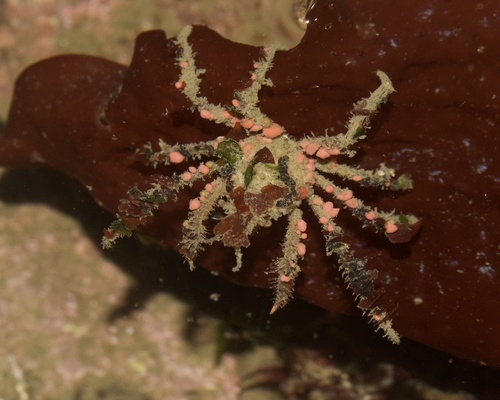
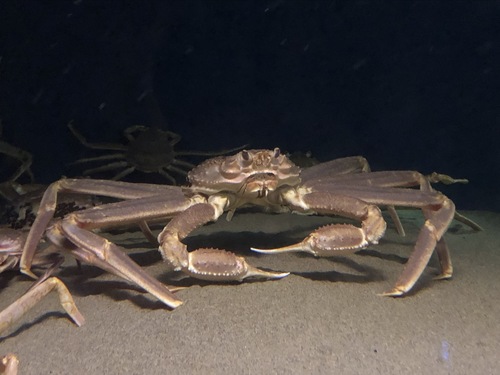
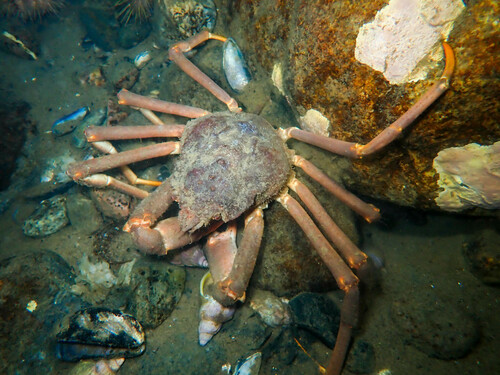
The great spider crab, scientifically known as Hyas araneus, is a crab species that inhabits northeast Atlantic waters and the North Sea, and is most commonly found below the tidal zone. In 1986, two specimens of this crab were captured near the South Shetland Islands, which lie off the Antarctic Peninsula; researchers believe these individuals were transported to the area through human activity. There were initial concerns that this non-native species would negatively impact the native marine fauna of the region, but no additional specimens of great spider crab have been captured in this area since the two 1986 individuals were found. Great spider crabs moult to shed their outer exoskeleton. The moulting process can take a significant amount of time, but it allows the crabs to grow to a very large size. Immediately after moulting, crabs are extremely vulnerable to predators, because their new exoskeleton is very soft.