About Hyalinobatrachium valerioi (Dunn, 1931)
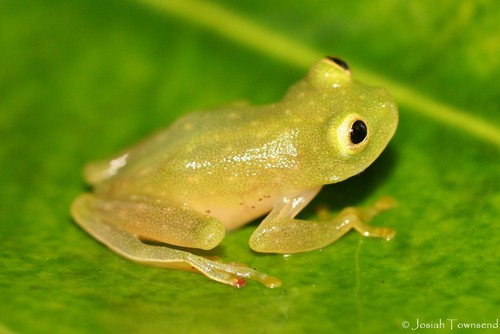
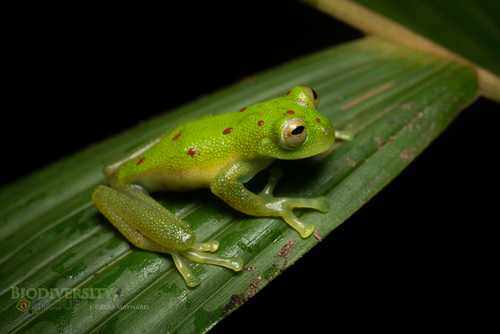
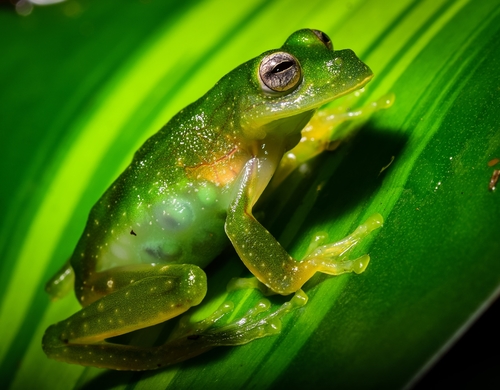
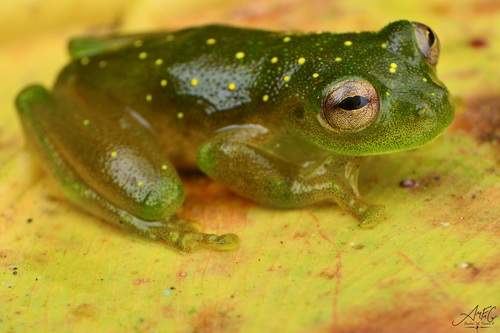
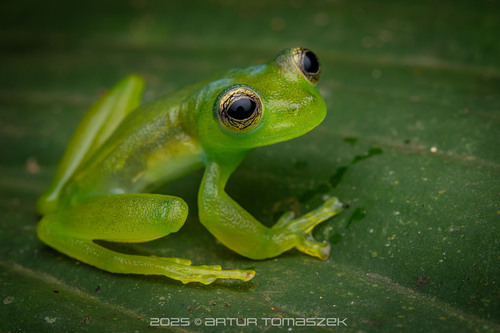
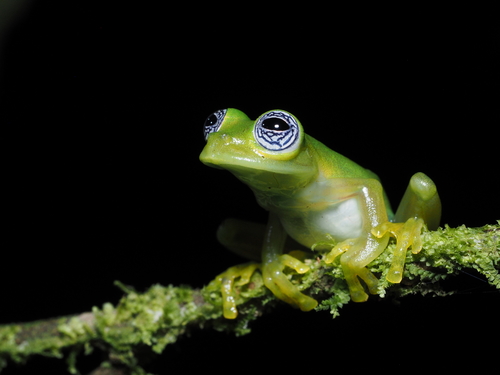
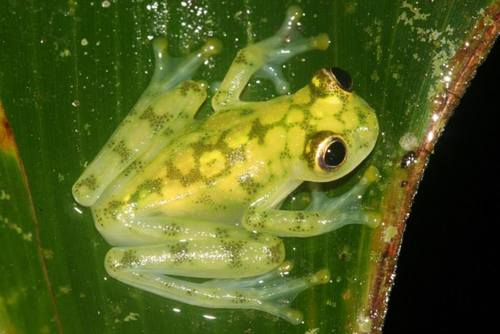
This species, Hyalinobatrachium valerioi, has a maximum snout–vent length of 24 mm (0.94 in) for males and 26 mm (1.0 in) for females. Its dorsum is covered in yellow spots, with green reticulated patterns between the spots; small dark spots may also appear in these green areas. The ventral surface of this frog is transparent, but the heart is covered by white tissue and cannot be seen. The liver and digestive tract are also white, and the eyes are gold in color. Hyalinobatrachium valerioi, a type of glass frog, is a carnivore. Its diet primarily consists of small invertebrates including crickets, moths, flies, and spiders, as well as other smaller frogs. Egg clutches of this species contain no more than 40 eggs, which are laid on the undersides of leaves that hang over streams. Unlike most other glass frog species, male Hyalinobatrachium valerioi stay with their egg clutches during daylight hours, providing constant 24-hour attendance to the eggs. The natural habitats of Hyalinobatrachium valerioi are moist primary and secondary lowland forests. Adult individuals of this species are most often found in bushes and trees growing along forest streams. This species can tolerate a certain degree of habitat modification, as long as the vegetation growing over streams is still present. Hyalinobatrachium valerioi populations are declining in some parts of the species' range, while other populations are considered stable. The main significant threats to this species are habitat loss from deforestation, and pollution caused by the spraying of illegal crops.