About Hyacinthus orientalis L.
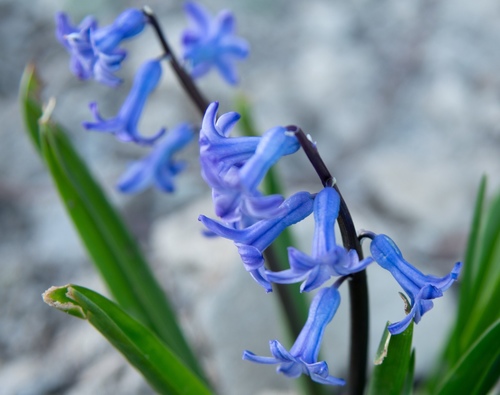
Hyacinthus orientalis L. is a bulbous plant, with bulbs that are 3–7 cm (1.2–2.8 in) in diameter. Its leaves are strap-shaped, 15–35 cm (5.9–13.8 in) long and 1–3 cm (0.39–1.18 in) broad. The leaves have a soft, succulent texture and grow in a basal whorl. The flowering stem is a raceme, which grows 20–35 cm (7.9–13.8 in) tall, rarely reaching 45 cm (18 in). It bears 2–50 fragrant purple flowers that are 2–3.5 cm long, with a tubular, six-lobed perianth.
In cultivation, Hyacinthus orientalis reproduces easily through division of new bulbs that grow from the main plant. This method of reproduction also occurs in wild plants, but the species also reproduces sexually via seeds. The plant is pollinated by a range of insects including honey bees; its strongly fragrant flowers attract insects, which are rewarded with nectar. After flowering, fleshy, spherical seed capsules begin to ripen. When the capsules reach maturity, they dry out and split into three sections. Each section has two subdivisions and holds a variable number of seeds. The seeds are black grains, each with a single white elaiosome of variable size. Seeds are dispersed via myrmecochory: ants collect the seeds and carry them back to their burrows, where they eat the elaiosome. The seeds can then germinate in the burrow.
Hyacinthus orientalis contains alkaloids and is toxic if consumed in large quantities. The bulb is the most poisonous part of the plant, and should never be ingested under any circumstances.
Hyacinthus orientalis has a long history of cultivation as an ornamental plant. It was originally grown across the Mediterranean region, and later spread to France (where it is used in perfumery), the Netherlands (a major cultivation centre) and other areas. It flowers in early spring, and grows best in full sun to partial shade in well-drained soil that is not dry. It requires a winter dormancy period, and only persists in regions with cold winter weather. It is grown for its clusters of strongly fragrant, brightly coloured flowers. Over 2,000 named cultivars have been selected, with flower colours in shades of blue, white, pale yellow, pink, red or purple. Most cultivars are also selected to produce denser flower spikes than the wild type, bearing 40–100 or more flowers per spike.