About Huperzia selago subsp. appressa (La Pylaie ex Desv.) D.Löve
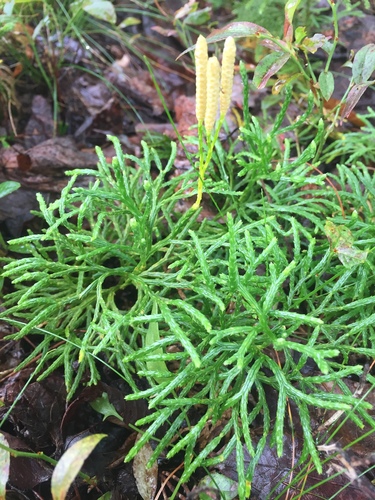
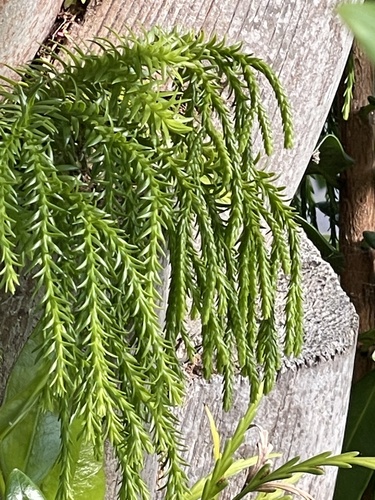
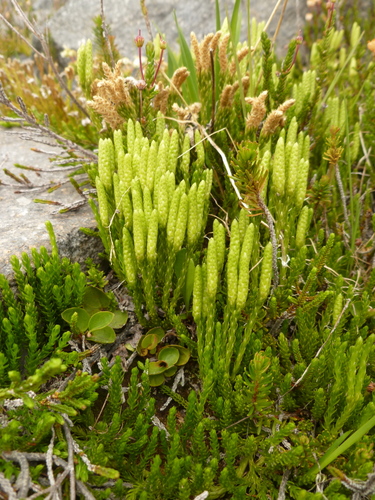
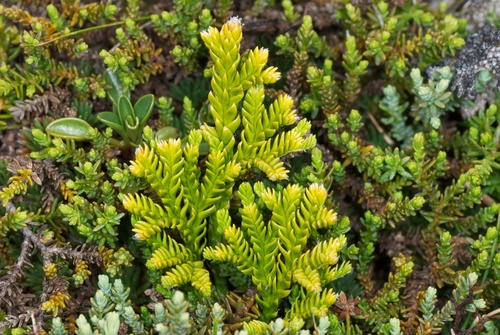
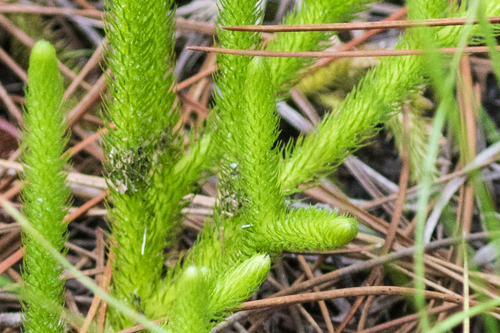
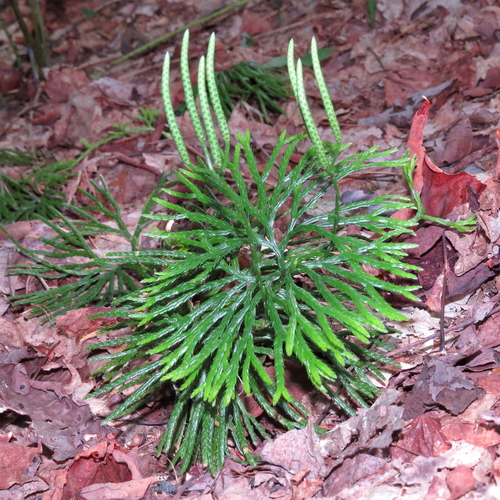
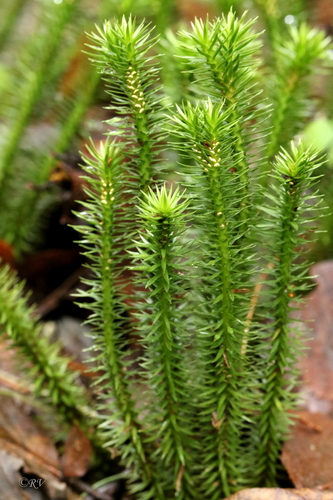
This plant has dichotomous stalks measuring 5 to 20 cm long, with branches all of equal length. Its leaves are densely arranged in a spiral pattern, flat, needle-like, and 4 to 8 mm long. Sporangia grow at the base of leaves on the upper portion of the shoot. Bulbils are often present in the leaf axils. It is a circumpolar subspecies distributed across northern regions of North America, Europe, and Asia. It can be found growing in sandy pits, ditches, along lakeshores, heathland, and conifer swamps. In the northeastern United States, it occurs in boreal habitats and does not grow in alpine zones. In Europe, its range stretches from Svalbard to the mountains of northern Spain and Italy, and extends east from the British Isles through central Asia to the Kamchatka peninsula, Japan, the Aleutian Islands, North America, Greenland, and Iceland. Upper Tanana Indians applied a poultice made from the whole plant to the head to treat headaches. In Finnish traditional medicine, this plant has been used as a treatment for rickets. This toxic plant contains lycopodium alkaloid, and has also been used as an emetic and a remedy against maggots in Finnish traditional medicine.