About Huperzia lucidula (Michx.) Trevis.
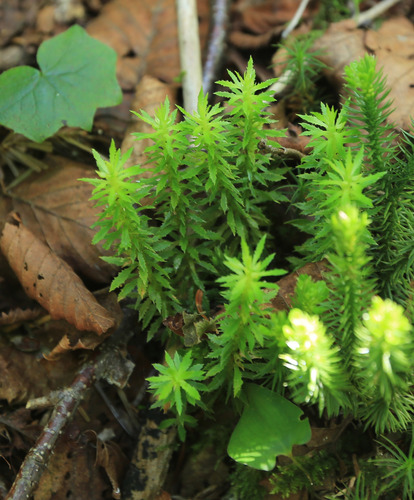
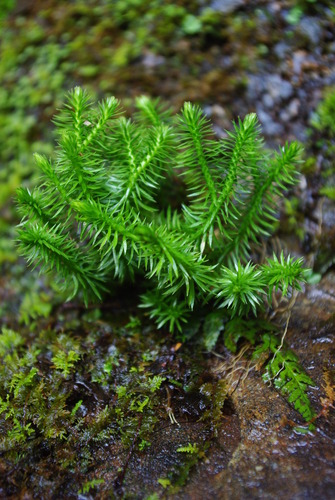
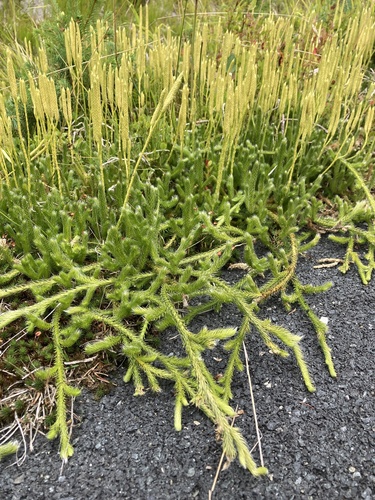
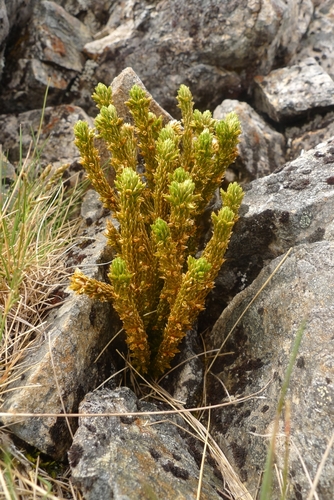
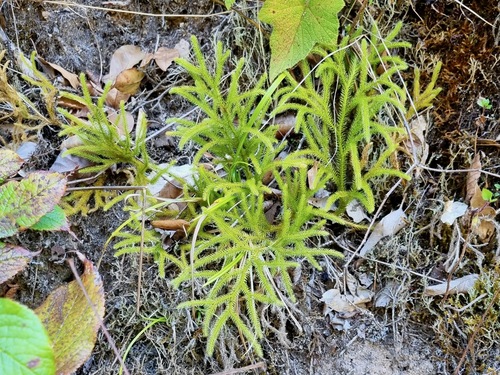
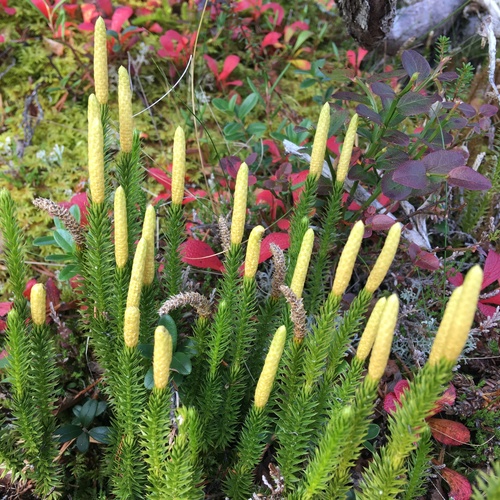
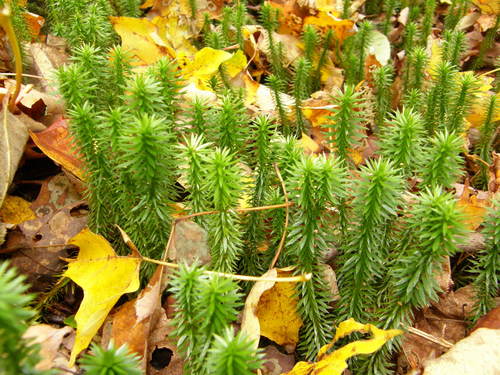
Huperzia lucidula, commonly known as shining firmoss or shining clubmoss, is a bright evergreen, rhizomatous clubmoss belonging to the genus Huperzia. It grows in loose tufts that are typically 14 to 20 centimeters long, and occasionally reach up to 1 meter in length. Its leaves are 7 to 11 millimeters long, shorter at 3 to 6 millimeters at annual nodes, and are narrow, lance-shaped, shiny, and evergreen. The leaf edges have small, irregular serrations, or "teeth". Sporangia (spore cases) are nestled at the bases of the upper leaves. The plant's roots grow from a creeping, branching underground rhizome. Shining firmoss is distributed in Canada from Manitoba westward east to Newfoundland; it ranges south into the United States, along the Eastern Seaboard to South Carolina, and west through to Missouri. It primarily prefers rich, acidic soils in cool, moist coniferous or mixed hardwood forests, and also grows near bogs, above stream banks, and on sheltered, low hillsides. It occasionally grows on moss-lined cliffs and ledges, or on shaded, acidic sandstone outcroppings. The specific epithet lucidula is derived from Latin, meaning "shining", a reference to the plant's bright, vivid green color. Huperzia lucidula reproduces either through abundant spore production from sporangia at the base of stem leaves, or vegetatively through the spread of gemmae.