About Howellanthus dalesianus (J.T.Howell) Walden & R.Patt.
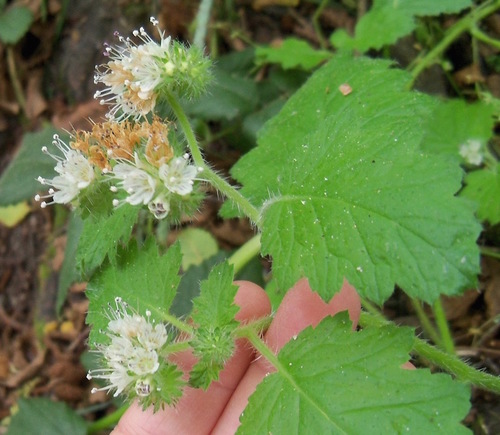
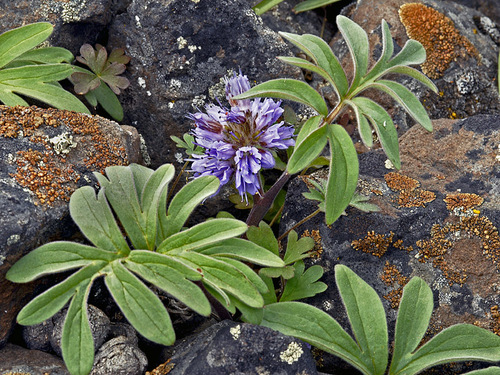
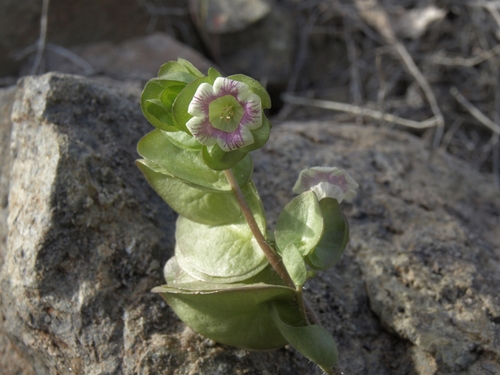
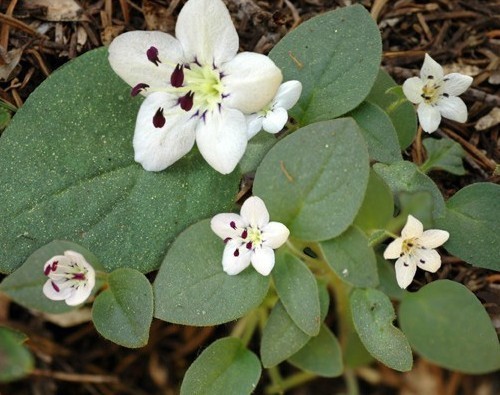
This species was formerly described as Phacelia dalesiana. It is a perennial herb that grows a few decumbent stems up to roughly 15 centimeters long, forming a low patch on the ground. The plant has a glandular, hairy texture. Its leaves grow primarily in a basal rosette, with a small number of smaller leaves occurring along the stems. The leaves are oval with smooth edges. The inflorescence is a small, curving cluster of flowers; each individual flower is just under one centimeter wide. The flower is white with small purple streaks at its throat. Five protruding stamens extend from the flower, each tipped with a large purple anther. Blooming occurs between May and August, with timing dependent on snowmelt. This plant is endemic to the southern Klamath Mountains of northern California, including the Scott Mountains that the species was originally named for. It grows in mountain forests and meadows, very often on serpentine soils. It is considered a paleoendemic, with morphology that is unique among phacelias. It is likely a relict species that persists only in areas of ultramafic rock substrate within a small section of the Siskiyou-Trinity Mountains.