About Hovenia dulcis Thunb.
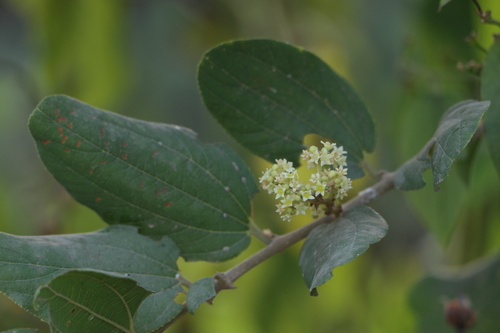
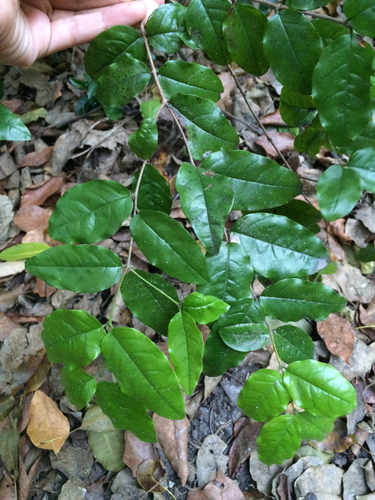
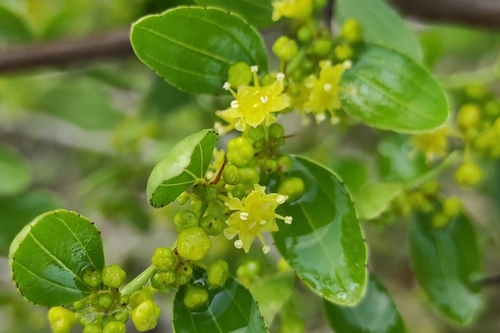
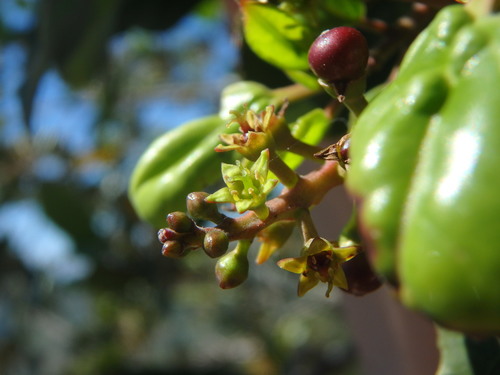
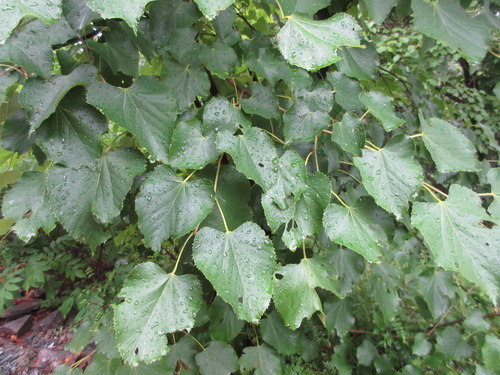
Hovenia dulcis Thunb. is typically a deciduous tree, and rarely grows as a shrub, reaching heights of 10 to 30 meters. Its branchlets are brown or black-purple, glabrous, and marked with inconspicuous lenticels. This species has large, glossy, pointed leaves. In July, the trees produce clusters of small, cream-coloured hermaphroditic flowers. The actual drupes grow at the ends of an edible fleshy fruit stalk called a rachis, making the overall structure a type of accessory fruit. The fleshy rachis of the mature infructescence is sweet and fragrant, and can be eaten raw or cooked. When dried, these rachises resemble and taste similar to raisins. Extracts from the seeds, boughs, and young leaves can be used as a substitute for honey, and are also used to make wine and candy. Leaf extracts contain hodulcine, a glycoside that demonstrates anti-sweet activity. Its fine, hard timber is used for building construction and crafting fine furniture. Hovenia dulcis is a natural source of dihydromyricetin, a flavonoid with antioxidant properties that is primarily found in this tree's leaves, stems, and bark. It has been used in traditional Chinese, Korean, and Japanese medicine to treat fever, parasitic infections, liver diseases, and hangovers, and to act as a laxative. It is also used in medicinal preparations for preventing and treating chronic diseases, and added to skincare products for its ability to protect skin from UV-induced damage and aging.