About Hottonia palustris L.
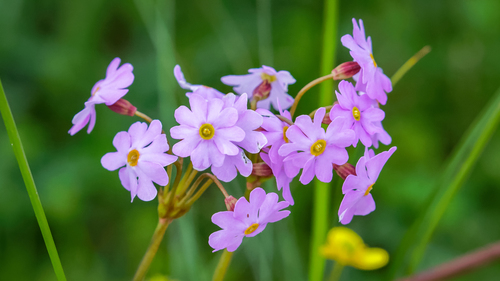
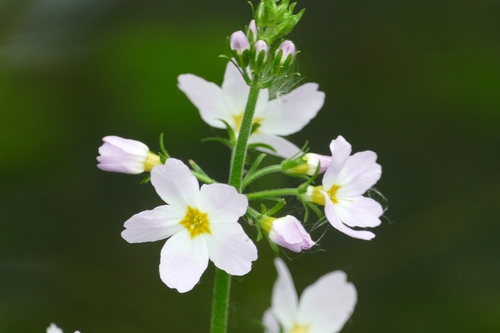
This species, scientifically named Hottonia palustris L., is commonly called featherfoil. The stem of this plant can grow up to 80 centimetres (30 inches) tall. Its basal roots are buried in underlying mud, while other silvery, shiny roots dangle freely in water. Its leaves are deeply divided all the way to the central vein, shaped like the teeth of a double comb. The leaves are normally completely submerged, but they can reach the surface if water levels drop drastically. Leaves grow alternately on the stem, or arranged in more or less regular whorls around the stem. Its flowers are hermaphrodite, pollinated by both insects and cleistogamy, and bloom from May to June. This plant is self-fertile. Featherfoil is distributed across Europe and northern Asia. The species epithet palustris is Latin for "of the marsh", which indicates the plant's common habitat. It is naturally a bog or marsh plant. Most commercially sold specimens are grown emersed, and must be submerged gradually in aquariums to help them adapt and produce submerse leaves. Featherfoil can be kept in both cool and tropical aquariums. It benefits from a good substrate, sufficient light, and additional CO2 when available. It can also be grown in or around ponds, where it is considered a good oxygenator. Its bushy leaves offer protection for fish and fry. It can also grow floating, or grow fully exposed to full sun.