About Hottentotta tamulus (Fabricius, 1798)
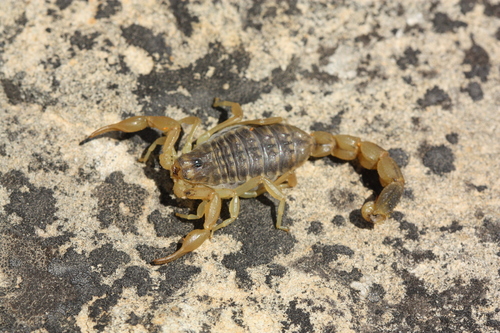
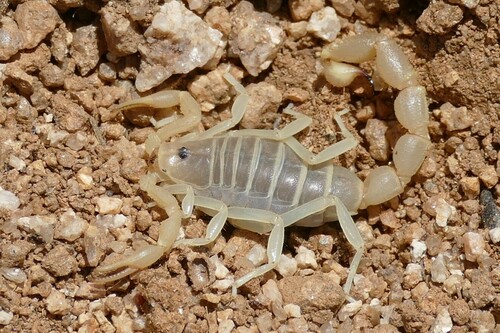
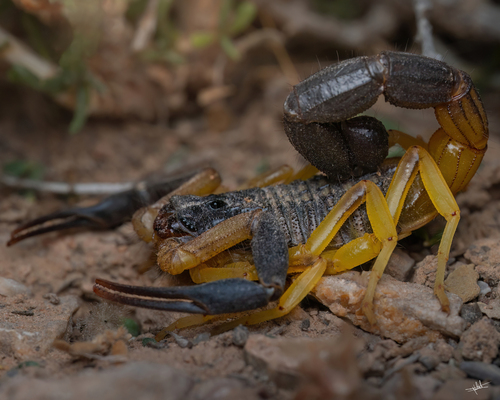
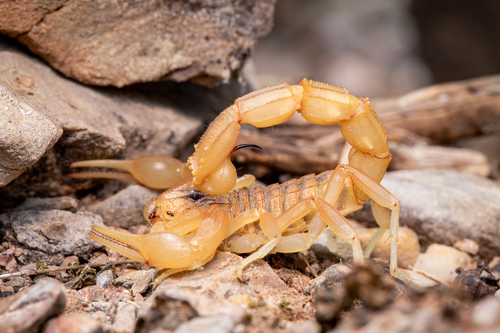
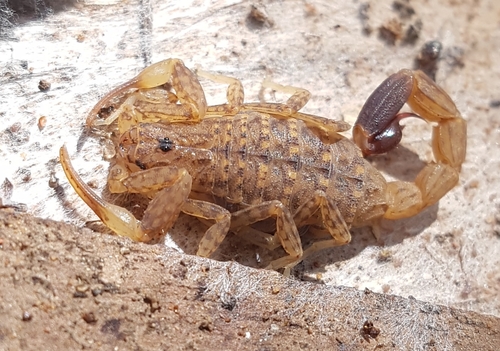
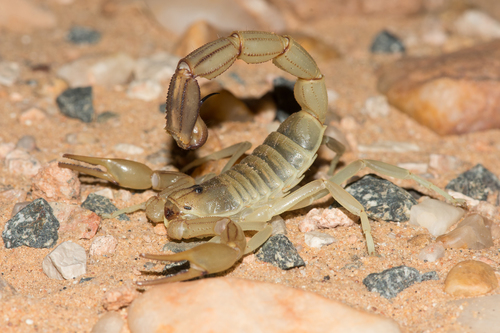
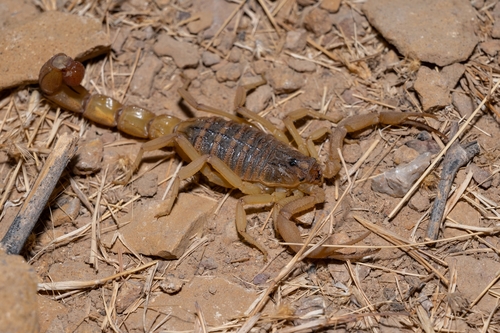
This buthid scorpion species has a total body length of approximately 50 to 90 mm. Its walking legs and the tips of its pedipalp pincers are colored bright orange-yellow to light reddish-brown. The mesosomal tergites always have three distinct carinae. It has the typical body form of buthid scorpions: rather small pedipalp pincers, moderately thickened metasomal segments, and a rather bulbous telson with a large stinger. The base of the pedipalp pincers (called the manus) is slightly more inflated in males than in females.
Despite this species’ medical importance, little is known about its ecology and habitat preferences. It is widespread across vegetated lowlands with subtropical to tropical, humid climates, and often lives close to or within human settlements, especially in rural areas. A study conducted in Saswad-Jejuri, Pune (western India) found H. tamulus in a wide range of microhabitats: scrubland and stony veld, cropland with red and black soil, loamy, grassy, and stony hillslopes and hilltops, black soil in mango orchards, Eucalyptus plantations, and under tree bark. H. tamulus was by far the most abundant of the six scorpion species recorded in this study, making up 48.43% of the total scorpion count. It occurs rather seldom under tree bark; this habitat is dominated by its sister species Hottentotta pachyurus, which makes up 91.1% of the scorpions found in this microhabitat compared to 8.9% for H. tamulus. Like all other scorpions, H. tamulus is nocturnal, and preys on small invertebrates and even small vertebrates such as lizards. Encounters with humans mainly happen during the night or early morning, when the scorpions accidentally crawl into beds or fall from ceilings.
This species is of great medical significance in densely populated areas of India and Nepal, and it occasionally causes human fatalities. Clinical studies have reported fatality rates between 8% and 40%, and most victims are children. Symptoms of envenomation by this species include severe local pain, vomiting, sweating, priapism, cyanosis, unconsciousness, muscular convulsions, breathlessness, pink frothy sputum, abnormal heart rhythms, a fast or slow heart rate, low or high blood pressure, acute myocarditis, shock, and death. The venom mainly affects the cardiovascular and pulmonary systems, and can eventually lead to pulmonary oedema, which may cause death. Scorpion antivenom has little effect in clinical treatment, but use of prazosin reduces the mortality rate to less than 4%. Like the venom of other scorpions, H. tamulus venom is a complex mixture of proteins. Some major components have been isolated, including the toxin tamapin. Scorpion envenomation with high morbidity and mortality is usually caused by either excessive autonomic activity and cardiovascular toxic effects, or neuromuscular toxic effects. Antivenin is the specific treatment for scorpion envenomation, combined with supportive measures: vasodilators for patients with cardiovascular toxic effects, and benzodiazepines when there is neuromuscular involvement. Although rare, severe hypersensitivity reactions including anaphylaxis to scorpion antivenin (SAV) are possible.