About Hosackia rosea Eastw.
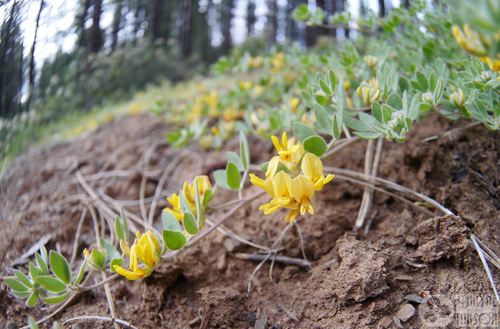
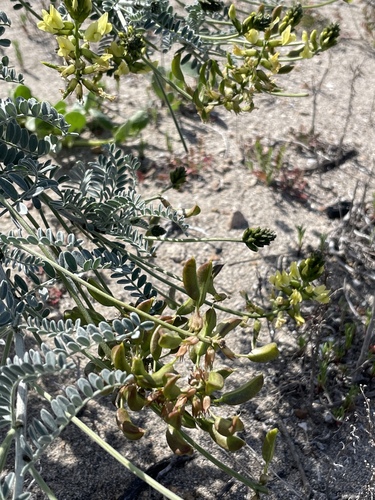
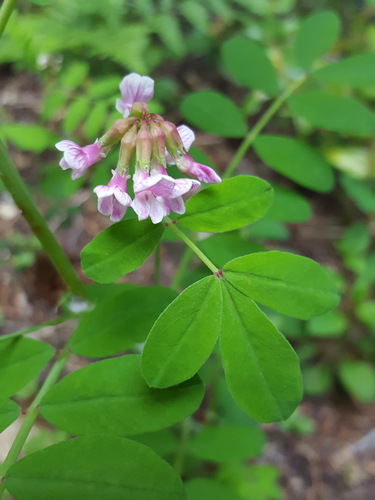
Hosackia rosea Eastw., also known by the synonym Lotus aboriginus, is a legume species native to North America. Its common names are rosy bird's-foot trefoil and thicket trefoil. This plant grows in mountains and canyons, most often in moist areas. It is a perennial herb, with leaves lined along its stem; each leaf is made up of pairs of oval leaflets that measure 1 to 3 centimeters long. Its inflorescence is an arrangement of six to 10 white or pink flowers, each around 1 centimeter long. The flowers are somewhat tubular, with their base enclosed in a calyx of sepals and lobing at the mouth. The fruit produced by Hosackia rosea is a hairless, elongated legume pod that is 3 to 5 centimeters long. This species is thought to potentially serve as a host plant for caterpillars of the critically endangered lotis blue butterfly, which is also referenced by the synonyms Lycaeides idas lotis, Lycaeides argyrognomon lotis, and Plebejus anna lotis.