About Hormaphis hamamelidis (Fitch, 1851)
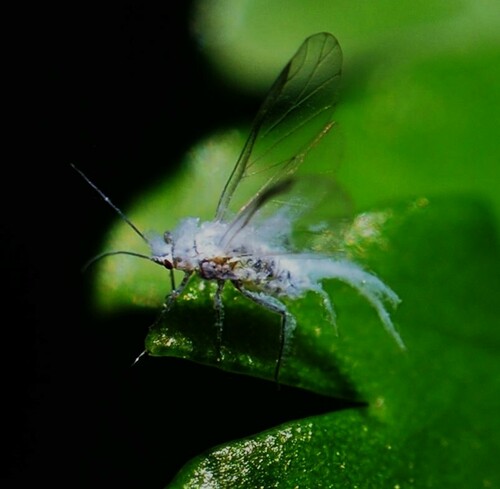
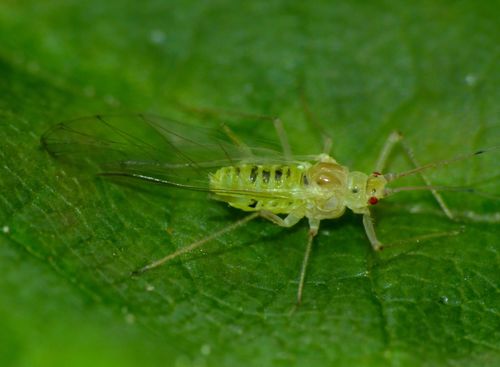
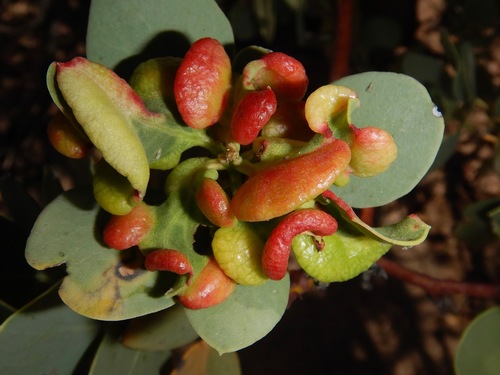
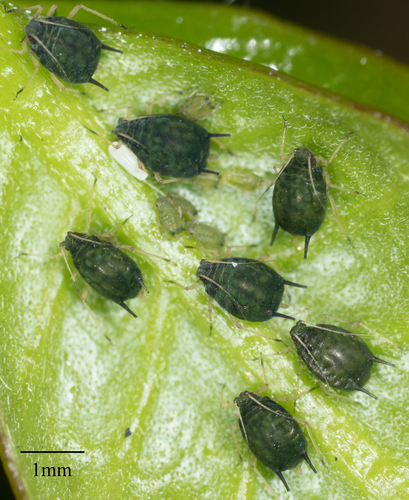
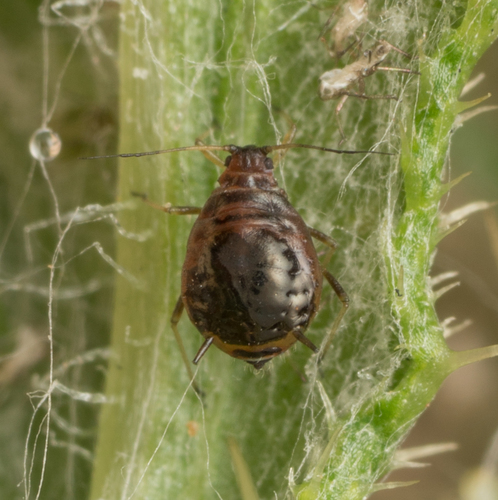
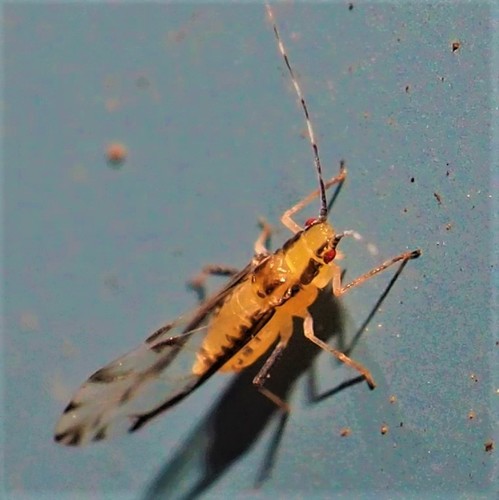
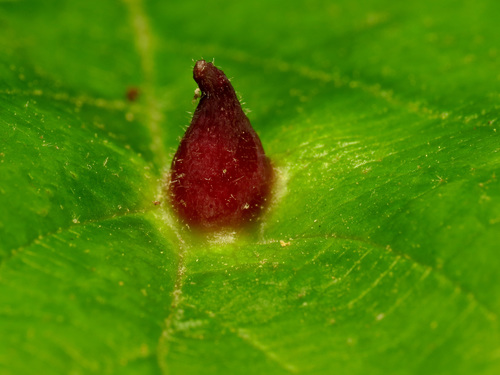
The witch-hazel cone gall aphid, scientifically named Hormaphis hamamelidis, is a very small insect that belongs to the aphid superfamily. Its presence on witch-hazel (Hamamelis virginiana) plants is easily identified by the conical gall structure it produces. These galls start out green and later turn bright red. Nutrient-rich, the gall provides both food and shelter for the female aphid. H. hamamelidis has three generations per year, and each generation plays a distinct role in the species’ life cycle. In early spring, female stem mothers crawl to witch-hazel leaf buds. As the leaf grows, the aphid injects it with a substance, likely an enzyme or hormone, that triggers gall formation around the aphid. Once enclosed inside her gall, the stem mother reproduces parthenogenically, filling the gall with 50 to 70 female offspring. The second generation develops wings, disperses, and repeats the gall-forming process. The third generation includes both males and females. By late summer, the third generation reproduces sexually and lays eggs on the bark of witch-hazel. The entire life cycle restarts the following spring. Hormaphis hamamelidis is sometimes confused with the closely related species Hormaphis cornu. Both species live in the eastern United States and both form galls on witch-hazel. However, H. hamamelidis is autoecious and completes three generations per year, while H. cornu lays eggs on both witch-hazel and river birch and produces seven generations per year. H. hamamelidis is often found at higher elevations, whereas H. cornu is typically found at lower elevations. The two species interbreed readily, but their hybrids are most likely inviable. Like galls made by other insects, galls formed by H. hamamelidis may deter herbivory.