About Hordeum brachyantherum Nevski
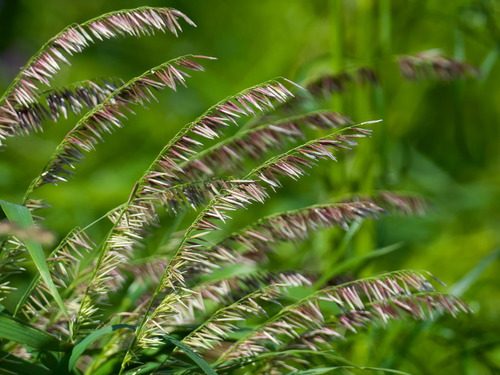
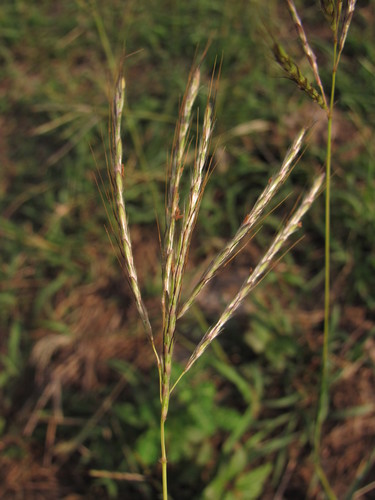
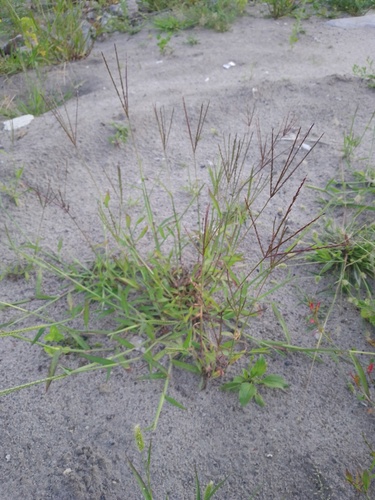
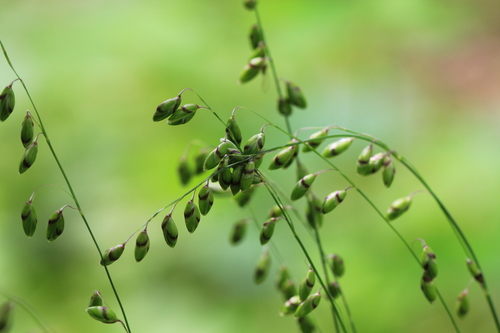
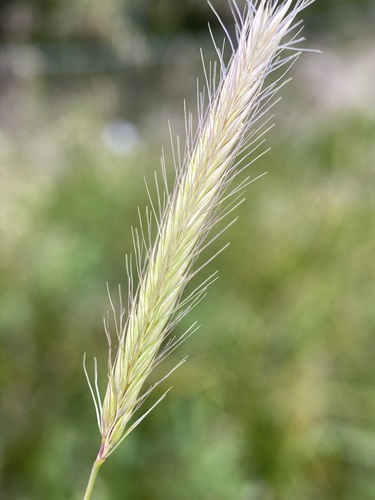
Hordeum brachyantherum Nevski, commonly called meadow barley, is a species of barley. It is native to western North America ranging from Alaska to northern Mexico, coastal areas of far eastern Russia (Kamchatka), and a small coastal area of Newfoundland. Diploid cytotypes of this species are only found throughout California, while all populations outside of California are tetraploid. This species is a tufting perennial bunchgrass that reaches a maximum height of close to one meter. It produces compact, narrow inflorescences that are 8 to 10 centimeters long and purplish in color. Like other barleys, its spikelets grow in groups of three. It has two small, often sterile lateral spikelets that grow on pedicels, and one larger, fertile central spikelet that has no pedicel.
A major role of perennial plants overall is supporting land and ecosystem restoration. Meadow barley is used to restore native perennial grasslands in California, and to reduce the population density of non-native annual plants. Perennial plants like meadow barley can quickly restore soil microbial biomass in grasslands, because perennial plants maintain a steady supply of carbon to the soil. While species diversity and overall species composition are not affected by this restoration treatment, the relative proportion of native plant biomass does increase in the restored perennial grassland.